Professional Tree Fertilization Services in Denver, CO
Great Western Tree Care delivers targeted tree fertilization programs designed to overcome the specific soil and nutrient challenges trees face along Colorado's Front Range. Denver metro soils, predominantly alkaline clay with pH levels ranging from 7.5 to 8.5, lock out critical micronutrients including iron, manganese, and zinc, producing chlorotic foliage and stunted growth even in otherwise healthy trees. Our ISA-Certified Arborists develop fertilization programs based on laboratory soil analysis and species-specific nutrient requirements rather than one-size-fits-all seasonal applications. Combined with proper supplemental watering and proactive pest management, fertilization is a core component of long-term tree health. Call (720) 535-8769 to schedule your free tree health evaluation.
Importance of Fertilizing Trees & Shrubs
Nutrient-poor Soils
Many areas in Colorado have shallow, rocky, or nutrient-depleted soils that may not provide adequate nutrients for trees and shrubs, especially in urban and suburban landscapes with compacted soils.
Water Stress
Colorado's semi-arid climate and variable precipitation can lead to water stress, reducing plants' ability to absorb nutrients from the soil.
Competition
In urban and suburban landscapes, trees and shrubs compete with lawns, other plants, and pavement for nutrients and water.
Promote Growth & Health
Strategic fertilization helps trees and shrubs establish strong root systems, promotes vigorous growth, enhances stress tolerance, and improves overall plant health.
Enhancing Aesthetics
Proper fertilization contributes to vibrant foliage color, improved flower production, and overall plant appearance.
Soil Analysis and Amendments
Laboratory Soil Testing
Effective fertilization starts with understanding what your soil actually contains, and what it lacks. We collect soil samples from multiple locations within the dripline of target trees, at depths of 6–12 inches where feeder roots concentrate. Samples are submitted to the Colorado State University Soil Testing Laboratory for analysis of macronutrient levels (nitrogen, phosphorus, potassium), micronutrient availability (iron, manganese, zinc, boron), pH, organic matter content, and cation exchange capacity. Test results guide every fertilization prescription we write, eliminating guesswork and preventing over-application of nutrients that are already adequate.
Soil pH Correction
Alkaline soil conditions across the Denver metro area cause iron and manganese to become chemically unavailable to tree roots, even when these nutrients are physically present in the soil. Iron chlorosis, characterized by yellow leaves with green veins, is one of the most common tree health complaints in Highlands Ranch, Centennial, and communities throughout Douglas and Arapahoe Counties. We apply elemental sulfur, aluminum sulfate, or acidifying organic amendments to reduce soil pH in targeted root zone areas, improving nutrient availability without disrupting surrounding landscape plantings.
Organic Matter Enhancement
Front Range soils typically contain less than 2% organic matter, well below the 4–6% range that supports robust microbial activity and nutrient cycling. Low organic matter reduces the soil's ability to retain moisture and nutrients between watering cycles and limits beneficial mycorrhizal fungi that extend tree root absorption capacity. We apply compost topdressing, humic acid injections, and mycorrhizal inoculants to build soil biology over successive treatment seasons.
Deep Root Fertilization
How Deep Root Fertilization Works
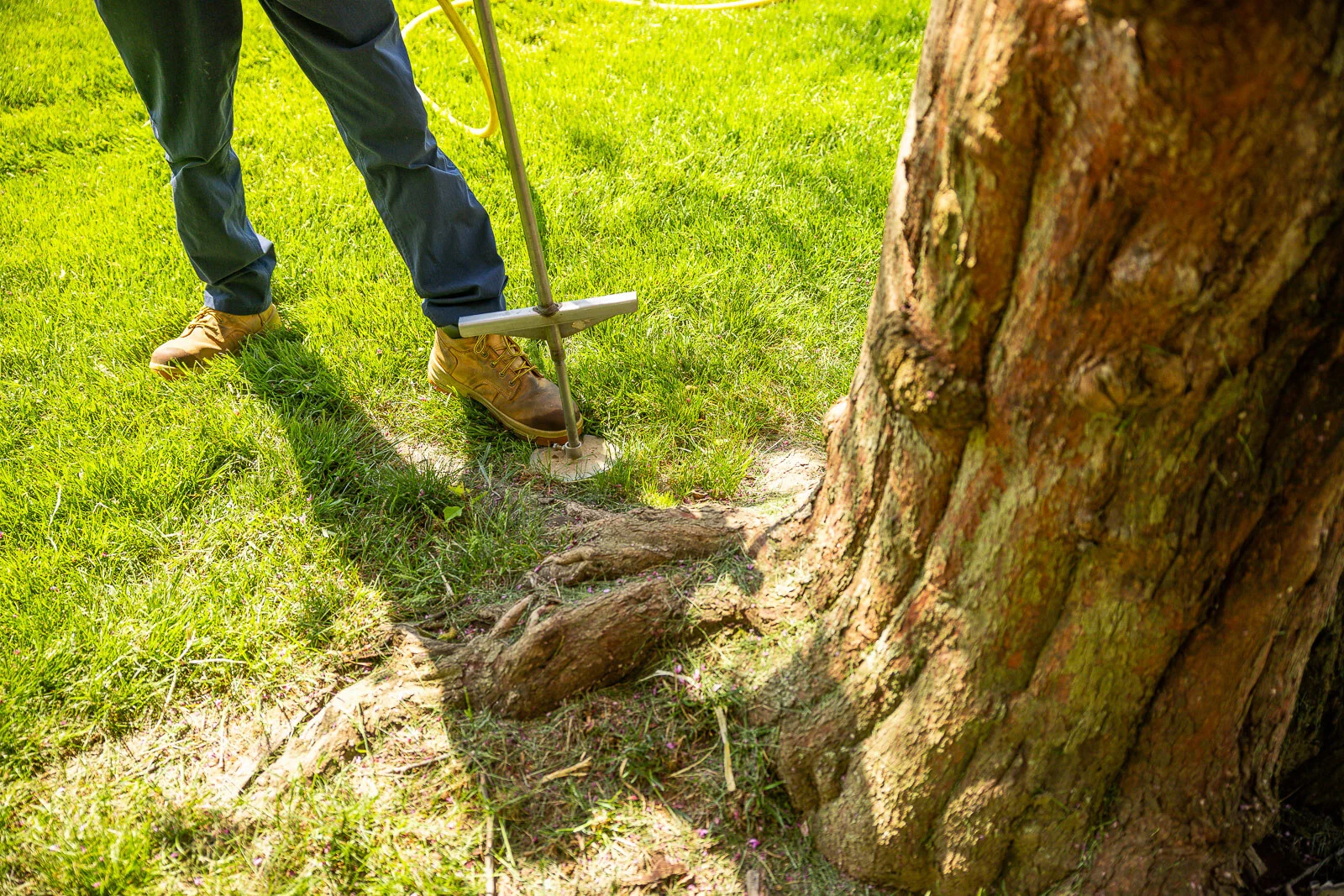
Deep root fertilization delivers liquid nutrient solutions directly into the root zone at 8–12 inch depths using high-pressure injection probes. This bypasses the compacted clay surface layer that prevents granular fertilizers from reaching absorbing roots and avoids nutrient loss from surface runoff or volatilization. Injection points are spaced at 2–3 foot intervals throughout the dripline area, creating a grid pattern that distributes nutrients evenly across the root zone. Each injection delivers a calibrated volume of solution formulated to the specific nutrient prescription developed from soil test results.
Slow-Release vs. Fast-Release Formulations
We use slow-release nitrogen formulations as the foundation of most fertilization programs. Slow-release products, including polymer-coated urea and organic nitrogen sources, provide sustained nutrient availability over 8–12 weeks rather than the concentrated spike-and-crash pattern of fast-release synthetics. This steady supply matches tree uptake rates, reduces risk of root burn, and minimizes nitrogen leaching into groundwater. Fast-release components are added in targeted amounts when soil tests indicate acute deficiencies requiring immediate correction.
Micronutrient Supplementation
Beyond primary macronutrients, Colorado trees frequently require supplemental iron, manganese, and zinc delivered in chelated forms that remain available in alkaline soil conditions. EDDHA-chelated iron provides the most effective correction for iron chlorosis in high-pH soils; standard iron sulfate products oxidize and become unavailable within weeks in alkaline conditions. We incorporate chelated micronutrients into deep root injection solutions for direct root zone delivery, or apply trunk injection treatments for trees requiring immediate foliar response.
Seasonal Fertilization Timing
Timing affects fertilizer effectiveness significantly. We schedule primary fertilization applications in early spring, typically late March through April in the Denver metro area, as soil temperatures rise above 45°F and root growth resumes. Fall applications using slow-release formulations in September through mid-October support root development during the secondary growth phase and build nutrient reserves for winter dormancy. We avoid fertilizing during peak summer heat stress periods and during active drought conditions when trees cannot effectively process additional nutrients.
Unique To Colorado
Colorado’s soils are often low in key nutrients, so regular fertilization helps trees grow stronger, stay greener, and better withstand stress.
How Much Does Tree Fertilization Cost in Denver, CO?
Tree fertilization costs depend on the number of trees, their size, soil test requirements, and the specific nutrient program prescribed. Here are general ranges for Denver metro properties:
Soil Testing (per property): $75–$200 depending on number of sample zones submitted to the lab
Deep Root Fertilization (per tree): $100–$300 per application depending on tree canopy spread and nutrient formulation complexity
Iron Chlorosis Treatment (chelated iron injection): $150–$400 per tree depending on size and severity
Seasonal Fertilization Program (spring + fall applications): $300–$800 per year for properties with 5–10 trees
Comprehensive Soil Amendment Program (pH correction + organic matter + fertilization): $500–$2,000+ per season depending on scope
Cost factors specific to the Denver metro area include:
- Properties in Castle Pines and Roxborough Park with rocky or shallow soil profiles may require modified injection techniques
- Heavily alkaline soils common across Lone Tree and Englewood often need more intensive pH correction programs
- Properties with large inventories of chlorotic trees benefit from per-property pricing rather than per-tree rates
• Combining fertilization with watering programs improves nutrient uptake and often reduces the total number of treatment visits needed
Tree Fertilization by Property Type
Residential Properties with Established Trees
Mature shade trees and ornamental specimens on residential properties across Parker, Castle Rock, and Littleton often show signs of nutrient depletion after years of competing with turf grass for soil resources. Leaves may be smaller than typical, canopy density may decline, and fall color may appear prematurely. Deep root fertilization restores nutrient balance and supports ongoing vigor without requiring changes to the existing landscape design.
Newly Planted and Young Trees
Trees planted within the last 3–5 years benefit from establishment fertilization programs that support root expansion into surrounding native soil. We use phosphorus-enhanced formulations during the first two growing seasons to promote root development, transitioning to balanced nitrogen programs once the root system extends beyond the original planting hole. Coordinating fertilization with establishment watering ensures nutrients remain in solution and available to developing root systems.
Properties with Iron Chlorosis Issues
Iron chlorosis is pervasive across Denver metro landscapes, particularly affecting red maples, silver maples, pin oaks, and other species sensitive to alkaline soil conditions. Properties with multiple chlorotic trees may require multi-year soil amendment programs combining pH correction, chelated iron applications, and organic matter enhancement to achieve lasting improvement. We track chlorosis severity at each visit and adjust treatment intensity based on measured response.
FAQs About Tree Fertilization in Denver, CO
Why Great Western Tree Care for Tree Fertilization
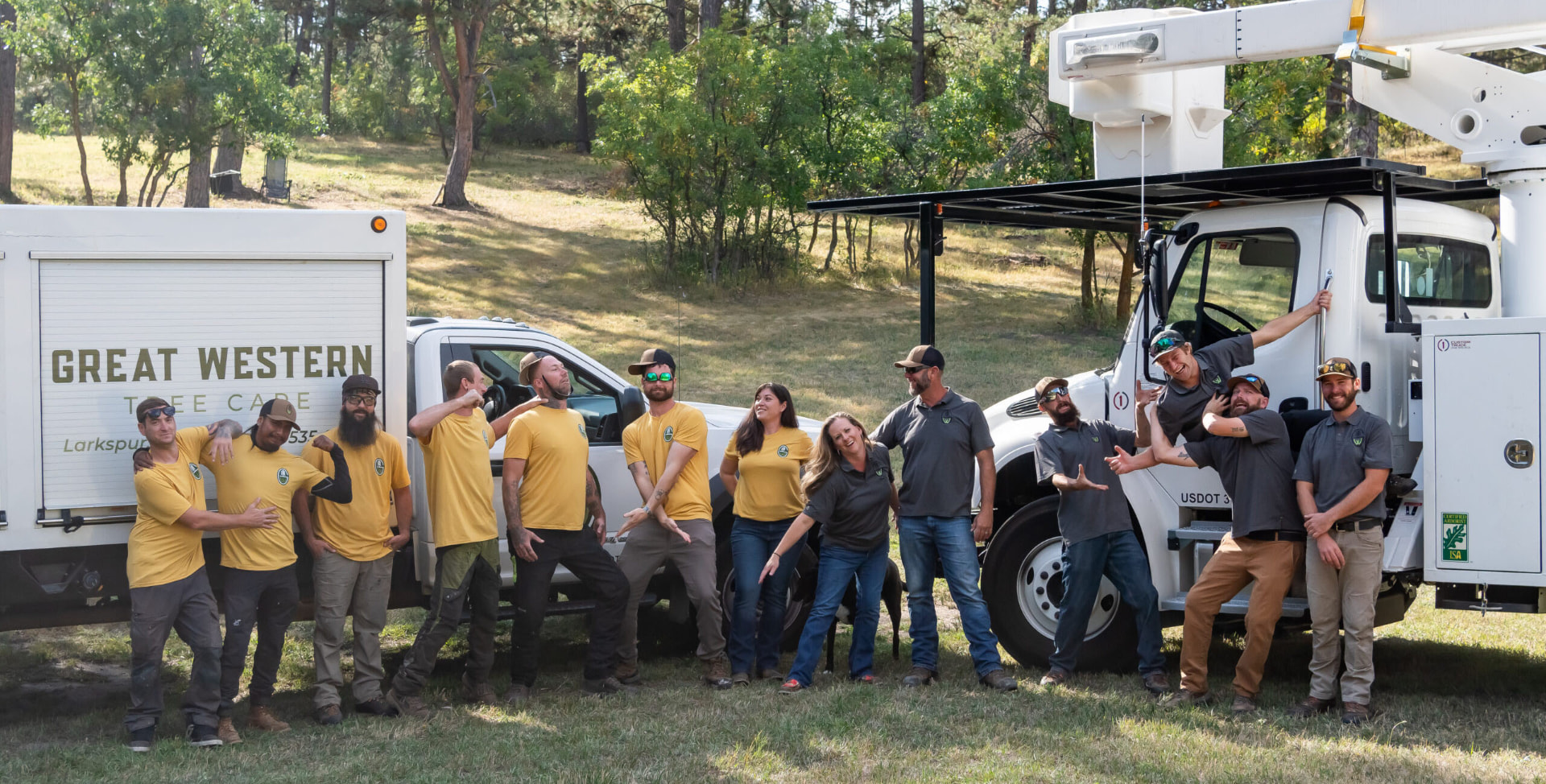
3 ISA-Certified Arborists on Staff: Our arborists hold credentials from the International Society of Arboriculture reflecting verified expertise in tree biology, soil science, and nutrient management. Fertilization programs are designed by arborists, not generic lawn care technicians.
3 Colorado Department of Agriculture Plant Health Care Qualified Supervisors: State-recognized qualification in diagnosing plant nutrient deficiencies and prescribing treatment programs specific to Colorado's soil and climate conditions.
Family-Owned Since 2018: Headquartered in Larkspur, Colorado, we know the soil conditions across Douglas County and Arapahoe County from years of testing and treating properties in every community we serve.
2 TRAQ-Certified Professionals: Tree Risk Assessment Qualification training includes evaluating how nutrient deficiency contributes to structural weakness, canopy decline, and increased failure risk.
1 Certified Treecare Safety Professional (CTSP): Ensures responsible handling and application of fertilizer products, protecting your property and our crew.
Our Tree Fertilization Process
Step 1: On-Site Tree and Soil Assessment: We evaluate tree species, health symptoms, soil conditions, and landscape context. We collect soil samples for laboratory analysis when existing test data is not available.
Step 2: Nutrient Prescription: Based on soil test results and tree health evaluation, we develop a species-specific fertilization plan specifying products, application rates, delivery methods, and timing.
Step 3: Scheduling and Preparation: We schedule applications during optimal seasonal windows and coordinate with your watering program to maximize nutrient uptake. Pre-application watering may be recommended to prepare compacted soils.
Step 4: Fertilization Application: Our crew applies nutrients using deep root injection equipment calibrated to deliver precise volumes at each injection point. We document products applied, rates per tree, and injection point patterns.
Step 5: Monitoring and Follow-Up: We evaluate tree response at subsequent visits, compare foliage color and growth to baseline observations, and adjust formulations or timing for the next application cycle based on measured results.
Additional Tree Care Services
- Great Western Tree Care offers comprehensive tree and plant health care services that integrate with our fertilization programs:
Greater Denver Metro Service Areas
- Our tree fertilization crews serve residential properties throughout Douglas County and Arapahoe County from our Larkspur, Colorado headquarters:
Schedule Your Tree Fertilization Consultation
Healthy trees start with healthy soil. Great Western Tree Care provides science-based fertilization programs grounded in laboratory soil analysis and ISA-Certified Arborist expertise, not generic seasonal spray programs. We evaluate your trees' specific nutrient needs and develop treatment plans that produce measurable results.
Call (720) 535-8769 to schedule your free on-site tree health evaluation, or use the form below to request an estimate.
Great Western Tree Care
Larkspur, CO Location
Mon - Fri: 8a to 5p
9575 Spruce Mountain Rd
Larkspur, CO 80118
(720) 535-8769
Aurora, CO Location
Mon - Fri: 8a to 5p
10730 E Bethany Dr
Aurora, CO 80014
(303) 325-3541