
-
Spring Tree Care Checklist for Colorado Homeowners
Spring in Colorado is when your trees are set up for success—or start down the path of decline. After a long winter of dry conditions, wind exposure, and temperature swings, your trees need more than just water
-
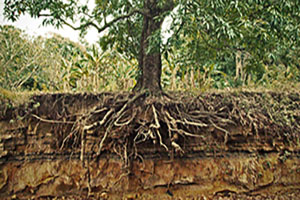
Biological Soil Inoculation
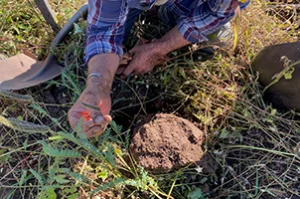
Most tree care in Colorado focuses on watering, fertilization, and pruning—but one of the most powerful tools for improving tree health exists below ground.
-
The Amazing World Of Galls
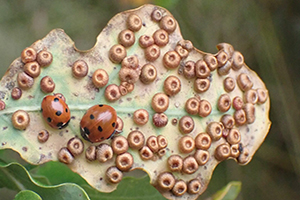
If you’ve ever noticed strange bumps, balls, or growths on your tree leaves or branches, you’ve likely encountered one of nature’s most fascinating phenomena:
Galls.
While they can look alarming,
-
Understanding Winter Desiccation
Colorado’s winters are tough!
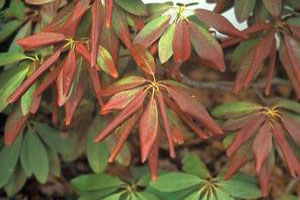
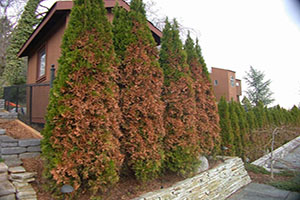
If you’ve ever seen brown needles on an evergreen in February, or a normally healthy tree struggling to leaf out in spring, there’s a good chance you’re looking at winter desiccation or freeze damage.
-
Why Winter Watering Is Critical For Tree Health
Colorado’s cold season may look quiet and dormant, but below the surface, your trees are still very much alive. One of the most important — and most overlooked — pieces of advice I give homeowners is this: Don’t forget to water your trees in winter.
-
How Climate Change In Colorado Is Affecting The Urban Forest
Colorado’s climate has always been challenging for trees. High elevation, dry air, intense sunlight, and temperature swings make it a tough environment even in normal conditions. But over the last decade, our urban forests…
-
How Road Salts Can Damage Your Trees
Every winter, communities rely on road salts to melt ice and keep streets safe. While salt helps people travel safely, it can be quietly harmful to trees along roads, driveways, sidewalks, and parking areas. Each spring, we get calls from homeowners wondering why the trees closest to the street look stressed, discolored, or dying—while trees farther from the road look completely healthy.
-
Understanding Co-Dominant Unions
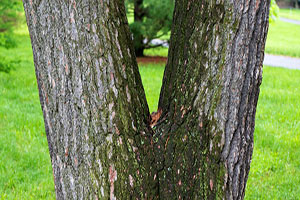
When homeowners look at a tree, they usually notice the canopy, the shade, or the overall shape—but what matters most to a tree’s structural safety is how the branches and stems are attached. One of the most common structural defects in urban trees is something called a co-dominant union, and it plays a major role in why trees split or fail during storms, heavy snow, or high winds.
-
Why Bark Beetles Thrive on the Front Range
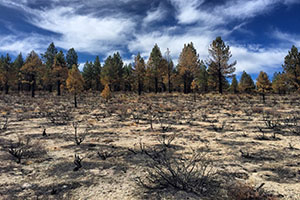
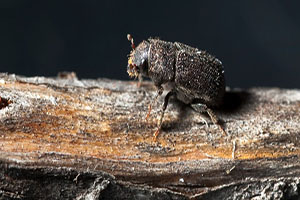
Bark beetles are native to Colorado forests—so why are they causing so much damage now? A combination of environmental factors has converged over the past several years, creating ideal conditions for bark beetle populations to thrive. Prolonged drought, warmer winters, and stressed trees have reduced natural defenses…
Great Western Tree Care
Larkspur, CO Location
Mon - Fri: 8a to 5p
9575 Spruce Mountain Rd
Larkspur, CO 80118
(720) 535-8769
Aurora, CO Location
Mon - Fri: 8a to 5p
10730 E Bethany Dr
Aurora, CO 80014
(303) 325-3541