When is the best time to prune trees in Denver?
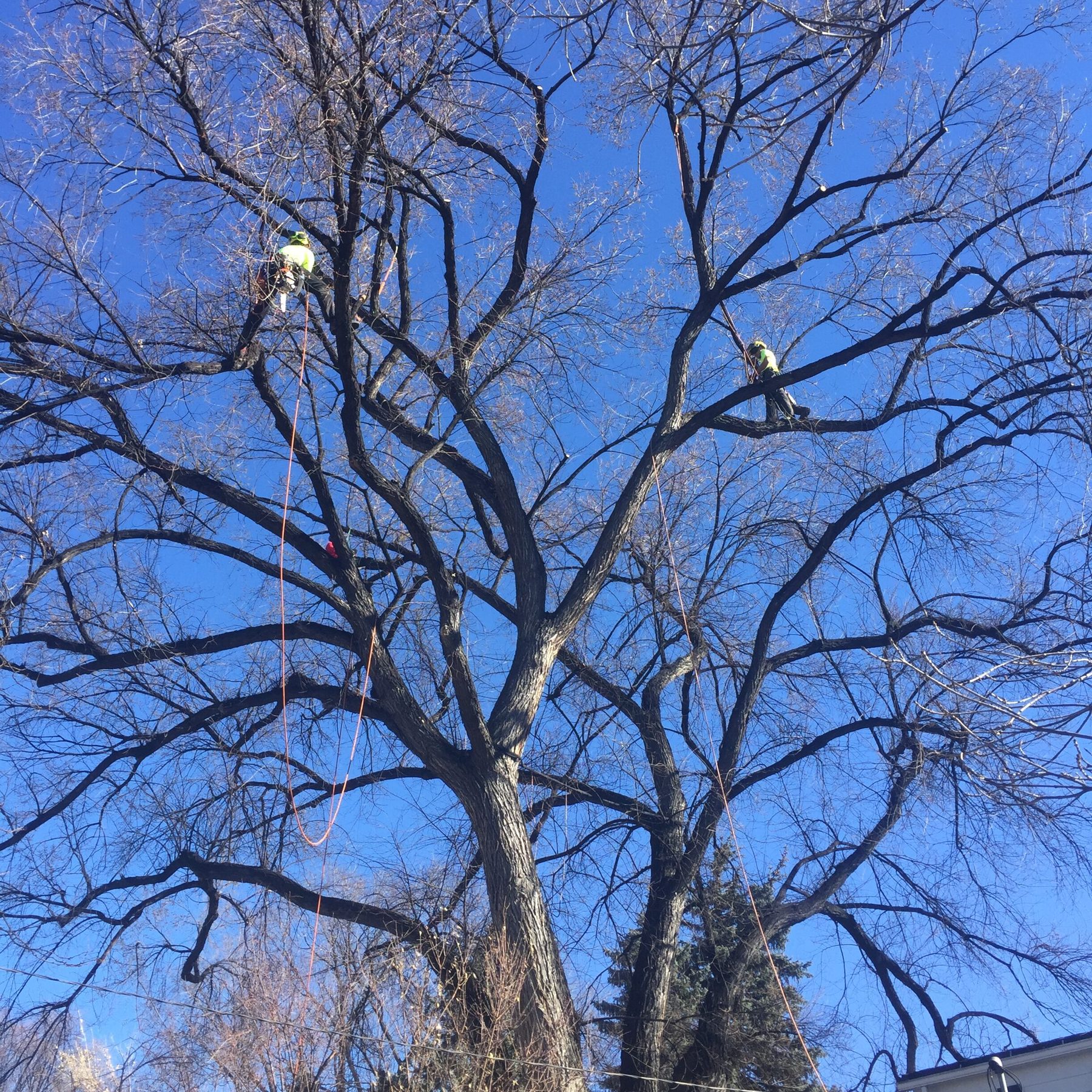
Late winter dormancy, February through early March, is the optimal pruning window for most deciduous trees in the Denver metro area. Branch structure is fully visible, wound closure begins immediately with spring growth, and pest transmission risk is minimized. Deadwood removal can be performed at any time, and spring-flowering trees should be pruned immediately after bloom.
How often should trees be pruned?
Most mature shade trees benefit from pruning every 3–5 years. Young trees in structural training should be pruned every 1–2 years during their first decade. Fast-growing species like cottonwood and silver maple may need more frequent attention, and fruit or ornamental trees often require annual pruning.
Is tree topping ever acceptable?
No. Topping — the indiscriminate cutting of branches to stubs — is harmful to every tree species. It triggers explosive regrowth of weakly attached water sprouts, exposes large wounds to decay organisms, and destroys the tree's natural form. We use crown reduction with proper reduction cuts as the safe alternative.
Will pruning hurt my tree?
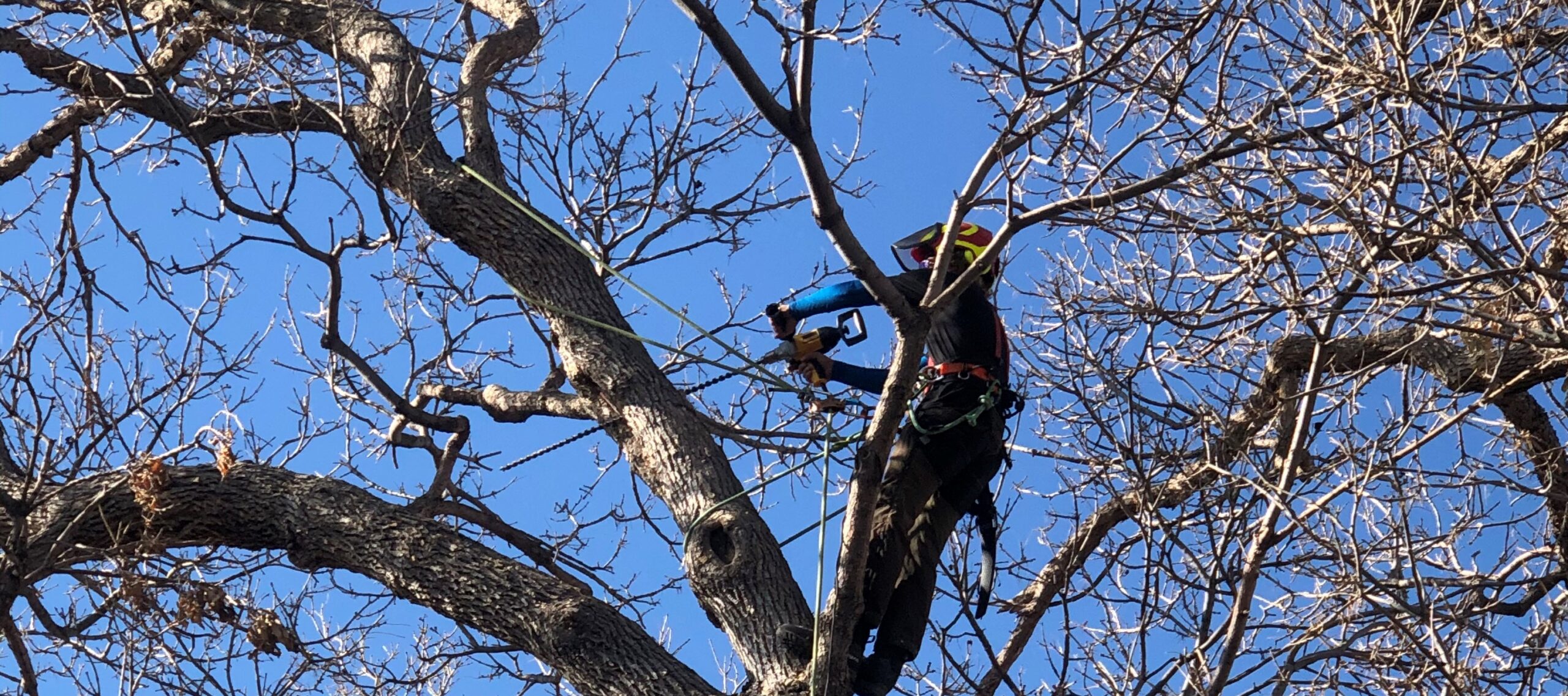
Proper pruning using correct techniques benefits tree health by removing dead and diseased wood, improving structural integrity, and increasing air circulation and light penetration. Improper pruning — including topping, lion-tailing, flush cuts, and excessive removal — damages trees and creates long-term decline. Our ISA-Certified Arborists follow ANSI A300 standards to ensure every cut benefits the tree.
How much of a tree's canopy can be removed safely?
ISA guidelines recommend removing no more than 15–25% of a tree's live canopy in a single pruning cycle. Removing more triggers a stress response, including excessive water sprout production, reduced energy reserves, and increased vulnerability to pests and disease. Mature and stressed trees should have even less removed per cycle.
Do you clean up branches and debris after pruning?
Yes. Our crews chip all pruning debris on-site or load it for removal, and we leave your property clean after every job. If you prefer to keep wood chips for mulch, we can leave chipped material on-site at no additional charge.