When is the best time to prune trees in Denver?
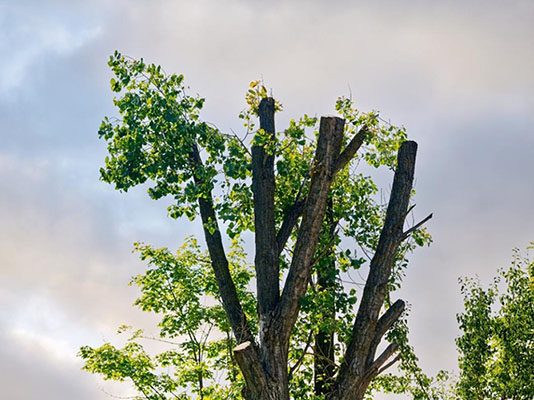
Most shade trees benefit from pruning during late winter dormancy when branch structure is visible and disease transmission risk is lowest. Spring-flowering ornamentals should be pruned immediately after blooming. Deadwood removal and hazard limb pruning can be performed any time of year, and we recommend avoiding heavy pruning during the active growing season.
Do I need approval to remove a tree in Denver?
Trees in Denver's public right-of-way, such as tree lawns and parkways, generally fall under city forestry oversight, and work there should be coordinated accordingly. Trees on private residential property are generally the homeowner's responsibility, though specific requirements can vary. We help identify which situation applies before work begins.
Should I treat my ash trees for emerald ash borer in Denver?
If you have green or white ash trees in good health, preventive trunk injection treatment is typically the most cost-effective approach, since treatment is significantly less expensive than removal and replacement. Trees already showing substantial canopy decline may be past the point where treatment is a sound investment, and removal and replacement planning becomes the better option.
How do I know if my tree is hazardous?
Common signs of a potentially hazardous tree include visible trunk cracks, large cavities or decay, codominant stems leaning apart, mushroom or fungal growth at the base, recent soil heaving near the root plate, and significant deadwood in the canopy. If you notice any of these conditions on a tree near your home, sidewalk, or driveway, a professional risk assessment provides an objective evaluation and documented recommendations.
Why do so many trees in Denver show yellowing leaves?
Yellowing between leaf veins, especially on maples and oaks, is typically iron chlorosis caused by Denver's alkaline clay soils locking out iron and other micronutrients. Deep root fertilization with chelated iron addresses the underlying soil chemistry rather than just masking the symptom.
What tree species grow best in Denver's climate?
Drought-adapted species that tolerate alkaline clay soils perform well in Denver, including bur oak, Kentucky coffeetree, hackberry, and honeylocust for shade trees. Native conifers such as ponderosa pine and Rocky Mountain juniper are solid choices for evergreen screening. We select final species based on each site's soil, sun exposure, and available rooting space.