Great Western Tree Care arborist working on a mature tree along the Colorado Front Range
Tree Care In Castle Rock, Colorado

Tree Service in Castle Rock, CO

Professional tree service in Castle Rock, CO — expert trimming, removal, and reliable care for your trees, year-round from ISA-Certified Arborists.

From tree pruning and trimming on established lots in The Meadows to tree removal for beetle-killed pines along the Plum Creek corridor, we handle every project with the expertise Castle Rock properties demand.

Serving Colorado's Front Range · (720) 535-8769

Local Introduction

Leading Tree Service Company in Castle Rock

Great Western Tree Care is the Douglas County seat's go-to tree care provider, serving Castle Rock homeowners, HOA communities, and commercial property managers with full-spectrum arborist services. Castle Rock is the county seat and largest municipality in Douglas County, with a population that has grown from roughly 20,000 in 2000 to over 75,000 today.

That growth has transformed open grassland and scrub oak terrain into dense residential subdivisions, each with distinct tree care requirements based on age, species mix, and site conditions. Castle Rock's rapid residential growth over the past two decades has placed mature native Ponderosa and Gambel oak alongside newly planted ornamental landscapes — each requiring distinct care approaches that our ISA-Certified Arborists deliver daily.

Whether it's tree pruning and trimming on established lots in The Meadows or tree removal for beetle-killed pines along the Plum Creek corridor, our team handles every project with the expertise Castle Rock properties demand. Call (720) 535-8769 for your free on-site estimate.

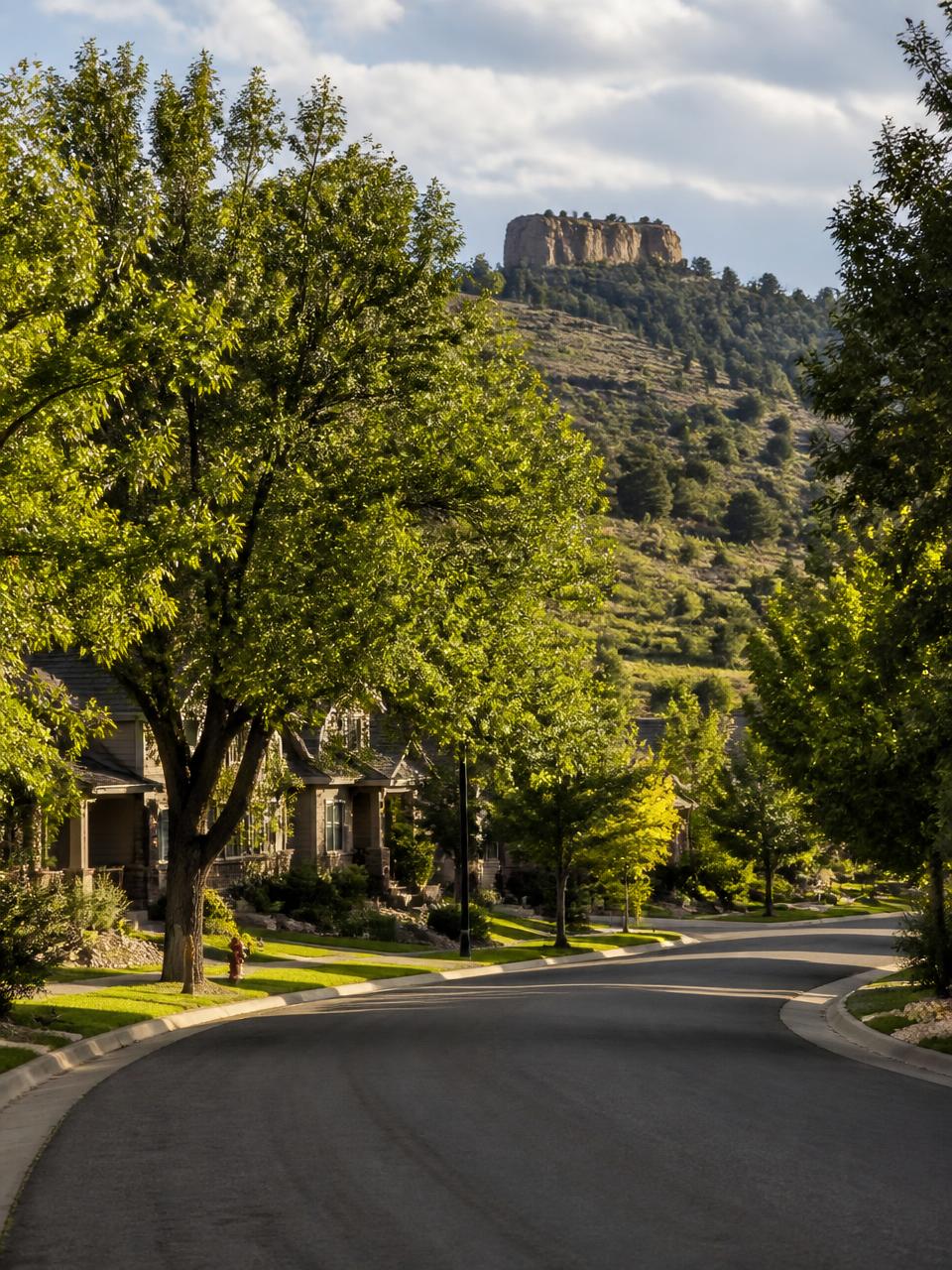
Mature shade trees lining a residential street below Castle Rock, Colorado
Tree Services

Tree Services in Castle Rock

Our team provides the full range of arborist services tailored to Castle Rock's elevation, soils, and climate — from newly developed neighborhoods with young ornamental trees to established areas with mature Ponderosa pines exceeding 60 feet in height.

01

Tree Pruning & Trimming

We perform structural pruning on young trees to develop strong central leaders and proper scaffold branch spacing, and maintenance pruning on mature specimens for deadwood removal, crown thinning, and clearance from structures.

Tree pruning in Castle Rock frequently involves Gambel oak thickets that require selective thinning for fire mitigation and property line management.

Explore Service
02

Tree Removal

Beetle-killed pines, storm-damaged trees, and removals for new construction are the most common tree removal requests in Castle Rock. Our crews use crane-assisted removal for large specimens near structures and utilize rigging techniques on slope-side properties throughout the Plum Creek valley and the ridgelines along Founders Parkway.

We coordinate with the Town of Castle Rock forestry department when removal involves protected trees on public property borders.

Explore Service
03

Tree Planting

Castle Rock's new developments often feature minimal tree coverage, and established neighborhoods lose canopy to beetle kill and storm damage. Our tree planting services include site evaluation, species selection appropriate for Castle Rock's 6,200-foot elevation and alkaline soils, proper hole preparation, and post-planting care instructions.

We source nursery stock from Colorado growers acclimated to Front Range conditions.

Explore Service
04

Tree & Pest Disease Management

Mountain pine beetle and Ips engraver beetle are the headline threats in Castle Rock, responsible for killing thousands of Ponderosa pines across Douglas County over the past decade.

Our integrated pest management programs combine preventive bark spray treatments (carbaryl or bifenthrin applied in spring), systemic injections, and proactive monitoring. We also treat for Western spruce budworm, Douglas fir tussock moth, cytospora canker on spruce, and fire blight on ornamental trees.

Explore Service
05

Tree Fertilization & Soil Health

Castle Rock soils are predominantly alkaline clay and Castle Rock conglomerate — a naturally occurring mix of gravel, sand, and calcium carbonate cemented together. These soils are nutrient-poor and resist water absorption, making deep root fertilization essential for tree health.

Our injection equipment delivers slow-release nutrients, mycorrhizal inoculants, and chelated iron directly to root zones, bypassing the compacted surface layer.

Explore Service
06

Essential Watering

Castle Rock averages 17 inches of annual precipitation — well below what most tree species require for healthy growth. Municipal water restrictions during summer drought periods make efficient supplemental watering critical.

Our tree watering programs deliver deep root irrigation to established trees and provide scheduled soaking for new plantings, including essential winter watering when soil moisture drops and root desiccation risk peaks.

Explore Service
07

Tree Risk Assessment

With Castle Rock's continued development pushing into hillside terrain and forested areas, tree risk assessments are increasingly important for property owners, HOA boards, and commercial facility managers.

Our ISA-certified assessments evaluate structural integrity, root plate stability, species-specific failure modes, and proximity to targets (structures, walkways, play areas). We issue detailed written reports suitable for insurance documentation and HOA compliance.

Explore Service
08

Tree Cabling & Bracing

Castle Rock's exposure to high-wind events — particularly downslope Chinook winds that can exceed 80 mph — places significant stress on multi-trunk trees and those with structural defects.

Our cabling and bracing installations use dynamic cable systems and steel through-bolt bracing to preserve large-canopy trees that provide shade, property value, and neighborhood character.

Explore Service
09

Lawn Care

Healthy turf and healthy trees share root zones and compete for moisture and nutrients. Our lawn care programs work in concert with tree care — aeration relieves compaction that restricts both root systems, fertilization programs balance the needs of turf and tree roots, and targeted pest treatments address grubs and fungus without harming beneficial soil organisms that support tree health.

Explore Service
Local Context

The Castle Rock Tree Care Landscape

Castle Rock occupies a mesa and valley landscape along East Plum Creek between the Palmer Divide to the south and the Denver metro edge to the north.

Geology & Soils

The town's namesake — a prominent butte of Castle Rock conglomerate — illustrates the geological substrate underlying much of the community: a cemented gravel and sandstone formation that creates shallow, rocky soils with limited water retention.

Native Canopy

The native tree canopy is dominated by Ponderosa pine on south-facing slopes and ridgelines, Gambel oak in transition zones, and narrowleaf cottonwood along Plum Creek and its tributaries. Residential developments have introduced Austrian pine, Colorado blue spruce, ornamental crabapple, honeylocust, and various shade tree species.

Older neighborhoods like the downtown historic district and areas along Perry Street feature mature elms and ash trees now threatened by emerald ash borer's westward expansion.

Growth & Development Patterns

Castle Rock's rapid growth has created a patchwork of tree care needs: newly planted trees in developments like Crystal Valley, Terrain, and Montaine require establishment care, while mature stands in The Meadows, Castlewood Ranch, and Sapphire Pointe need maintenance pruning, pest monitoring, and structural preservation.

Urban Forestry

The Town's Urban Forestry Program manages street trees and public plantings, but private property tree care falls to homeowners and their chosen arborists.

Species

Trees Commonly Encountered in Castle Rock Landscapes

Common tree species across Castle Rock include the following. Each species presents distinct management requirements that our ISA-Certified Arborists address through tailored care programs.

  • Ponderosa Pine

    Dominant on south-facing slopes and ridgelines; heavily impacted by beetle kill.

  • Gambel Oak

    Common in transition zones; requires selective thinning for fire mitigation.

  • Narrowleaf Cottonwood

    Found along Plum Creek and its tributaries; needs deadwood management.

  • Austrian Pine

    Widely planted in residential developments; monitored for Ips beetle.

  • Colorado Blue Spruce

    Popular ornamental conifer; susceptible to cytospora canker.

  • Crabapple

    Ornamental flowering species vulnerable to fire blight.

  • Honeylocust

    Common shade tree in newer subdivisions; prone to codominant stems.

  • American Elm & Ash

    Mature specimens in older neighborhoods now threatened by emerald ash borer.

  • Pinyon Pine

    Native, drought-adapted conifer suited to conglomerate soils.

  • Rocky Mountain Juniper

    Native evergreen tolerant of alkaline, rocky substrates.

  • Bur Oak

    Recommended ornamental shade tree tolerant of alkaline pH and well-drained rocky soils.

  • Kentucky Coffeetree

    Recommended ornamental shade tree for rocky, well-drained substrates.

Species identification and condition are confirmed on site — we don't diagnose Castle Rock trees from a list.

Local Conditions

Common Tree Care Challenges in Castle Rock

Castle Rock's geography, climate, and growth patterns create specific challenges our arborists encounter regularly.

  1. 01

    Beetle Kill & Dead Tree Accumulation

    Over a decade of mountain pine beetle activity has left standing dead Ponderosa pines throughout Castle Rock's older neighborhoods and open space borders. These dead trees become increasingly brittle and unpredictable, posing falling hazards that worsen each year they remain standing.

    Timely removal is essential for safety and to reduce beetle habitat.

  2. 02

    Castle Rock Conglomerate Soils

    The town's signature geology creates poor growing conditions — limited root depth, poor moisture retention, and alkaline pH. Trees planted in conglomerate-dominated soils often develop restricted root systems that make them more vulnerable to wind throw and drought stress.

    Proper species selection and amended planting techniques are critical for long-term success.

  3. 03

    Chinook Wind Events

    Castle Rock's location along the Palmer Divide corridor exposes properties to powerful Chinook wind events, particularly between November and March. These warm, dry downslope winds can gust above 80 mph, causing catastrophic branch failure and uprooting in trees with structural defects or compromised root systems.

  4. 04

    Wildfire Interface Zones

    Western Castle Rock neighborhoods bordering Castlewood Canyon State Park, the Plum Creek valley, and open space parcels fall within designated Wildland-Urban Interface zones. Douglas County's wildfire mitigation standards require defensible space management including tree thinning, ladder fuel removal, and dead vegetation clearing.

  5. 05

    Construction Damage to Established Trees

    Castle Rock's ongoing construction activity — both new development and infill projects — frequently damages root zones and trunk bark of existing trees through grading, trenching, and heavy equipment compaction.

    We assess construction-impacted trees, recommend remediation when possible, and document damage for insurance and builder accountability.

  6. 06

    Water Restrictions & Drought Stress

    Castle Rock's water supply relies primarily on non-renewable Denver Basin aquifers, and the town enforces strict watering restrictions during summer months. Trees that don't receive supplemental deep watering during drought periods develop chronic stress that increases susceptibility to beetle attack, disease, and structural failure.

Plant Health

Pest & Disease Pressures in Castle Rock

Castle Rock's tree population faces a consistent set of insect and pathogen pressures. Diagnosis and treatment timing matter more than product selection.

Mountain Pine Beetle & Ips Engraver Beetle

Responsible for killing thousands of Ponderosa pines across Douglas County over the past decade. Preventive bark spray treatments (carbaryl or bifenthrin) applied in spring, combined with systemic injections and proactive monitoring, are the most effective defenses.

Western Spruce Budworm & Douglas Fir Tussock Moth

Periodic defoliation events affect spruce and fir across Castle Rock. Early identification through monitoring is critical for treatment success before significant canopy loss occurs.

Cytospora Canker

A common canker disease on Colorado blue spruce, typically appearing on lower branches of drought-stressed or wounded trees. Management combines sanitation pruning with water and soil correction.

Fire Blight

Affects crabapple and other ornamental species across Castle Rock landscapes, with infection driven by warm, wet spring conditions during bloom. Pruning timing and disinfection practice are critical.

Emerald Ash Borer

As EAB continues its westward expansion across the Front Range, mature elm and ash trees in Castle Rock's older neighborhoods — including the downtown historic district and areas along Perry Street — face increasing risk. Preventive trunk injection is most effective when applied before infestation.

Regulatory

Permits and Regulations in Castle Rock

The Town of Castle Rock administers tree-related regulations through its Municipal Code and the Community Development Department.

Municipal Tree Preservation

The Town's Municipal Code (Chapter 17.56) includes tree preservation provisions for development projects, requiring protection of significant trees during construction and replacement plantings when removal is unavoidable. Residential property owners should consult the Town's Development Services Department for removal of trees that may be subject to preservation requirements.

Wildfire Mitigation

Douglas County's Wildfire Mitigation regulations apply to properties in identified WUI zones. The Castle Rock Fire and Rescue Department provides wildfire mitigation assessments and guidance for vegetation management around structures.

HOA Covenants

HOA covenants in Castle Rock's planned communities — including The Meadows, Crystal Valley, Terrain, Castlewood Ranch, and Montaine — impose additional requirements including approved species lists, tree removal approval processes, and landscape maintenance standards.

Our team is familiar with the requirements of Castle Rock's major HOAs and prepares compliant documentation for approval submissions.

Requirements may vary by property and community. Homeowners should confirm current municipal or HOA rules where applicable — this information is provided as general guidance, not legal advice.

Our Approach

Diagnose First. Recommend Second.

ISA-Certified Arborists on Staff
3ISA-Certified Arborists on Staff
CDA Plant Health Care Qualified Supervisors
3CDA Plant Health Care Qualified Supervisors
TRAQ-Certified Professionals
2TRAQ-Certified Professionals
Certified Treecare Safety Professional
1Certified Treecare Safety Professional
Family-Owned, Headquartered in Larkspur, Colorado
2018Family-Owned, Headquartered in Larkspur, Colorado

Before we recommend anything on a Castle Rock property, we evaluate species, tree age, structure, soil, water availability, pest and disease pressure, site conditions, surrounding structures, and the long-term value of the tree. The recommendation follows the diagnosis — never the other way around.

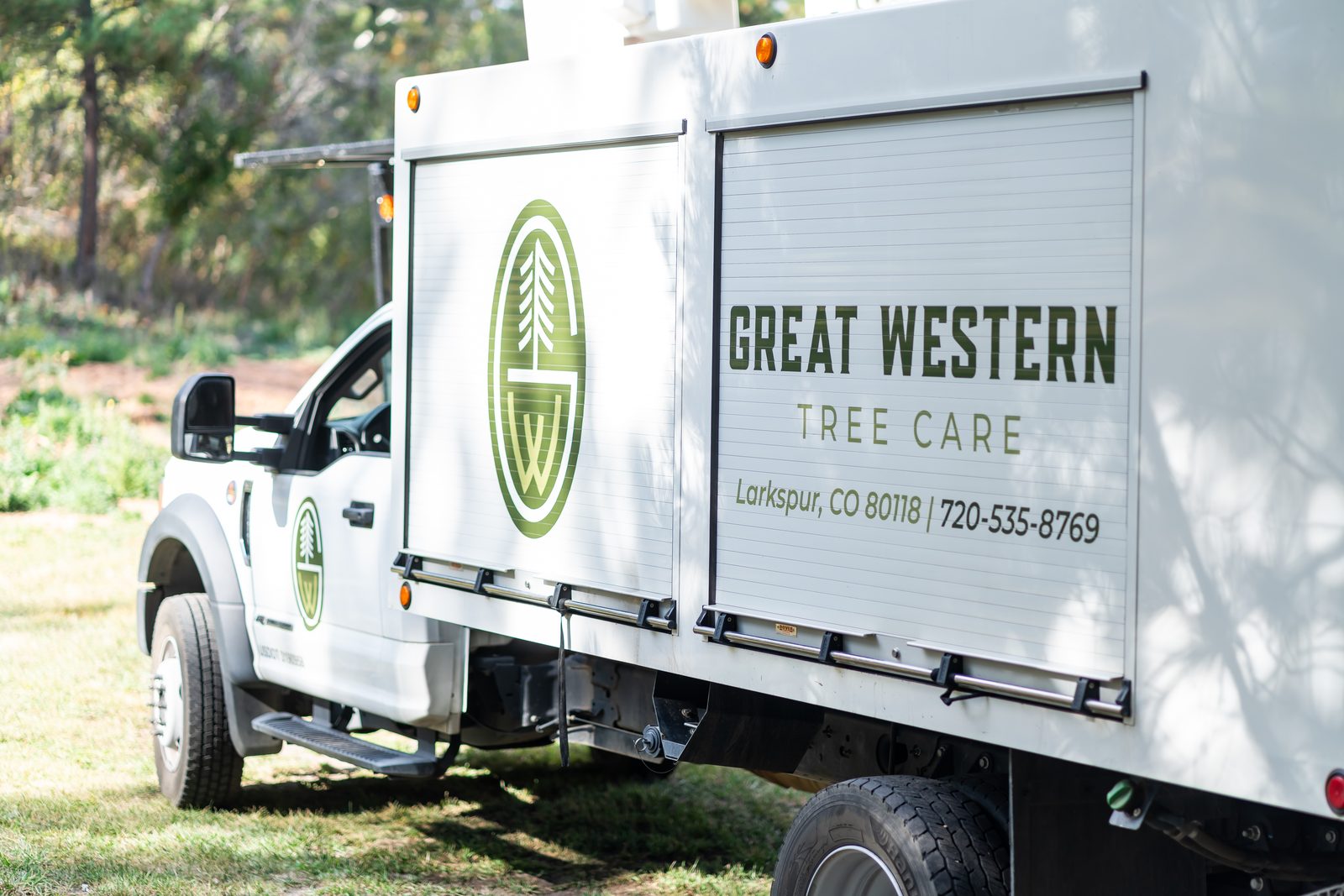
Great Western Tree Care branded service truck parked on a residential Colorado property
01On-Site Consultation
We visit your Castle Rock property, evaluate tree health and structural conditions, identify site-specific risks (beetle activity, wind exposure, soil limitations), and discuss your care priorities.
02Assessment & Estimate
We prepare a detailed scope of work with itemized costs. For properties with extensive tree inventories, we provide prioritized multi-phase plans that address urgent needs first while scheduling routine maintenance over time.
03Permits & Approvals
We coordinate with the Town of Castle Rock for any required permits, prepare HOA architectural committee submissions, and obtain all necessary approvals before scheduling work.
04Tree Work Execution
Our crews follow ANSI A300 pruning standards and ANSI Z133 safety protocols. We select equipment appropriate for site conditions — from compact track loaders for tight backyard access to crane-assisted removal for large specimens near structures.
05Site Cleanup & Follow-Up
All brush is chipped on-site, logs are hauled, and work areas are raked and blown clean. We walk through completed work with you and recommend follow-up care schedules based on species requirements and seasonal timing.
Coverage

Castle Rock Neighborhoods We Serve

Our crews work throughout Castle Rock's residential communities.

  • The Meadows
  • Crystal Valley
  • Terrain
  • Castlewood Ranch
  • Montaine
  • Sapphire Pointe
  • Founders Village
  • Plum Creek
  • Red Hawk
  • Castle Oaks
  • Dawson Trails
  • Keene Ranch
  • Cobblestone Ranch
  • Ainsworth
  • Downtown Castle Rock
  • Perry Park
Questions

FAQs About Tree Service in Castle Rock

How do I know if my pine trees have mountain pine beetle?

Look for small pitch tubes (popcorn-sized resin masses) on the trunk, boring dust in bark crevices, and fading needles that turn from green to yellow to red. By the time needles turn red, the beetle has already completed its life cycle and the tree cannot be saved. Preventive bark spray treatments are the most effective approach — applied in spring before beetle flight season begins.

Does Castle Rock require permits for tree removal?

The Town of Castle Rock has tree preservation provisions in its Municipal Code that may apply depending on the tree's location and the scope of work. Development projects are subject to specific preservation requirements. For residential properties, HOA covenants often have their own approval requirements that we navigate on your behalf.

What trees grow best in Castle Rock's rocky soil?

Ponderosa pine, Gambel oak, pinyon pine, and Rocky Mountain juniper are native species adapted to Castle Rock's conglomerate soils and low moisture. For ornamental plantings, we recommend hawthorn, serviceberry, bur oak, and Kentucky coffeetree — all species that tolerate alkaline pH and well-drained rocky substrates.

How do Chinook winds affect trees in Castle Rock?

Chinook winds create extreme mechanical stress on tree canopies, particularly on exposed ridgeline lots. Trees with codominant trunks, included bark unions, or root damage are most vulnerable to wind-related failure. We reduce wind sail through crown thinning and install dynamic cabling systems on structurally compromised trees to reduce splitting risk.

Is my property in a wildfire interface zone?

Properties bordering Castlewood Canyon State Park, open space parcels along Plum Creek, and undeveloped areas on Castle Rock's western edge are most likely within designated WUI zones. Douglas County and Castle Rock Fire and Rescue maintain maps identifying these areas. We provide wildfire mitigation services including defensible space creation, ladder fuel removal, and vegetation management plans.

How quickly can you respond to storm damage in Castle Rock?

Our Larkspur headquarters is approximately 10 minutes from central Castle Rock, allowing rapid response for emergency situations. During major storm events, we prioritize clearing trees from structures, driveways, and utilities, then schedule follow-up cleanup and restoration work. Our standing relationships with Castle Rock's Public Works department facilitate coordination during community-wide events.
Nick Anderson, a Great Western Tree Care arborist, on a Colorado property
Nick Anderson, Sales Manager, Great Western Tree Care
Free Estimate

Need Tree Care in Castle Rock?

Great Western Tree Care provides free on-site evaluations for residential properties across Castle Rock. Our ISA-Certified Arborists assess your trees' health, structural condition, and specific care needs before recommending any services.

(720) 535-8769

Serving Colorado’s Front Range