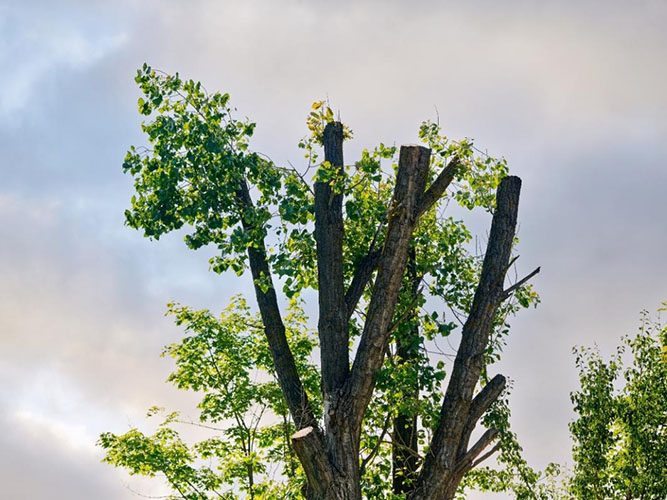
Great Western Tree Care arborist pruning a mature shade tree canopy in Colorado
Tree Care In Greenwood Village, Colorado

Tree Service in Greenwood Village, CO

Expert tree care for Greenwood Village's mature, heavily wooded estate properties — structural pruning, plant health care, and risk management from ISA-Certified Arborists.

Decades of established canopy along the Highline Canal and Cherry Creek corridors call for arborists who understand large, aging shade trees on large lots.

Serving Colorado's Front Range · (720) 535-8769

Local Introduction

Your Trusted Tree Service in Greenwood Village

Greenwood Village is one of the Denver Metro's most established residential communities, built out primarily from the 1970s through the 1990s on large, generously landscaped lots. Decades of irrigation, deep soil preparation, and deliberate planting have produced some of the most mature, continuous shade canopy in Arapahoe County.

The Highline Canal and Cherry Creek corridors run through and along the city, lined with mature cottonwoods and shade trees that give many neighborhoods a wooded, park-like character. That maturity is also the reason so many Greenwood Village properties need experienced structural evaluation — large trees planted forty and fifty years ago are now reaching the age where codominant stems, included bark, and root-zone changes from decades of turf irrigation become real risk factors.

From our Larkspur and Aurora locations, Great Western Tree Care serves homeowners throughout Douglas County, the Denver Metro, and surrounding Front Range communities — including the estate-scale properties of Greenwood Village. Call (720) 535-8769 for your free Greenwood Village tree care estimate.
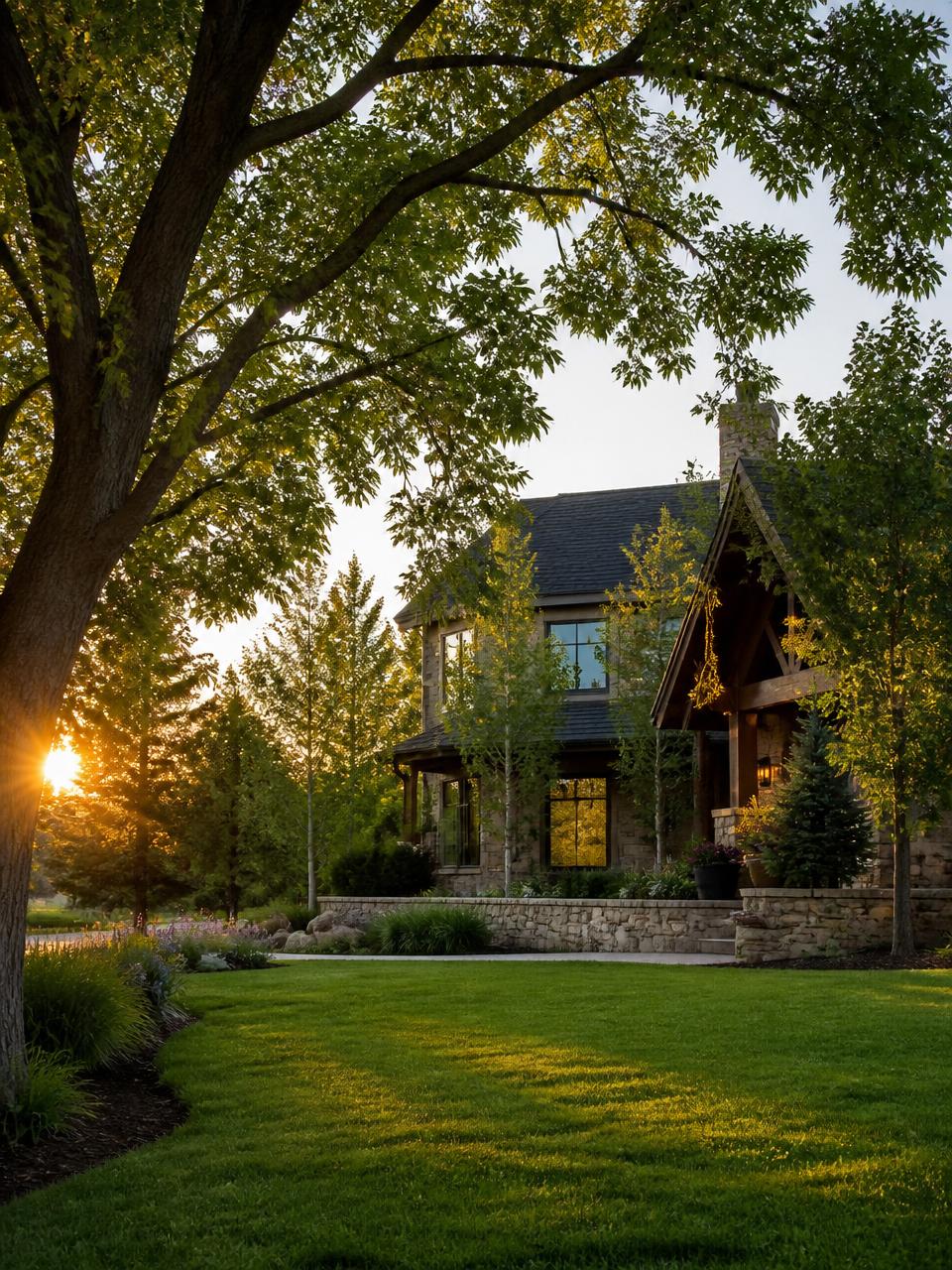
Mature shade trees and manicured landscaping at a Greenwood Village, Colorado residence
Tree Services

Tree Services in Greenwood Village

Greenwood Village's large lots and mature landscapes were established over a fairly narrow window of development decades ago, which means much of the canopy is aging together — and much of it was planted before today's structural pruning standards were common practice.

01

Tree Pruning & Trimming

Many Greenwood Village shade trees — honeylocust, silver maple, ash, and mature cottonwood along the canal and creek corridors — were never structurally pruned when young and now carry codominant leaders and included-bark unions high in the canopy.

Our arborists perform crown thinning, crown raising for clearance over driveways and patios, deadwood removal, and structural correction following ISA and ANSI A300 standards, along with restoration pruning after wind and snow events.

Explore Service
02

Tree Removal

Large, mature trees on Greenwood Village estate lots are frequently positioned close to homes, pools, outbuildings, and neighboring properties, which requires controlled sectional dismantling rather than open felling.

Our crews handle complex removals in tight access conditions, including crane-assisted work when a tree's size or proximity to structures makes rigging the safer approach.

Explore Service
03

Tree Planting

Replacing an aging shade tree on a mature Greenwood Village lot means working around established irrigation, existing root systems, and heavy clay soils.

We select species suited to the site's sun exposure, soil, and available room to mature, and plant with correct root flare depth and an establishment watering plan.

Explore Service
04

Tree & Pest Disease Management

Greenwood Village's substantial ash population, planted heavily through the community's main build-out decades, faces significant pressure from emerald ash borer now established across the Denver Metro.

Programs include preventive trunk injection for high-value ash, timed treatments for Ips and mountain pine beetle on stressed conifers, and fungicide applications for canker and blight issues on ornamentals.

Explore Service
05

Tree Fertilization & Soil Health

Decades of bluegrass lawn irrigation and fertilization have shaped the soil chemistry beneath Greenwood Village's mature trees, and alkaline clay conditions common along the Front Range still lock out iron, manganese, and zinc.

Deep root fertilization delivers nutrients into the active root zone below the compacted surface layer, with prescriptions based on soil analysis rather than a standard blanket application.

Explore Service
06

Essential Watering

Large, mature trees often rely on lawn irrigation systems designed for turf, not for deep root watering — a mismatch that becomes more consequential as trees age and canopy demand grows.

We design supplemental deep root watering programs, including dormant-season watering during dry winters, to support long-established canopy that lawn sprinklers alone cannot sustain.

Explore Service
07

Tree Risk Assessment

Large, aging trees near homes and heavily used outdoor living areas warrant periodic structural evaluation, particularly on properties with the decades-old canopy common throughout Greenwood Village.

Our TRAQ-qualified arborists assess trunk and root condition, canopy structure, and defect indicators, and issue standardized risk ratings following ISA Best Management Practices.

Explore Service
08

Tree Cabling & Bracing

Many high-value shade trees with structural defects can be preserved rather than removed with supplemental support.

We install steel and synthetic cabling systems and brace rods for split-prone unions, extending the safe life of mature trees that define a property's landscape character.

Explore Service
09

Lawn Care

Greenwood Village's expansive irrigated bluegrass lawns face compaction, thatch buildup, and turf disease pressure that builds up over decades of consistent maintenance.

Our programs include core aeration, overseeding, fertilization, and pest and weed control tailored to large-lot turf under significant shade from mature canopy.

Explore Service
Local Context

Greenwood Village's Tree Care Landscape

Greenwood Village's landscape character comes from its era of development, its large lots, and the green corridors that run through the city.

Mature Estate Landscapes

Most of Greenwood Village was developed from the 1970s through the 1990s on large residential lots with substantial setbacks, mature ornamental plantings, and extensive irrigated turf.

That consistency of era means a large share of the city's shade trees are now decades old and entering a stage where structural condition, not simple aesthetics, drives care decisions.

Highline Canal Corridor

The Highline Canal runs through Greenwood Village, and properties along its path often border mature cottonwood, willow, and shade tree plantings that have grown up around the corridor over many years.

Trees near the canal need periodic hazard limb evaluation given the foot and bike traffic the corridor carries.

Cherry Creek Corridor

Cherry Creek and its associated open space and trail system border parts of the city, supporting mature riparian and shade species on adjacent residential lots.

Properties near the creek benefit from monitoring for hazard limbs and root-zone conditions where soil moisture differs from the rest of the yard.

Active Municipal Forestry & HOA Governance

Greenwood Village maintains an active civic interest in its tree canopy, and many neighborhoods operate under HOA or covenant-based landscape guidelines that address tree maintenance and replacement.

We coordinate with property owners and, where relevant, HOA management to keep tree work aligned with community standards.

Species

Trees Commonly Encountered in Greenwood Village Landscapes

Greenwood Village's mature residential canopy includes a wide range of shade and ornamental species planted during the community's main development decades. Each presents distinct management needs that we evaluate on site.

  • Green Ash

    Widely planted through the 1970s–90s; now under heavy pressure from emerald ash borer.

  • Honeylocust

    Common large shade tree; frequently develops codominant stems needing structural correction.

  • Silver Maple

    Fast-growing legacy shade tree with included-bark unions prone to splitting under snow load.

  • Cottonwood

    Mature specimens common along the Highline Canal and Cherry Creek, needing regular deadwood management.

  • Colorado Blue Spruce

    Widely planted evergreen; susceptible to cytospora canker and winter desiccation.

  • Austrian Pine

    Common windbreak and screening conifer; monitored for Ips beetle activity.

  • Norway Maple

    Mature shade tree in older sections; sensitive to soil compaction around the root zone.

  • Linden

    Established shade species sensitive to drought stress and alkaline clay soils.

  • Crabapple

    Common ornamental flowering tree vulnerable to fire blight.

  • Bur Oak

    A durable, long-lived shade tree well suited to Front Range clay soils.

  • Kentucky Coffeetree

    Tough, drought-tolerant shade species increasingly used as a replacement for declining ash.

  • American Elm

    Older surviving specimens requiring monitoring for age-related structural decline.

Species identification and condition are confirmed on site — we don't diagnose Greenwood Village trees from a list.

Local Conditions

Common Tree Care Challenges in Greenwood Village

  1. 01

    Emerald Ash Borer

    Greenwood Village's substantial ash population, much of it planted during the city's core development decades, is exposed to emerald ash borer, now confirmed across the Denver Metro.

    Preventive trunk injection is most effective when started before significant canopy decline, and treatment must be maintained on a recurring cycle to remain protective.

  2. 02

    Aging Canopy & Structural Defects

    A large share of Greenwood Village's shade trees are now forty to fifty years old and were planted before structural pruning during the young-tree stage was standard practice.

    Codominant stems and included-bark unions in mature canopies raise the stakes of any structural failure, given proximity to homes and outdoor living spaces.

  3. 03

    Heavy Clay Soils & Turf Irrigation Effects

    Decades of irrigated bluegrass turf change the moisture and compaction profile of the soil beneath mature trees, often favoring shallow rooting and surface compaction over deep, resilient root systems.

    Alkaline clay conditions common along the Front Range compound the issue by locking out key micronutrients.

  4. 04

    Spring Snow Loading

    Heavy, wet spring snowstorms load fully leafed-out canopies with significant weight, and large, mature trees with codominant structure are especially vulnerable to limb and stem failure.

    Restoration pruning after storm events helps reduce recurring risk in trees that have already sustained damage.

  5. 05

    Drought Stress on Legacy Canopy

    Colorado's periodic drought years put mature trees under real stress, particularly where irrigation systems were designed decades ago for turf rather than for the deep, extensive root systems large trees now carry.

    Supplemental deep root watering, including during dry winters, helps offset the gap between turf irrigation and a mature tree's actual water needs.

  6. 06

    Root Zone Conditions Near the Canal and Creek

    Properties bordering the Highline Canal or Cherry Creek can have different soil moisture and drainage conditions than the rest of the yard, affecting root health and stability of adjacent trees.

    Periodic risk assessment is worthwhile for large trees positioned near these corridors, given the trail traffic they see.

Plant Health

Pest & Disease Pressures in Greenwood Village

Greenwood Village's mature canopy faces a fairly consistent set of insect and disease pressures common across the Denver Metro, with the added weight of tree age and long establishment history.

Emerald Ash Borer

The primary long-term threat to Greenwood Village's substantial ash population. Preventive trunk injection on healthy trees is far more cost-effective than removal and replacement once decline sets in.

Ips & Mountain Pine Beetle

Bark beetles target drought-stressed pines and spruce. Treatment timing tied to beetle flight periods, paired with proper irrigation, is the most effective defense.

Cytospora Canker

A common canker disease affecting mature Colorado blue spruce, typically starting on lower branches of stressed or wounded trees. Sanitation pruning and moisture correction are the primary management tools.

Fire Blight

Affects crabapple and other ornamental species, with infection risk driven by warm, wet conditions during spring bloom.

Full diagnostic and treatment detail lives on our Tree & Pest Disease Management page — this section covers how those pressures typically show up on Greenwood Village properties.

Regulatory

Tree Care, HOAs & Local Requirements

Municipal Forestry Culture

Greenwood Village maintains an active interest in its tree canopy as part of the community's overall landscape character, with attention paid to street trees and public rights-of-way.

HOA & Covenant-Governed Communities

Many Greenwood Village neighborhoods operate under homeowners association or covenant guidelines that may address tree maintenance, removal, and replacement planting.

We coordinate with property owners and HOA management where approval is needed for significant pruning or removal work.

Private Property Trees

For trees on private residential property, homeowners generally have authority to prune or remove without city permits, though HOA covenants may add requirements specific to the neighborhood.

Requirements may vary by property and community. Homeowners should confirm current municipal or HOA rules where applicable — this information is provided as general guidance, not legal advice.

Our Approach

Diagnose First. Recommend Second.

ISA-Certified Arborists on Staff
3ISA-Certified Arborists on Staff
CDA Plant Health Care Qualified Supervisors
3CDA Plant Health Care Qualified Supervisors
TRAQ-Certified Professionals
2TRAQ-Certified Professionals
Certified Treecare Safety Professional
1Certified Treecare Safety Professional
Family-Owned, Headquartered in Larkspur, Colorado
2018Family-Owned, Headquartered in Larkspur, Colorado

Before we recommend anything on a Greenwood Village property, we evaluate species, tree age, structure, soil, water availability, pest and disease pressure, site conditions, surrounding structures, and the long-term value of the tree. The recommendation follows the diagnosis — never the other way around.

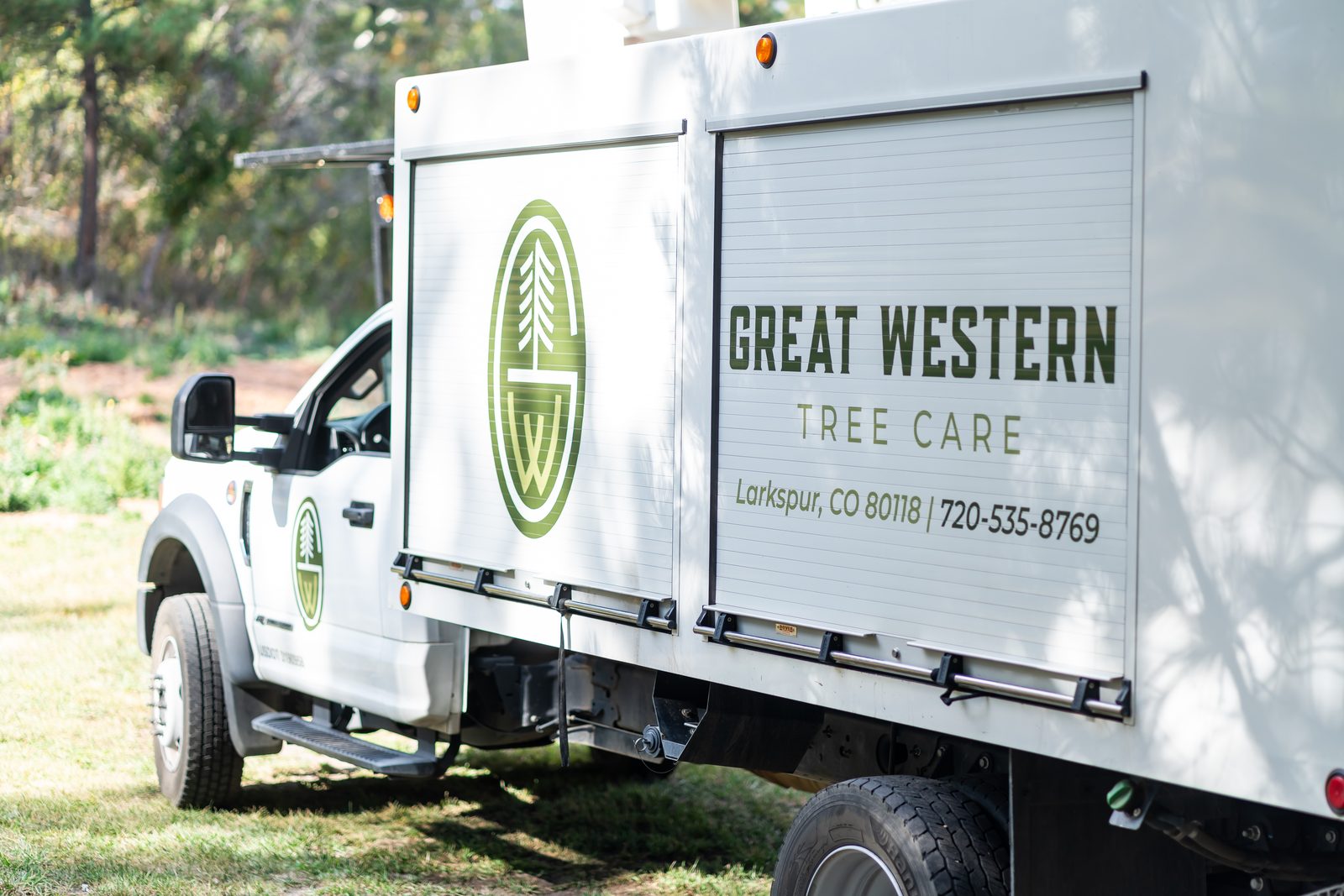
Great Western Tree Care branded service truck parked on a residential Colorado property
01On-Site Consultation
We visit your Greenwood Village property and assess species, health, structural concerns, soil type, irrigation coverage, and proximity to structures.
02Diagnosis & Proposal
We prepare a detailed scope with recommendations, pricing, and scheduling, and explain our findings before any work begins.
03Scheduling & Preparation
Work is scheduled in the right seasonal window, with HOA coordination, access routes, and property protection confirmed in advance.
04Service Execution
ISA-Certified Arborists and trained crews perform all work to ANSI A300 standards, documenting services and products applied.
05Follow-Up & Monitoring
We assess tree response at subsequent visits and adjust ongoing care programs based on observed outcomes.
Coverage

Greenwood Village Neighborhoods We Serve

Our crews work throughout Greenwood Village's residential communities, where estate-scale lots and decades-old canopy sit alongside the denser landscapes near the Denver Tech Center.

  • Greenwood Hills
  • The Preserve
  • Sundance Hills
  • Cherry Hills Farm
  • Village Green
  • Greenwood Meadows
  • Silver Spruce
  • Cottonwood Cove
  • Denver Tech Center
  • Orchard Hills
Questions

FAQs About Tree Service in Greenwood Village

When is the best time to prune mature trees in Greenwood Village?

Most large shade trees benefit from structural pruning during late winter dormancy, December through February, when branch architecture is easiest to evaluate and disease transmission risk is lowest. Spring-flowering ornamentals should be pruned right after they bloom. Deadwood and hazard limb removal can be done any time of year.

Why does my mature tree need a structural assessment if it looks healthy?

Many defects that lead to limb or stem failure — codominant leaders with included bark, internal decay, root plate movement — aren't visible from the ground and don't necessarily correlate with visible canopy health. A trained risk assessment evaluates the structural condition directly rather than relying on foliage appearance alone.

Should I treat my ash trees for emerald ash borer?

If your ash trees are in good health, preventive trunk injection is the most cost-effective option and is significantly less expensive than removal and replacement. Trees with more than about 50% canopy dieback are typically past the point where treatment is a viable investment.

Does Great Western Tree Care work with Greenwood Village HOAs?

Yes. Many Greenwood Village neighborhoods operate under HOA or covenant-based landscape guidelines. We coordinate with HOA management for approvals when needed and can provide written documentation to support requests submitted to a board.

How does the Highline Canal or Cherry Creek affect tree care on my property?

Properties bordering these corridors can have different soil moisture and drainage patterns than the rest of the yard, which affects root development and, over time, structural stability. We factor proximity to the canal or creek into our site evaluation.

What should I plant to replace a declining or removed shade tree?

Durable, drought-tolerant species that perform well in Front Range clay soils — including bur oak, Kentucky coffeetree, and hackberry — are strong choices for large-lot Greenwood Village properties looking to replace an aging or EAB-affected ash or maple.

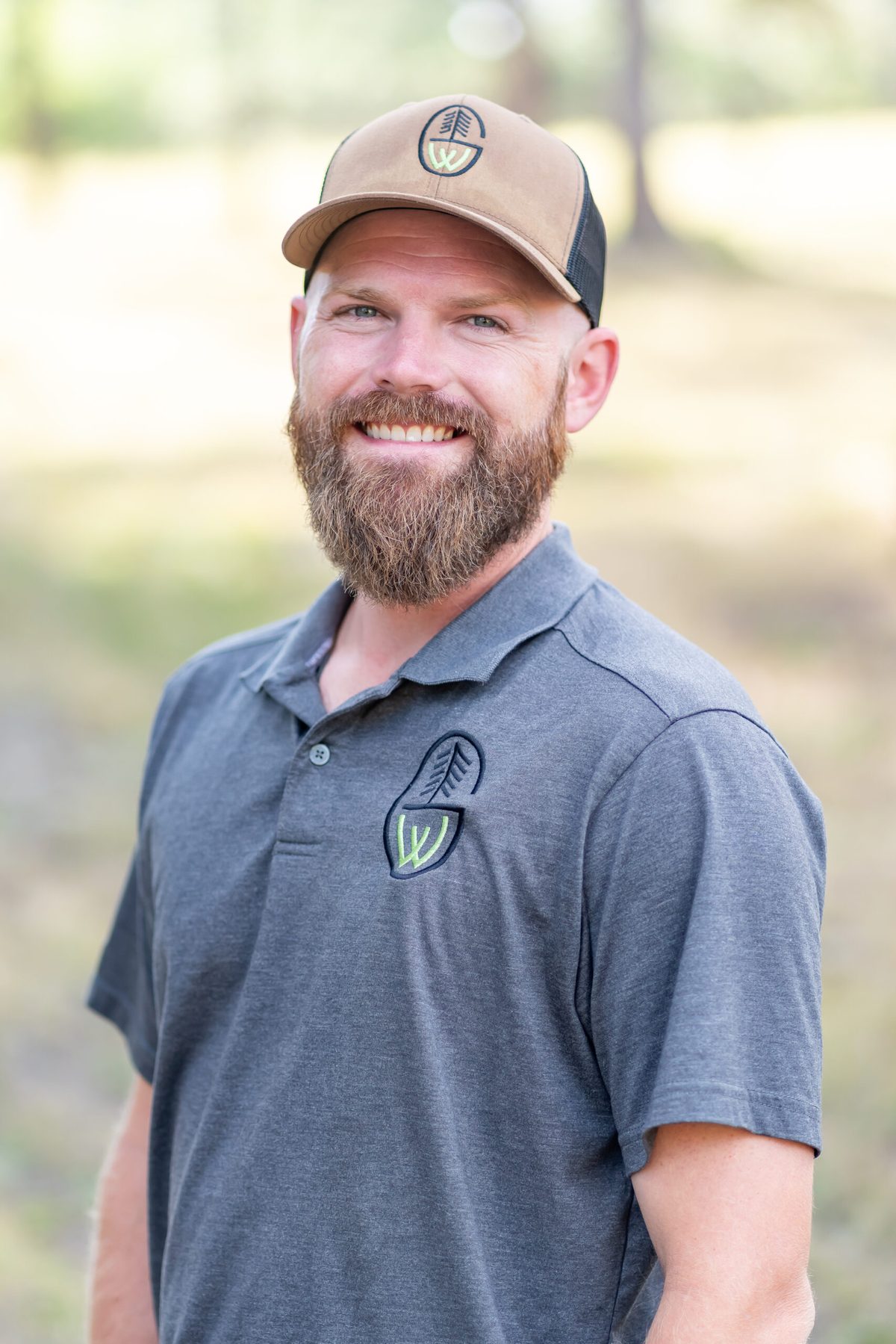
Nick Anderson, a Great Western Tree Care arborist, on a Colorado property
Nick Anderson, Sales Manager, Great Western Tree Care
Free Estimate

Need Tree Care in Greenwood Village?

Great Western Tree Care provides free on-site evaluations for residential properties across Greenwood Village. Our ISA-Certified Arborists assess your trees' health, structural condition, and specific care needs before recommending any services.

(720) 535-8769

Serving Colorado’s Front Range