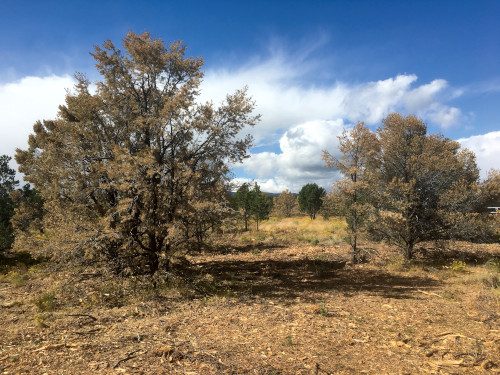
Great Western Tree Care arborist assessing tree drought stress at a Colorado property
Tree Care In Elizabeth, Colorado

Tree Service in Elizabeth, CO

Tree care built for Elbert County's high plains — windbreak management, drought-adapted plant health care, and structural pruning from ISA-Certified Arborists.

From ponderosa pine stands on acreage properties to Gambel oak thickets and shelterbelt plantings, we manage trees for the wind, dryness, and elevation of the Elizabeth area.

Serving Colorado's Front Range · (720) 535-8769

Local Introduction

Your Trusted Tree Service in Elizabeth

Great Western Tree Care provides tree care and plant health services for residential and acreage properties throughout the Elizabeth area of Elbert County. Sitting at roughly 6,500 feet on the high plains east of the Palmer Divide, Elizabeth's growing conditions differ meaningfully from the metro suburbs closer to Denver — more wind exposure, less annual precipitation, and a landscape that transitions from ponderosa pine and Gambel oak foothills into open grassland.

Many properties in and around Elizabeth sit on large lots or acreage, often with windbreak and shelterbelt plantings protecting homes, driveways, and pasture from prevailing winds, along with native ponderosa pine stands and Gambel oak understory left in place from the original landscape. Well water is common, and irrigation capacity is often more limited than in municipally served subdivisions closer to the city.

Every engagement starts with an on-site evaluation of species, site exposure, and water availability. Call (720) 535-8769 for your free Elizabeth tree care estimate.
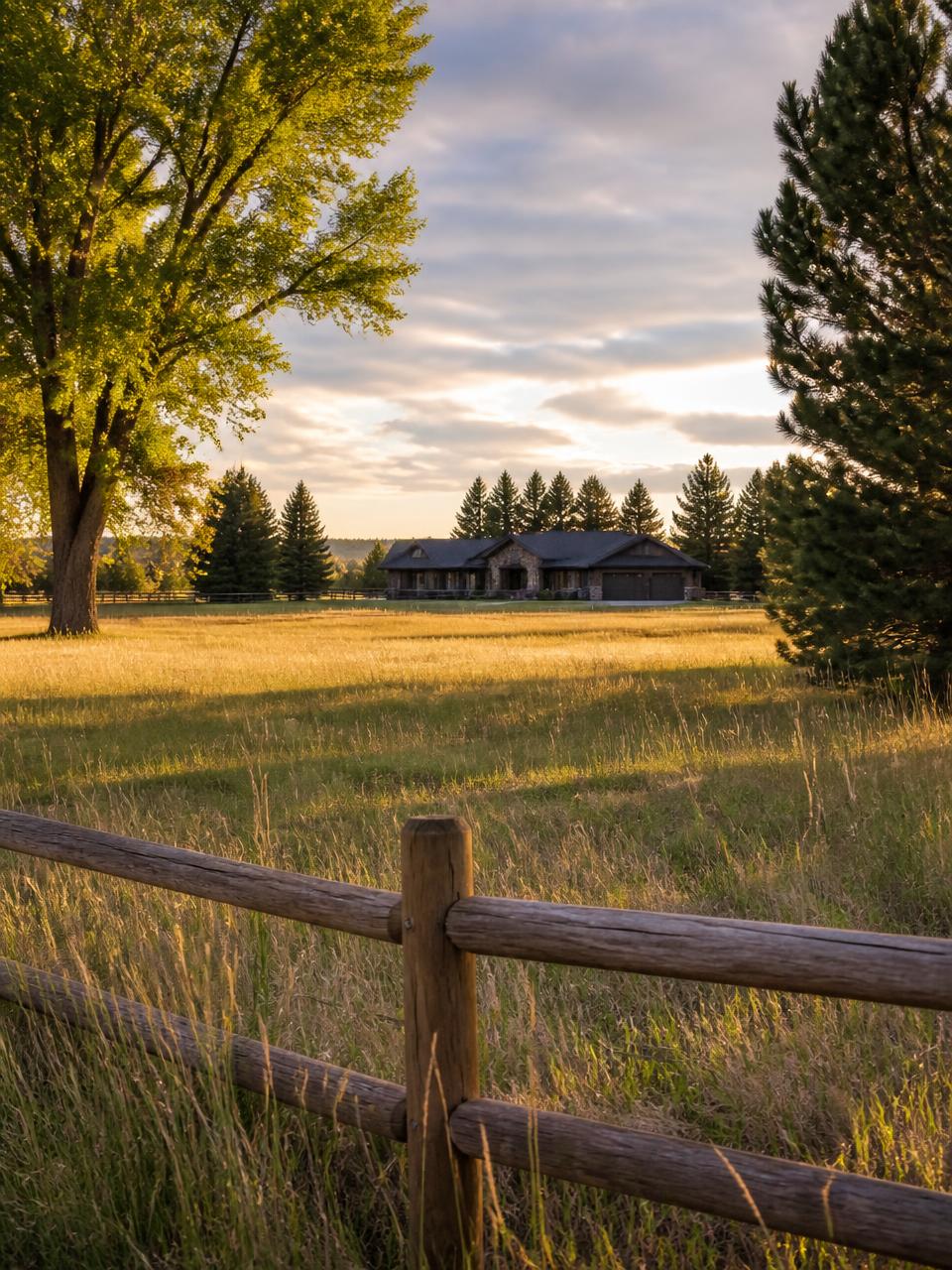
Mature cottonwoods and pine windbreak on an acreage property near Elizabeth, Colorado
Tree Services

Tree Services in Elizabeth

Elizabeth's mix of acreage properties, windbreak plantings, and native ponderosa pine and Gambel oak stands calls for a service approach tuned to wind exposure, limited irrigation, and wildland tree species rather than dense urban canopy.

01

Tree Pruning & Trimming

Ponderosa pines and shelterbelt trees on exposed Elizabeth properties develop lopsided crowns and weak leaders from persistent wind loading, and Gambel oak thickets often need selective thinning to reduce density and fire fuel load.

Our arborists perform structural pruning, crown thinning, and deadwood removal following ISA and ANSI A300 standards, with attention to how each tree's form has been shaped by prevailing wind direction.

Explore Service
02

Tree Removal

Drought-stressed, beetle-killed, or storm-damaged trees on acreage properties often stand near outbuildings, fence lines, and shelterbelt rows where controlled dismantling protects surrounding plantings.

Our crews handle removals across open acreage as well as tighter residential lots closer to town, including safe felling and sectional take-down where structures or livestock areas are nearby.

Explore Service
03

Tree Planting

At roughly 6,500 feet with strong wind exposure, low humidity, and limited water in many locations, species selection for Elizabeth properties has to prioritize drought tolerance and wind hardiness over ornamental variety.

We plan windbreak and shelterbelt plantings with proper spacing and species layering, and prepare planting sites with attention to root flare depth and an establishment watering plan suited to well-water capacity.

Explore Service
04

Tree & Pest Disease Management

Drought-stressed ponderosa pine on Elizabeth-area properties is vulnerable to Ips engraver beetle, particularly following dry years when trees can't produce enough resin to resist attack.

Programs include monitoring for early signs of beetle activity, preventive treatment on high-value trees, and sanitation removal of infested material before beetles emerge and spread to neighboring pines.

Explore Service
05

Tree Fertilization & Soil Health

Soils around Elizabeth vary from sandy, well-drained ground to heavier clay pockets, and both nutrient availability and moisture-holding capacity affect tree vigor differently across a single property.

Deep root fertilization delivers nutrients to the active root zone and supports trees carrying chronic drought stress, helping build the resilience needed to resist secondary pest and disease pressure.

Explore Service
06

Essential Watering

Many Elizabeth properties rely on private wells with limited output, which changes how supplemental tree watering has to be planned compared to municipally irrigated suburbs.

We design deep root watering programs that make efficient use of available water, prioritizing high-value trees and newly planted windbreaks during drought periods and dry winters.

Explore Service
07

Tree Risk Assessment

Wind-exposed ponderosa pines with root or trunk defects present elevated failure risk on open acreage, especially near homes, driveways, and outbuildings.

Our TRAQ-qualified arborists evaluate structural condition and assign standardized risk ratings, with particular attention to trees that have experienced repeated wind loading or beetle pressure.

Explore Service
08

Tree Cabling & Bracing

Mature shelterbelt and shade trees with structural weaknesses can often be preserved rather than removed, which matters where replacing an established windbreak tree means years of lost wind protection.

We install cabling and bracing systems suited to the tree's structural defect and the wind loads typical of an exposed high-plains site.

Explore Service
09

Lawn Care

Where Elizabeth properties maintain irrigated turf, our programs address drought stress, wind desiccation, and the compaction and thin-soil challenges common on the high plains.

Services include aeration, overseeding, and fertilization programs calibrated to the property's water availability.

Explore Service
Local Context

Elizabeth's Tree Care Landscape

Elizabeth sits in transition country — the ponderosa pine and Gambel oak foothills of the Palmer Divide give way to open high plains, and the tree care needs on any given property depend heavily on where it falls along that gradient.

Acreage & Rural Residential Properties

Large-lot and acreage properties are common around Elizabeth, often with a mix of native ponderosa pine and Gambel oak left standing alongside planted windbreaks and ornamental trees closer to the house.

These properties typically rely on well water, which shapes how much supplemental irrigation is realistic for tree health during dry stretches.

Windbreak & Shelterbelt Plantings

Rows of evergreens and hardy deciduous trees planted as windbreaks protect homes, driveways, and livestock areas from the persistent winds that sweep across the high plains east of the Palmer Divide.

These plantings need structural pruning and health monitoring like any other tree, but their spacing and orientation also affect how well they continue to function as wind protection over time.

Ponderosa Pine & Gambel Oak Transition

Native stands of ponderosa pine with a Gambel oak understory occupy the higher, rockier ground around Elizabeth, carrying both aesthetic and wildfire fuel-load considerations.

Selective thinning of oak thickets and pine density management reduce fire risk while improving the health and resilience of the remaining trees.

Town & In-Town Residential Lots

Closer to the town center, smaller residential lots carry a more typical mix of shade and ornamental trees, though wind exposure and limited precipitation still shape their care needs relative to metro-area suburbs.

Species

Trees Commonly Encountered Around Elizabeth

Trees commonly encountered on Elizabeth-area properties include the following. Site conditions — elevation, wind exposure, and water availability — vary enough from lot to lot that species performance is always confirmed on site.

  • Ponderosa Pine

    Dominant native conifer on higher ground; vulnerable to Ips beetle during drought.

  • Gambel Oak

    Native understory species, often forms dense thickets that benefit from selective thinning.

  • Colorado Blue Spruce

    Common windbreak and ornamental planting; needs supplemental water in exposed sites.

  • Rocky Mountain Juniper

    Drought- and wind-hardy native evergreen, frequently used in windbreak rows.

  • Austrian Pine

    Planted windbreak conifer; monitor for Ips and other bark beetle pressure.

  • Cottonwood

    Found along drainages; large mature specimens need deadwood and hazard limb management.

  • Honeylocust

    Drought-tolerant shade tree used in town and on larger lots for filtered shade.

  • Bur Oak

    A durable, drought-adapted shade tree well suited to Elizabeth's dry conditions.

  • Kentucky Coffeetree

    Tough, drought-tolerant shade species that tolerates high-plains exposure well.

  • Siberian Elm

    Common older windbreak tree; weak-wooded and prone to storm and wind damage.

  • Green Ash

    Present in older plantings; watch for emerald ash borer as it continues to spread regionally.

  • Apple & Fruiting Trees

    Found on homestead and acreage properties; susceptible to fire blight in wet spring conditions.

Species identification and condition are confirmed on site — we don't diagnose Elizabeth-area trees from a list.

Local Conditions

Common Tree Care Challenges Around Elizabeth

  1. 01

    Wind Exposure

    Open high-plains terrain around Elizabeth means sustained winds that shape tree form, increase moisture loss, and raise the odds of limb failure or uprooting in trees with existing structural defects.

    Windbreak trees bear the brunt of this exposure and need periodic structural pruning to maintain sound form over their working lifespan.

  2. 02

    Drought & Ips Beetle Pressure

    Extended dry periods stress ponderosa pine's ability to produce the resin needed to repel Ips engraver beetles, and beetle populations build quickly in drought years, often starting in slash piles or recently downed wood before spreading to standing trees.

    Removing and properly disposing of beetle-killed material promptly reduces the source population available to attack neighboring pines.

  3. 03

    Limited Water & Well Capacity

    Many Elizabeth-area properties depend on private wells, and well output can constrain how much supplemental irrigation is realistic for trees during hot, dry stretches.

    Efficient deep root watering focused on the most valuable and vulnerable trees makes better use of limited water than broad, shallow irrigation.

  4. 04

    Wildfire Fuel Load in Oak & Pine Stands

    Dense Gambel oak thickets and overcrowded ponderosa pine stands carry higher wildfire risk, particularly on properties bordering open grassland or wooded parcels.

    Thinning and pruning to increase spacing and remove ladder fuels reduces fire risk while improving the health of remaining trees.

  5. 05

    Winter Desiccation

    High elevation, low humidity, and strong winter winds combine to dry out evergreen foliage and thin-barked young trees even when soil moisture would otherwise be adequate.

    Windbreak conifers and newly planted trees in exposed locations are most vulnerable to this kind of winter moisture loss.

  6. 06

    Aging Windbreak Rows

    Many shelterbelt plantings around Elizabeth were established decades ago and are now reaching maturity, with some trees declining or dying and leaving gaps in wind protection.

    Planning phased replacement plantings within an aging windbreak preserves wind protection continuity rather than losing it all at once.

Plant Health

Pest & Disease Pressures Around Elizabeth

Trees around Elizabeth face a set of pressures shaped by drought, elevation, and the region's mix of native conifer and hardwood species.

Ips Engraver Beetle

The most significant pest pressure on Elizabeth-area ponderosa pine, particularly in drought years. Prompt removal of infested and downed material limits the beetle population available to attack healthy trees nearby.

Mountain Pine Beetle

Present in Front Range ponderosa pine populations at various levels over time; drought-stressed and densely stocked stands carry higher risk. Monitoring and stand density management are the most effective long-term defenses.

Fire Blight

Affects apple and other fruiting or ornamental trees on homestead and acreage properties, especially following warm, wet weather during bloom. Sanitation pruning and disinfection practice limit spread.

Emerald Ash Borer

Confirmed in the Denver metro area and expanding regionally; ash trees planted in older Elizabeth-area landscapes warrant monitoring even though pressure here is currently lighter than in denser metro suburbs.

Full diagnostic and treatment detail lives on our Tree & Pest Disease Management page — this section covers how those pressures typically show up on Elizabeth-area properties.

Regulatory

Tree Care, HOAs & Local Requirements

Elbert County Properties

Most Elizabeth-area properties sit in unincorporated Elbert County, where tree removal and pruning on private land generally does not require a county permit, though wildfire mitigation and defensible space work may be subject to county guidance in some areas.

Acreage & Agricultural Parcels

Larger acreage and agricultural parcels typically have more flexibility for tree work than platted residential subdivisions, but property lines, easements, and shared windbreak plantings along boundary lines are worth confirming before major removal work.

HOA & Covenant Communities

Some newer residential developments around Elizabeth are governed by HOAs or covenant communities with their own landscaping and tree requirements, which can include restrictions on removal or requirements for replacement planting.

Defensible Space & Wildfire Mitigation

Properties bordering pine and oak-covered terrain benefit from defensible space practices around structures, including thinning dense vegetation and maintaining separation between tree canopies and buildings.

Our team can help identify defensible space opportunities as part of a broader tree health and risk assessment.

Requirements may vary by property, subdivision, and community. Homeowners should confirm current county or HOA rules where applicable — this information is provided as general guidance, not legal advice.

Our Approach

Diagnose First. Recommend Second.

ISA-Certified Arborists on Staff
3ISA-Certified Arborists on Staff
CDA Plant Health Care Qualified Supervisors
3CDA Plant Health Care Qualified Supervisors
TRAQ-Certified Professionals
2TRAQ-Certified Professionals
Certified Treecare Safety Professional
1Certified Treecare Safety Professional
Family-Owned, Headquartered in Larkspur, Colorado
2018Family-Owned, Headquartered in Larkspur, Colorado

Before we recommend anything on an Elizabeth-area property, we evaluate species, tree age, structure, soil, water availability, pest and disease pressure, site conditions, surrounding structures, and the long-term value of the tree. The recommendation follows the diagnosis — never the other way around.

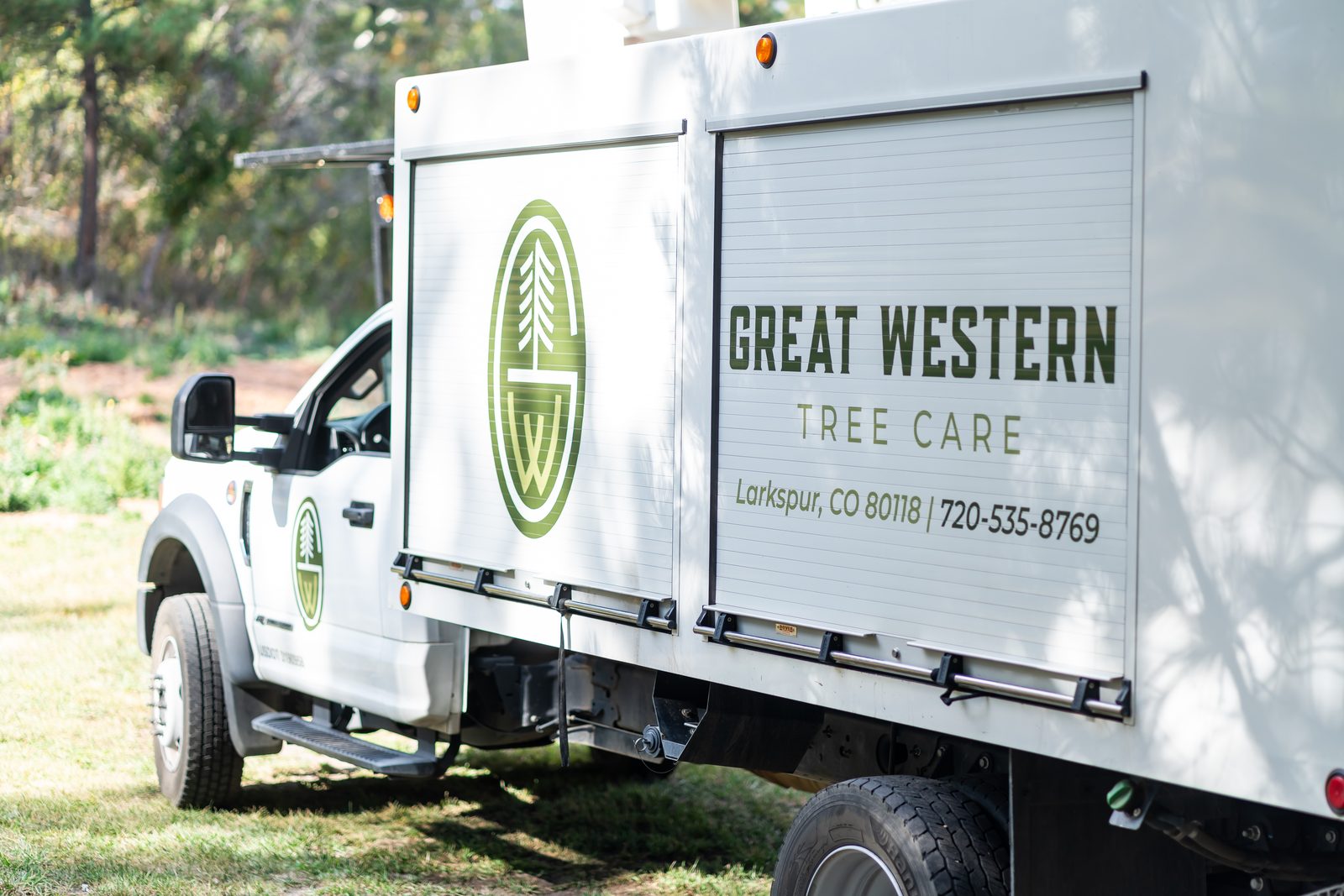
Great Western Tree Care branded service truck parked on a residential Colorado property
01On-Site Consultation
We visit your Elizabeth-area property and assess species, health, structural concerns, soil type, well or irrigation capacity, and wind exposure.
02Diagnosis & Proposal
We prepare a detailed scope with recommendations, pricing, and scheduling, and explain our findings before any work begins.
03Scheduling & Preparation
Work is scheduled in the right seasonal window, with access routes, equipment staging for acreage properties, and utility clearances confirmed in advance.
04Service Execution
ISA-Certified Arborists and trained crews perform all work to ANSI A300 standards, documenting services and products applied.
05Follow-Up & Monitoring
We assess tree response at subsequent visits and adjust ongoing care programs based on observed outcomes, including drought and beetle pressure monitoring.
Questions

FAQs About Tree Service in Elizabeth

What makes tree care around Elizabeth different from the Denver metro suburbs?

Elizabeth sits at roughly 6,500 feet on the high plains east of the Palmer Divide, with more wind exposure, lower annual precipitation, and many properties relying on well water rather than municipal irrigation. Care programs are built around drought resilience, wind-hardy species, and efficient use of limited water rather than the denser urban canopy management common closer to Denver.

How do you protect ponderosa pines from Ips beetle during drought?

The most effective defense is keeping trees as vigorous as possible through drought periods with efficient supplemental watering, combined with prompt removal and disposal of infested, downed, or freshly cut pine material that could otherwise host developing beetle broods. Preventive treatment can protect high-value trees during periods of elevated regional beetle activity.

Do you work with well-water-only properties on watering programs?

Yes. We design deep root watering plans around a property's actual water availability, prioritizing the trees that matter most and the periods when drought stress risk is highest, rather than assuming municipal-level water access.

Can you help maintain or replace an aging windbreak?

Yes. We assess the health and structure of existing windbreak and shelterbelt trees, recommend pruning or removal where needed, and can plan phased replacement plantings so wind protection isn't lost all at once when older trees decline.

Do acreage properties near Elizabeth need defensible space around structures?

Properties bordering ponderosa pine and Gambel oak terrain benefit from maintaining separation between tree canopies and structures and thinning dense understory vegetation. We can identify defensible space opportunities as part of a broader tree health assessment.

What tree species hold up best on high-plains Elizabeth properties?

Drought- and wind-adapted species perform best, including bur oak, Kentucky coffeetree, hackberry, and honeylocust for shade, along with ponderosa pine, Rocky Mountain juniper, and Austrian pine for windbreak and evergreen screening. Native ponderosa pine and Gambel oak already present on a property are often worth preserving and managing rather than replacing.

Nick Anderson, a Great Western Tree Care arborist, on a Colorado property
Nick Anderson, Sales Manager, Great Western Tree Care
Free Estimate

Need Tree Care in Elizabeth?

Great Western Tree Care provides free on-site evaluations for residential and acreage properties around Elizabeth. Our ISA-Certified Arborists assess your trees' health, structural condition, and specific care needs before recommending any services.

(720) 535-8769

Serving Colorado’s Front Range