Identify what you're seeing.
Start from the pest, the disease, the plant or simply what the problem looks like. Covers trees, shrubs and lawn.
Symptom filters narrow the library. They are a starting point for reading, not a diagnosis — several problems can produce the same appearance.
6 entries
- 01
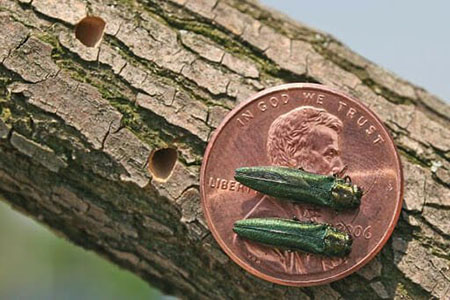
Emerald Ash Borer
Agrilus planipennisInsect · Trees · Fatal to untreated ash — 1.3 billion ash trees at risk in Colorado
The most destructive tree pest in history. When populations become elevated in an area, there is 100% fatality of ash trees that have not been treated.
- 02
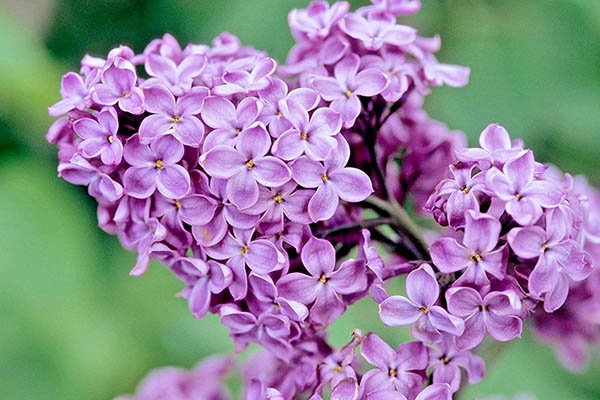
Lilac / Ash Borer
Insect · Shrubs, Trees · Stem loss on stressed lilac and ash
A clearwing borer that kills individual stems on lilac and ash, most active late spring through early summer and most damaging on drought- or winter-stressed plants.
- 03
Powdery Mildew
Blumeria graminis and related fungiDisease · Shrubs, Lawn & Turf · Usually cosmetic — a sign of shade, not infection pressure
A white, powdery fungal coating on grass blades and shrub foliage. It rarely kills turf and is usually a sign of too much shade, poor airflow, or prolonged moisture rather than a serious infection.
- 04
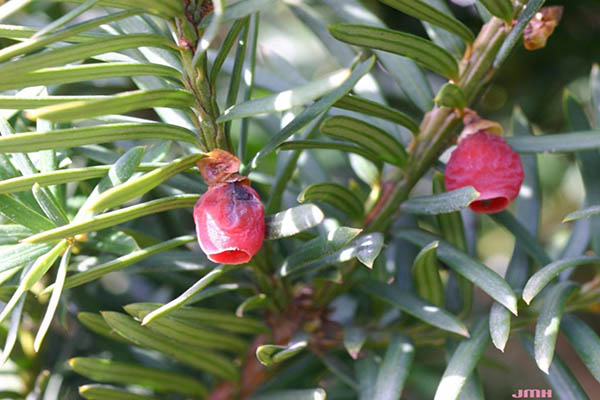
Winter Burn & Desiccation
Environmental · Shrubs, Trees · Most common evergreen problem in Colorado
Orange, bronze or brown foliage on evergreens caused by winter moisture loss — most common on south and west exposures, and almost entirely preventable with winter watering.
- 05
Necrotic Ring Spot
Ophiosphaerella korraeDisease · Lawn & Turf · One of Colorado's most destructive lawn diseases
A fungal turf disease of Kentucky bluegrass that causes rings, dead patches, frog-eye patterns and thinning that worsens with drought, heat and excessive thatch. Usually appears late spring through fall.
- 06
Turf Mites
Brown wheat mite, Banks grass mite, clover mite and related speciesInsect · Lawn & Turf · Extremely common winter turf damage in Colorado
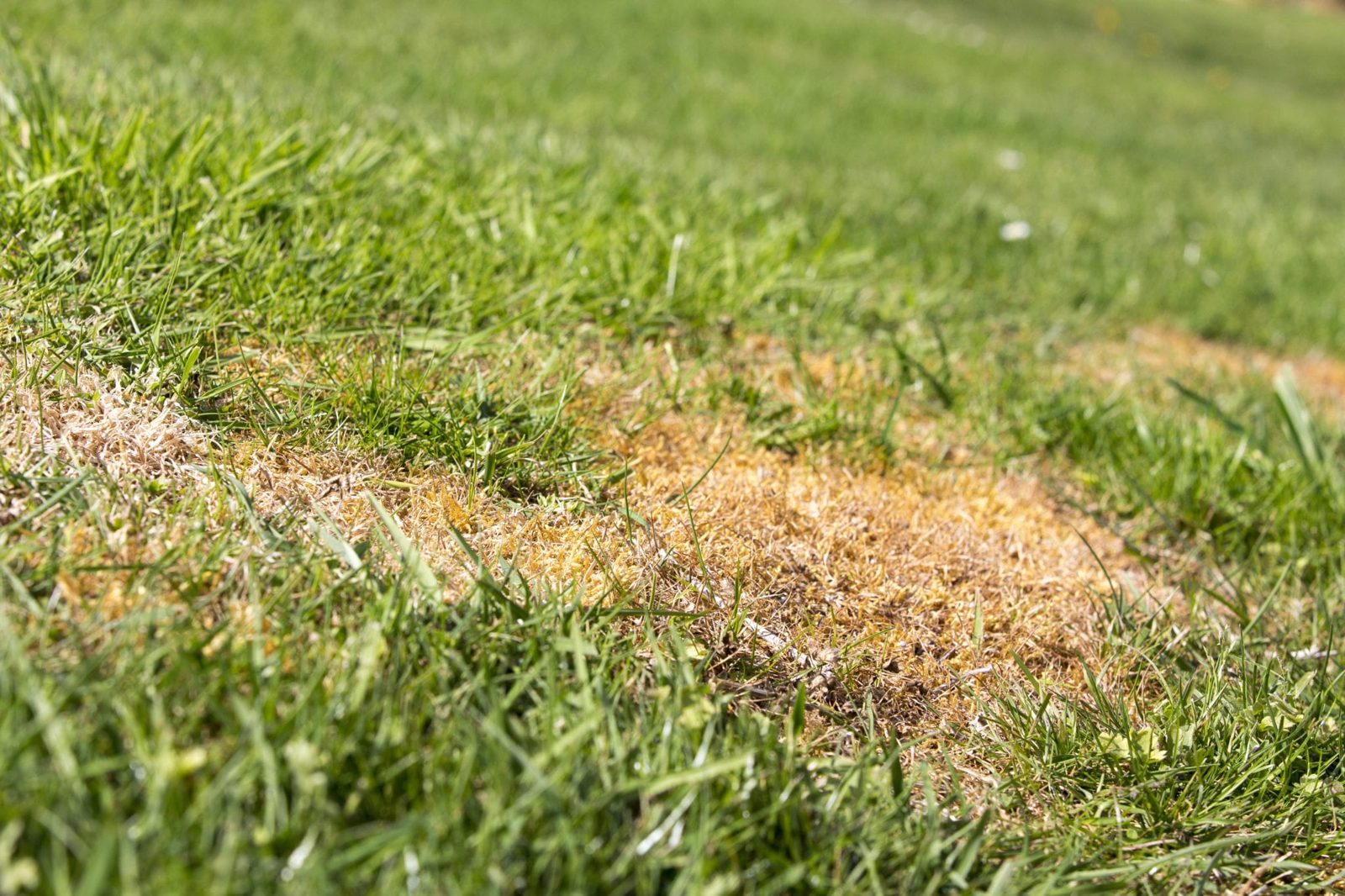
Tiny, sap-feeding arachnids that cause dry, straw-colored patches, usually during late winter to early spring when grass is stressed and moisture is low — especially on south- and west-facing slopes.
Colorado's trees, shrubs, and lawns face a wide range of pests and diseases driven by the state's unique climate, variable moisture, temperature extremes, and growing urban stress, making early identification, proper care, and seasonally timed treatments essential to preserving healthy, resilient landscapes year-round.
Tree Pests & Diseases
Colorado trees face a unique mix of pests and diseases driven by the state's dry climate, high elevation, temperature swings, and periodic drought stress. Insects such as bark beetles, emerald ash borer, aphids, and spider mites often target trees that are already weakened by lack of water or compacted soils, while fungal diseases like cytospora canker, fire blight, and various needle casts take advantage of environmental stress and poor growing conditions.
Learn MoreShrub Pests & Diseases
Colorado's shrubs face a unique set of pest and disease pressures shaped by the state's high elevation, intense sun, alkaline soils, and wide temperature swings. Stress from drought, winter desiccation, and late spring freezes often weakens shrubs, making them more vulnerable to insects and pathogens that might otherwise be secondary concerns. Many issues don't appear overnight; they build over seasons, gradually reducing vigor, thinning foliage, and increasing susceptibility to more serious decline.
Learn MoreLawn Pests & Fungus
Colorado lawns contend with a range of pests and diseases influenced by the state's dry climate, alkaline soils, intense sun, and dramatic temperature shifts. Insects such as white grubs, billbugs, sod webworms, and chinch bugs can damage turf by feeding on roots or blades, often becoming most active when lawns are stressed by drought or improper watering. Lawn diseases — including necrotic ring spot, dollar spot, brown patch, and snow mold — are frequently tied to moisture imbalance, compacted soils, and poor airflow.
Learn MoreProblems we see most
Emerald Ash Borer
Agrilus planipennisThe most destructive tree pest in history. When populations become elevated in an area, there is 100% fatality of ash trees that have not been treated.
Necrotic Ring Spot
Ophiosphaerella korraeA fungal turf disease of Kentucky bluegrass that causes rings, dead patches, frog-eye patterns and thinning that worsens with drought, heat and excessive thatch. Usually appears late spring through fall.
Browse by problem family
Tree, shrub and lawn problems are tracked separately — the terminology and management context are not interchangeable.
Lawn & Turf
17 turf problem profiles — insects, fungus and environmental stress, with seasonal activity and treatment timing.
Open Lawn & TurfPlant Health Profiles
16 landscape plant profiles covering the pests, diseases and disorders diagnosed on Front Range shrubs and evergreens.
Open Plant HealthTree Diseases
Shrub Pests & Diseases
Lawn Pests & Fungus
Related Species
- Baby Blue Eyes SpruceTree
- Colorado Blue SpruceTree
- Concolor FirTree
- Hoopsii SpruceTree
- Pinyon PineTree
- Ponderosa PineTree
- Honeycrisp AppleTree
- Newport PlumTree
- Chokecherry Canada RedTree
- Indian Magic CrabappleTree
- Japanese LilacTree
- Prarifire CrabappleTree
- Radiant Red CrabappleTree
- RedbudTree
- Accolade ElmTree
- Amur - Ginnala Flame MapleTree
- Armstrong MapleTree
- Autumn Blaze MapleTree
- Autumn Purple AshTree
- Bur OakTree
- Crimson Sentry MapleTree
- Emerald Queen MapleTree
- Flashfire MapleTree
- Frontier ElmTree
- Green Mountain MapleTree
- Highland Park MapleTree
- John Pair Caddo MapleTree
- Northern Red OakTree
- October Glory MapleTree
- Parkway MapleTree
- Plains CottonwoodTree
- Princeton ElmTree
- Rocky Mountain Glow MapleTree
- Shumard OakTree
- Sienna Glen MapleTree
- Slate Street MapleTree
- Swamp White OakTree
- Tatarian MapleTree
- Triumph ElmTree
- Valley Forge ElmTree
- Royal Raindrops CrabappleTree
- Spring Snow CrabappleTree
- Thunderchild CrabappleTree
- Autumn Blaze PearTree
- Chanticleer PearTree
- Cleveland PearTree
- Russian HawthornTree
- Thornless Cockspur HawthornTree
- Toba HawthornTree
- Winter King HawthornTree
- Serviceberry TreeTree
- Common LilacShrub
- Panicle HydrangeaShrub
- Anglo Japanese YewShrub
- BarberryShrub
- Burning BushShrub
- Cheyenne PrivetShrub
- Common BoxwoodShrub
- Common PrivetShrub
- Diablo NinebarkShrub
- Golden CurrantShrub
- Shrubby PotentillaShrub
- SpireaShrub
- Spreading EuonymusShrub
- ViburnumShrub
Disease Deep Dives
Related Care Guides
- Essential Watering for Colorado TreesWatering
- Tree Pruning BasicsPruning
- Front Range Shrub Care CalendarSeasonal Care
- Planting Trees in Colorado SoilPlanting
- Tree Fertilization and Soil NutritionFertilization
- Structural Defects and Tree RiskTree Risk
- Tree Support Systems: Cabling, Bracing and GuyingStructural Care
Related Services
Not sure what you're looking at?
A Great Western arborist can diagnose the problem in person before anything is treated.