Common Boxwood
Buxus sempervirens
Boxwood provides year-round evergreen structure and formal geometry, but it is one of the more site-sensitive shrubs in Colorado — winter exposure and soil moisture determine success.
Quick specifications
- Mature Size
- 4–6 ft tall | 4–6 ft wide
- Growth Rate
- Slow
- Form
- Dense, rounded evergreen shrub
- Foliage
- Small, dark green leaves
- Sun
- Partial shade preferred; protect from winter sun and wind
- Water
- Winter watering is critical during dry periods
- Soil
- Requires excellent drainage — avoid heavy, wet clay soils
- Lifespan
- 50+ years with proper care
- Hardiness
- Performs best in protected Front Range microclimates
- Native Status
- Non-native
Overview
Common boxwood is a slow-growing broadleaf evergreen valued for fine texture and its response to shearing.
In Colorado it performs best on north and east exposures where winter sun and reflected heat are limited.
Identification
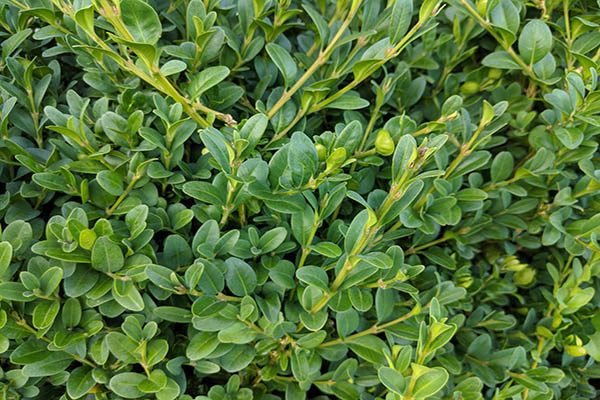
Leaf detail
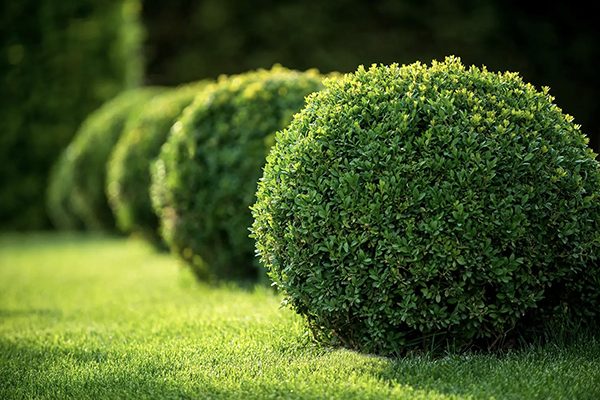
Mature form
Colorado Suitability
Provides rare evergreen structure at low height.
Tolerates repeated shearing for formal designs.
Best used in protected microclimates rather than open, exposed beds.
Planting Considerations
- Avoid south and west exposures with reflected building heat.
- Plant slightly high in heavy clay to protect the crown.
- Mulch to keep root zones cool and evenly moist.
Care
- Winter water monthly during dry, warm spells — this is the single most important boxwood practice here.
- Consider burlap screening on newly planted, exposed shrubs.
Pruning
- Shear in late spring after new growth hardens.
- Thin the interior occasionally so light reaches inner foliage.
- Avoid late-summer pruning that pushes tender growth into fall.
Best Use Scenarios
- Formal foundation plantings
- Hedges and borders
- Protected courtyards and entryways
- Landscapes needing year-round evergreen structure
Common Problems
- Winter burn and bronzing on exposed foliage.
- Root rot in saturated clay soils.
- Boxwood leafminer and mites on stressed plants.
- Chlorosis in highly alkaline soils.
Related Diseases
Related Shrubs
Related Services
When you want a professional opinion
The Root exists to help you understand your landscape. When a tree needs hands-on evaluation, a Great Western arborist can look at it in person.