Cheyenne Privet
Ligustrum vulgare 'Cheyenne'
Cheyenne privet was selected for high plains conditions and is the most cold-tolerant privet used along the Front Range. It makes a dense, fast-establishing hedge in exposed sites.
Quick specifications
- Mature Size
- 8–12 ft tall | 6–10 ft wide
- Growth Rate
- Fast
- Form
- Upright to oval deciduous shrub
- Foliage
- Green leaves with good density
- Sun
- Full sun to partial shade
- Water
- Moderate water needs once established
- Soil
- Adaptable to a wide range of soils if well-drained
- Bloom
- Small white blooms (early summer)
- Lifespan
- 30–50+ years under Front Range conditions
- Hardiness
- Excellent cold hardiness for Colorado winters
- Native Status
- Non-native
Overview
Cheyenne privet is an upright, densely branched deciduous shrub developed for the northern plains.
It is most often used as a screening hedge where a formal, shearable, fast-filling plant is needed.
Identification
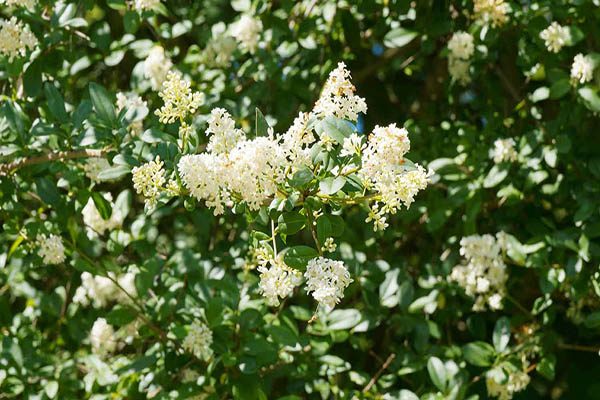
Flower
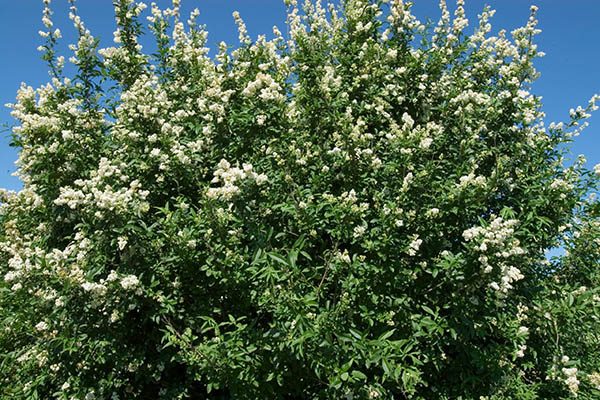
Mature form
Colorado Suitability
Superior winter hardiness compared with standard privet.
Tolerates wind and exposure on open lots.
Handles alkaline soils and urban conditions.
Planting Considerations
- Space 3–4 ft apart for a continuous hedge.
- Water regularly through the establishment period.
- Full sun produces the densest growth.
Care
- Reduce irrigation after establishment to avoid soft, disease-prone growth.
- Continue winter watering on exposed hedges.
Pruning
- Shear two to three times per growing season to maintain a formal hedge.
- Keep the hedge slightly wider at the base so lower growth gets light.
- Renewal-prune older hedges in late winter.
Best Use Scenarios
- Hedges and privacy screens
- Windbreaks and property boundaries
- Commercial and residential landscapes
- Sites needing fast, durable screening
Common Problems
- Winter dieback on tips in severe seasons.
- Leaf spot in wet, crowded conditions.
- Base thinning when hedges are sheared narrower at the bottom than the top.
Related Diseases
Related Shrubs
Related Services
When you want a professional opinion
The Root exists to help you understand your landscape. When a tree needs hands-on evaluation, a Great Western arborist can look at it in person.