
Toba Hawthorn
Crataegus × mordenensis 'Toba'
Toba Hawthorn is a cold-hardy ornamental tree valued for its fragrant, double flowers that open white and age to pink, its picturesque twisted trunk and branching, and its tough constitution in Front Range conditions.
Quick specifications
- Mature Height
- 15–20 ft
- Mature Spread
- 15–20 ft
- Growth Rate
- Slow to moderate
- Sun
- Full sun
- Water
- Moderate; drought-tolerant once established
- Hardiness
- USDA Zone 3–7; very cold-hardy
- Genus
- Hawthorn (Crataegus)
Identification
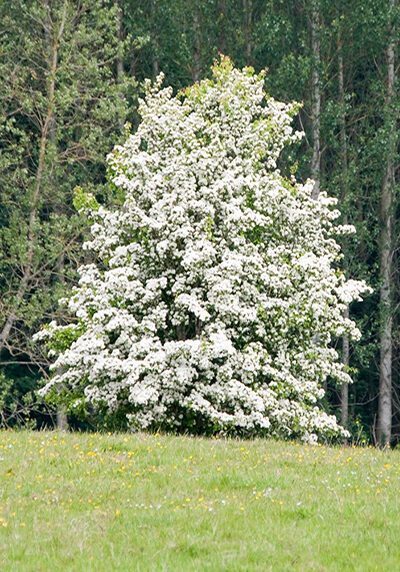
In the field
General hawthorn reference image from the GWTC photo library; not a verified photo of Toba Hawthorn.
Overview
Toba Hawthorn is a hybrid cultivar prized for its fragrant, double flowers that open white and gradually fade to soft pink, creating a two-tone bloom effect across the canopy each spring. Its trunk and branches develop an attractive twisted, gnarled character with age that adds winter interest.
Bred in Manitoba, Canada, Toba is exceptionally cold-hardy, making it a dependable choice for higher-elevation Front Range and foothills properties where late frosts and harsh winters can stress less hardy ornamentals.
Key Characteristics
- Mature Size: 15–20 ft tall | 15–20 ft wide
- Growth Rate: Slow to moderate
- Form: Rounded, dense canopy with twisted, picturesque branching
- Flower Color: Double, white opening to pink, fragrant
- Fruit: Small red pome, moderate persistence
- Cold Hardiness: Exceptional — rated to Zone 3
Colorado Growing Conditions
Excellent cold hardiness suits foothills and higher-elevation Front Range sites
Fragrant double flowers add distinct seasonal character to residential landscapes
Twisted branch structure provides visual interest through winter
Tolerates clay and alkaline soils typical of Douglas County
Planting Considerations
- Plant in full sun for best flowering
- Water regularly during establishment; reduce frequency once mature
- Thorny branching should be sited away from high-traffic areas
- Minimal pruning needed beyond removing crossing or damaged branches
Common Problems
- Thorns present — site thoughtfully around walkways
- Cedar-hawthorn rust and fire blight possible in wet spring years
- Occasional aphid activity on new growth
Best Use Scenarios
- Higher-elevation and foothills properties needing extra cold hardiness
- Ornamental accent with fragrant spring bloom
- Winter-interest plantings featuring branch structure
- Wildlife and bird-friendly landscapes
Related Services
Related Resources
When you want a professional opinion
The Root exists to help you understand your landscape. When a tree needs hands-on evaluation, a Great Western arborist can look at it in person.