
Russian Hawthorn
Crataegus ambigua
Russian Hawthorn is a small, exceptionally tough ornamental tree known for outstanding drought and alkaline-soil tolerance. Its fine-textured, deeply lobed foliage, white spring flowers, and small red fruit make it well suited to dry, exposed Front Range sites.
Quick specifications
- Mature Height
- 15–20 ft
- Mature Spread
- 15–20 ft
- Growth Rate
- Slow to moderate
- Sun
- Full sun
- Water
- Low to moderate; exceptionally drought-tolerant once established
- Hardiness
- USDA Zone 4–7
- Genus
- Hawthorn (Crataegus)
Identification
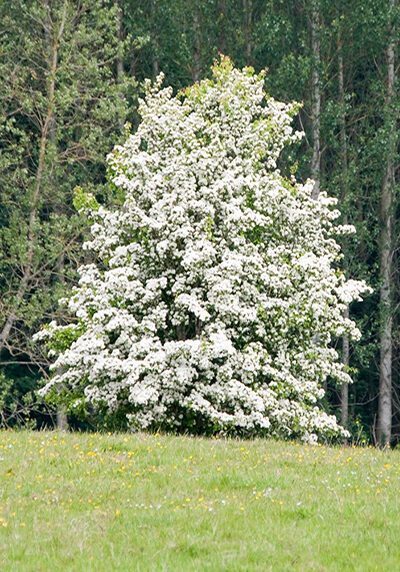
In the field
General hawthorn reference image from the GWTC photo library; not a verified photo of Russian Hawthorn.
Overview
Russian Hawthorn is one of the most drought-tolerant small ornamental trees available for Front Range landscapes, native to dry steppe regions of Central Asia with growing conditions that closely mirror Colorado's semi-arid climate and alkaline clay soils.
Its fine, deeply cut foliage gives it a softer texture than many hawthorns, and its small stature makes it well suited to compact yards, xeric landscapes, and exposed sites where water is limited.
Key Characteristics
- Mature Size: 15–20 ft tall | 15–20 ft wide
- Growth Rate: Slow to moderate
- Form: Rounded, dense, twiggy canopy
- Foliage: Fine-textured, deeply lobed, gray-green
- Flower Color: White, spring bloom
- Fruit: Small red pome, persists into fall
- Drought Tolerance: Exceptional
Colorado Growing Conditions
Among the most drought- and alkaline-soil-tolerant ornamental trees available for the Front Range
Small mature size fits xeric and water-wise residential landscapes
Handles wind exposure and reflected heat from hardscape well
Low water requirements once established make it a strong fit for Douglas County's semi-arid conditions
Planting Considerations
- Plant in full sun in well-drained soil
- Minimal supplemental irrigation needed once established
- Thorny branching should be sited away from high-traffic walkways
- Tolerates poor, compacted, or alkaline soils better than most ornamentals
Common Problems
- Thorns present on branches — site away from foot traffic
- Occasional fire blight or cedar-hawthorn rust in wet spring years
- Fruit drop can create minor litter near hardscape
Best Use Scenarios
- Xeric and water-wise landscapes
- Small residential yards and courtyards
- Exposed, wind-prone, or reflected-heat sites
- Wildlife and bird-friendly plantings
Related Services
Related Resources
When you want a professional opinion
The Root exists to help you understand your landscape. When a tree needs hands-on evaluation, a Great Western arborist can look at it in person.