
Winter King Hawthorn
Crataegus viridis 'Winter King'
Winter King Hawthorn is widely regarded as one of the best ornamental hawthorns available, prized for its outstanding persistent orange-red fruit, silvery bark, and good resistance to cedar-hawthorn rust compared to other hawthorn cultivars.
Quick specifications
- Mature Height
- 20–30 ft
- Mature Spread
- 20–25 ft
- Growth Rate
- Moderate
- Sun
- Full sun
- Water
- Moderate; drought-tolerant once established
- Hardiness
- USDA Zone 4–7
- Genus
- Hawthorn (Crataegus)
Identification
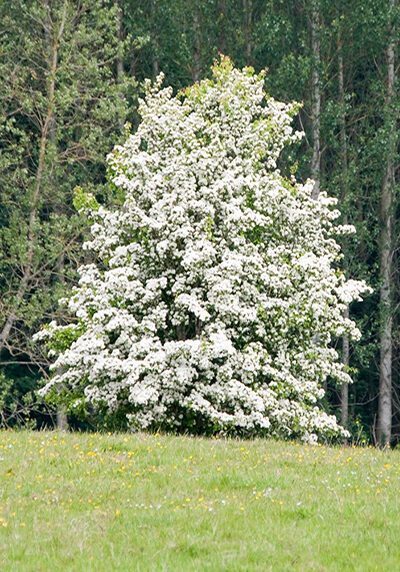
In the field
General hawthorn reference image from the GWTC photo library; not a verified photo of Winter King Hawthorn.
Overview
Winter King Hawthorn is considered one of the top ornamental hawthorn selections for its heavy crop of bright orange-red fruit that persists well into winter, providing striking color against snow and a reliable food source for birds long after most ornamentals have dropped their fruit.
It also offers attractive exfoliating, silvery-gray bark and a vase-shaped, spreading form, and shows notably better resistance to cedar-hawthorn rust than many other hawthorn cultivars — a meaningful advantage in Colorado, where junipers (the alternate host for the rust) are common in Front Range landscapes.
Key Characteristics
- Mature Size: 20–30 ft tall | 20–25 ft wide
- Growth Rate: Moderate
- Form: Vase-shaped, spreading canopy
- Bark: Exfoliating, silvery-gray, attractive in winter
- Flower Color: White, spring bloom
- Fruit: Abundant, bright orange-red, persistent through winter
- Disease Resistance: Good resistance to cedar-hawthorn rust relative to other hawthorns
Colorado Growing Conditions
Improved rust resistance is a real advantage given the prevalence of junipers along the Front Range
Outstanding persistent winter fruit display and bird value
Handles clay and alkaline soils common in Douglas County
Vase-shaped form and attractive bark provide multi-season interest
Planting Considerations
- Plant in full sun for best flowering and fruit production
- Water regularly during establishment; reduce frequency once mature
- Thorns are present on this species — site away from walkways and play areas
- Structural pruning while young helps develop a strong vase-shaped form
Common Problems
- Thorns present — site thoughtfully around foot traffic
- Occasional fire blight in wet spring conditions
- Some fruit litter as berries drop through winter
Best Use Scenarios
- Winter-interest and wildlife plantings
- Front-yard ornamental accent with multi-season appeal
- Sites near junipers where improved rust resistance is valuable
- Streetscape and residential landscape plantings
Related Services
Related Resources
When you want a professional opinion
The Root exists to help you understand your landscape. When a tree needs hands-on evaluation, a Great Western arborist can look at it in person.