Barberry
Berberis thunbergii
Barberry is a compact, thorny, drought-tolerant shrub that holds color through the Colorado growing season and tolerates the alkaline, low-organic soils common along the Front Range.
Quick specifications
- Mature Size
- 3–6 ft tall | 3–6 ft wide (varies by cultivar)
- Growth Rate
- Slow to moderate
- Form
- Dense, rounded shrub
- Foliage
- Green, red, or burgundy depending on cultivar
- Sun
- Full sun to partial shade (best color in full sun)
- Water
- Avoid overwatering; prefers dry soils
- Soil
- Performs well in alkaline and compacted soils
- Bloom
- Small yellow blooms (spring)
- Lifespan
- 40+ years with minimal care
- Hardiness
- Excellent cold hardiness and wind tolerance
- Native Status
- Non-native
Overview
Barberry is a dense, thorny deciduous shrub grown primarily for foliage color rather than bloom. Cultivars range from deep burgundy to gold and chartreuse.
Its thorns make it effective as a barrier planting, and its low water requirement suits xeric and transition beds.
Identification
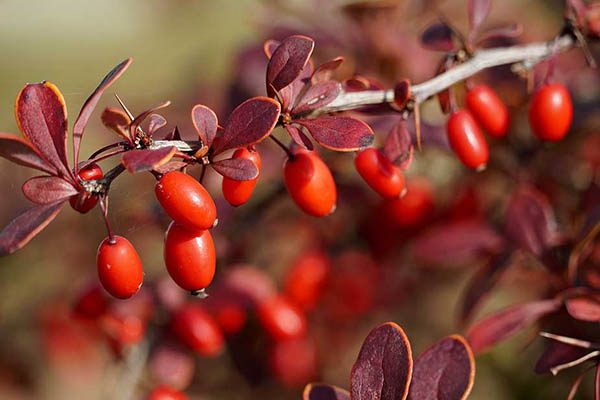
Leaf detail
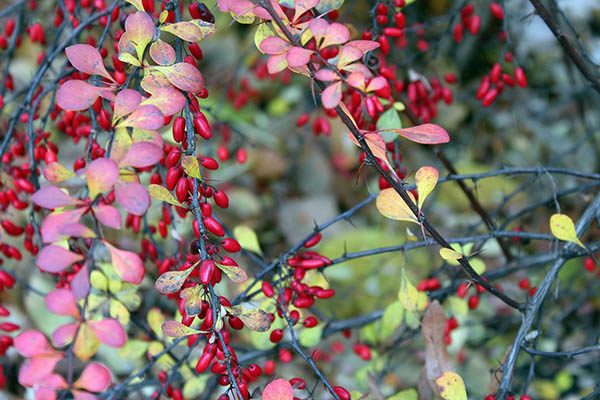
Fruit
Colorado Suitability
Excellent drought tolerance once established.
Handles alkaline Front Range soils without amendment.
Reliable winter hardiness at Douglas County elevations.
Deer generally avoid it.
Planting Considerations
- Site in full sun; shade reduces foliage color and density.
- Space for mature width — crowded plants thin out at the base.
- Avoid low, poorly drained beds.
Care
- Water deeply but infrequently through summer; overwatering causes root problems.
- Apply a coarse mulch, kept off the crown, to moderate soil temperature.
- Continue winter watering during dry, warm spells.
Pruning
- Shear or thin in late winter before bud break.
- Remove dead interior wood annually to keep the canopy open.
- Wear heavy gloves — thorns are stiff and numerous.
Best Use Scenarios
- Xeric and low-water landscapes
- Foundation plantings and mass beds
- Security hedges and barrier plantings
- Windy and exposed Front Range sites
Common Problems
- Root rot in overwatered or poorly drained beds.
- Leaf spot in wet springs.
- Thinning and legginess in shaded plantings.
- Some cultivars are restricted in certain jurisdictions — confirm before planting.
Related Diseases
Related Shrubs
Related Services
When you want a professional opinion
The Root exists to help you understand your landscape. When a tree needs hands-on evaluation, a Great Western arborist can look at it in person.