
Powdery Mildew (Turfgrass)
Primarily Blumeria graminis and related fungi
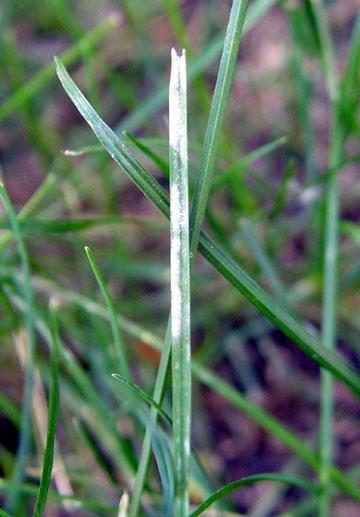
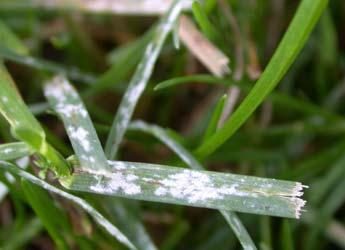
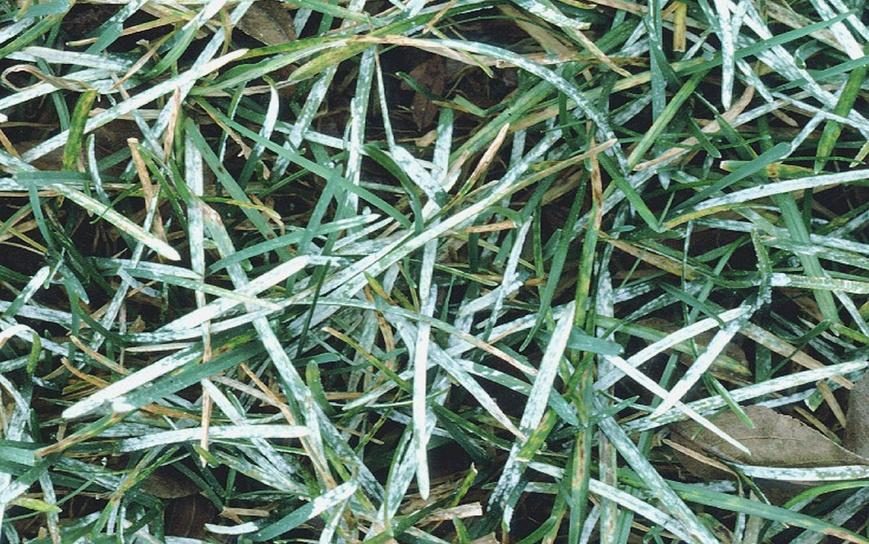
Powdery Mildew is a cosmetic fungal disease that affects Kentucky bluegrass in shady, damp, low-airflow areas. It appears as a white, powdery coating on grass blades. It rarely kills turf and is usually a sign of too much shade, poor airflow, or prolonged moisture, rather than a serious infection.
Seasonal Disease Activity Calendar
| Problem | Type Active Season |
|---|---|
| Powdery Mildew (turf) | Fungus Spring–Fall (especially cool, cloudy, humid periods) |
Symptoms (Homeowner-Friendly)
| Symptom | Description |
|---|---|
| White, powdery film on leaf blades | Most obvious early morning or in shade |
| Grass turns light green, then yellow | Severe infections cause mild thinning |
| Occurs almost exclusively in shade | Along fences, under trees, north-facing areas |
| Turf feels weak or thin | Growth slows due to reduced photosynthesis |
| Rare to cause death | Grass normally recovers with environmental correction |
Primary Causes (Colorado Conditions)
- Dense shade (trees, buildings, fences)
- Poor airflow or enclosed microclimates
- Overwatering or watering at night
- High humidity after rain or irrigation
- Kentucky bluegrass planted where sun-loving turf struggles
Treatment & Management
1. Environmental Corrections (Most Effective)
| Action | Why it Helps |
|---|---|
| Increase sunlight (prune trees, raise canopy) | Sun exposure stops mildew development |
| Improve airflow | Reduces humidity around turf |
| Water early in the morning | Allows grass to dry quickly |
| Reduce irrigation in shaded zones | Shade requires far less water |
2. Turf Cultural Practices
| Practice | Benefit |
|---|---|
| Raise mowing height to 3–3.5" | Encourages stronger growth |
| Reduce nitrogen during cool, cloudy weather | Lush growth is more mildew-prone |
| Overseed with shade-tolerant grasses | Fine fescue mixes thrive in shade |
3. Fungicide Options (Rarely Needed)
Powdery Mildew seldom requires chemical control in home lawns.
If treatment is desired
| Fungicide Class | Notes |
|---|---|
| DMI fungicides (myclobutanil, propiconazole) | Effective; applied preventively in shade-prone areas |
| QoI fungicides (azoxystrobin) | Works but rarely needed |
| Chlorothalonil | Contact option; short residual |
Fungicides will not help if the underlying shade and airflow issues remain unchanged.
When to Worry vs. When It’s Cosmetic
When to Worry (action recommended)
- Turf consistently thins out in shady areas every year
- Large sections turn yellow or bare due to prolonged infection
- Powdery coating persists for months, not weeks
- Lawn cannot dry out due to dense shade or overwatering
- Kentucky bluegrass is failing in deep shade (species mismatch)
In these cases, consider tree pruning, irrigation adjustment, or overseeding with fine fescue.
Mostly Cosmetic (monitor only)
- Light powdery residue that fades in sunnier weather
- Small patches under trees or along fences
- Turf recovers once airflow improves
- Symptoms appear only during cloudy/humid weeks
- Minimal thinning with no expanding patches
In most Colorado lawns, Powdery Mildew is temporary and harmless, disappearing with improved conditions.
Diagnostic Imagery
Turf problems are often several problems at once
A Great Western technician can confirm the diagnosis on site before anything is treated — timing matters more than product choice.