
Ascochyta Leaf Blight
Ascochyta spp. — fungal blight of cool-season grasses
Ascochyta Leaf Blight is a rapid-onset turf disease that causes lawns to appear straw-colored almost overnight, especially after periods of heat + drought stress, mowing injury, or irregular watering. Despite its alarming appearance, Ascochyta is usually temporary and non- lethal.
Seasonal Disease Activity Calendar
| Problem | Type | Active Season |
|---|---|---|
| Ascochyta Leaf Blight | Fungus | Late Spring–Summer |
Symptoms (Homeowner-Friendly)
| Symptom | Description |
|---|---|
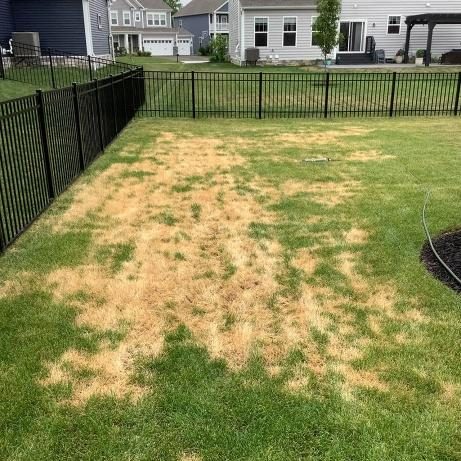
| Sudden straw-colored patches | Lawn can turn beige in 24–48 hours, often mistaken for drought kill |
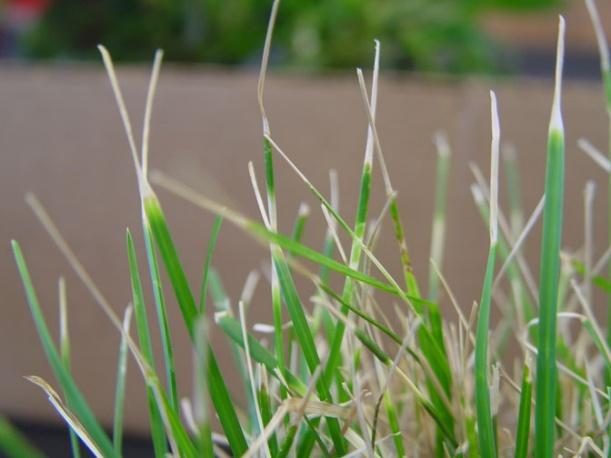
| Mostly leaf blight | Leaves bleach from the tips downward; crowns and roots remain healthy |
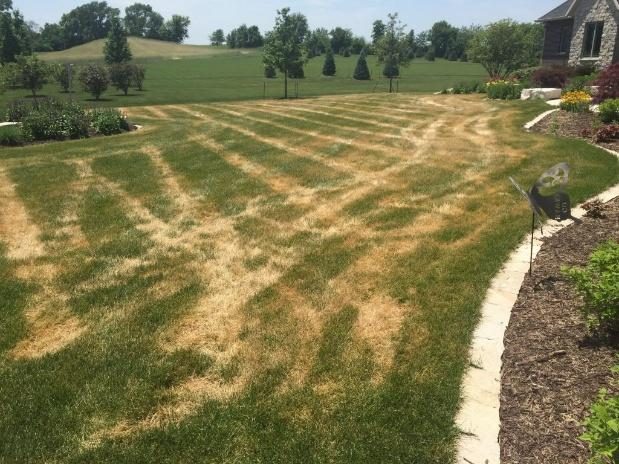
| Uniform patches | Affects large areas, mower-width strips, or “streaks” |
| Triggered by stress | Heat waves, dull mower blades, mowing wet grass, inconsistent irrigation |
| Healthy crown | Grass usually recovers within 2–3 weeks with proper care |
Treatment & Management
Good news: Fungicides are rarely necessary. Ascochyta primarily requires cultural correction, not chemical control.
Main Management Steps
Action Why it Works
Evens out moisture stress that
Deep, consistent watering
triggers outbreaks Dull blades shred leaf tips →
Sharpen mower blades
more infection sites Raise mowing height (3–3.5") Reduces heat stress on grass Prevents fungus spread via Avoid mowing when wet mower wheels and blades Reduce traffic during heat waves Foot traffic can worsen damage
Action Why it Works
Encourages lush, vulnerable leaf No heavy spring nitrogen growth
Recovery Practices
- Increase watering for 1–2 weeks during heat spikes.
- Mow less frequently until new green growth appears.
- If patches persist for >3–4 weeks, light overseeding can help thicken turf.
When to Worry vs. When It’s Cosmetic
When to Worry (action recommended)
- Grass does not green up within 2–4 weeks
- Brown areas spread despite proper watering
- Turf pulls up easily (suggests another disease, like Necrotic Ring Spot)
- Crown and roots appear brown or mushy
- Streaking follows mower lines every time (mowing practices need correction)
Ascochyta can mimic more serious diseases, so evaluating the roots and crowns is important.
Mostly Cosmetic (monitor only)
- Sudden beige patches after heat waves
- Streaks that align with mower patterns
- Leaf tips bleached while crowns remain green
- Discoloration following over- or under-watering cycles
- Small patches recovering after a week or two
In most cases, Ascochyta is temporary, and lawns recover quickly with improved mowing and watering habits.
Diagnostic Imagery
Related services
Turf problems are often several problems at once
A Great Western technician can confirm the diagnosis on site before anything is treated — timing matters more than product choice.