
Billbug (Turf Insect Damage)
Bluegrass Billbug – Sphenophorus parvulus, plus related species
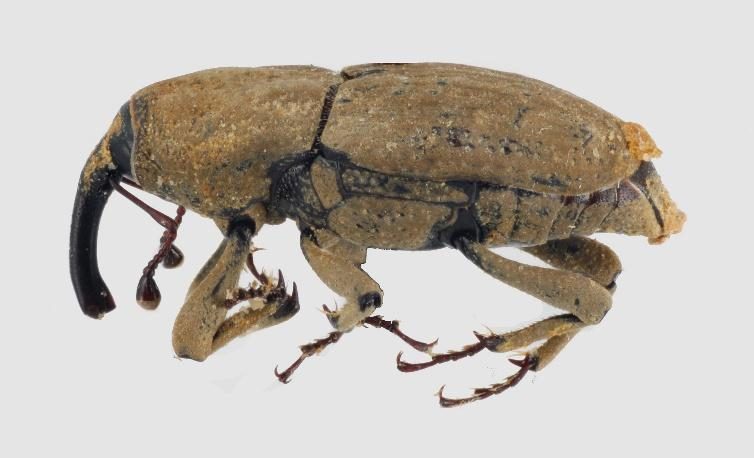
Billbugs are root-feeding weevils that damage Kentucky bluegrass, perennial ryegrass, and occasionally tall fescue in Colorado. Larvae feed inside stems and roots, causing dead patches that resemble drought or heat stress. Damage appears late spring through mid- summer.
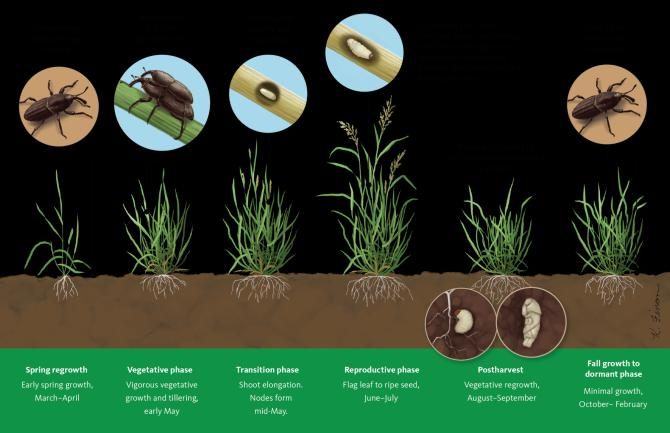
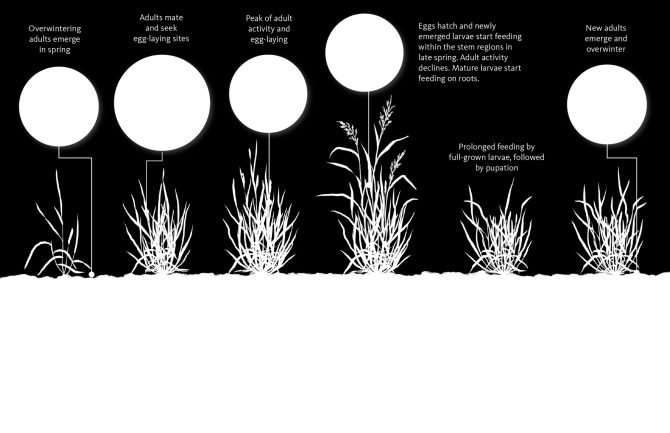
Seasonal Activity Calendar
| Stage / Damage | Type | Active Season |
|---|---|---|
| Adult billbug activity | Insect | Spring |
| Egg-laying in grass stems | Insect | Late Spring |
| Larval feeding (MOST DAMAGE) | Insect | Summer |
| Pupation in soil | Insect | Late Summer |
| Overwintering adults | Insect | Winter |
Symptoms (Homeowner-Friendly)
What Homeowners See
| Symptom | Description |
|---|---|
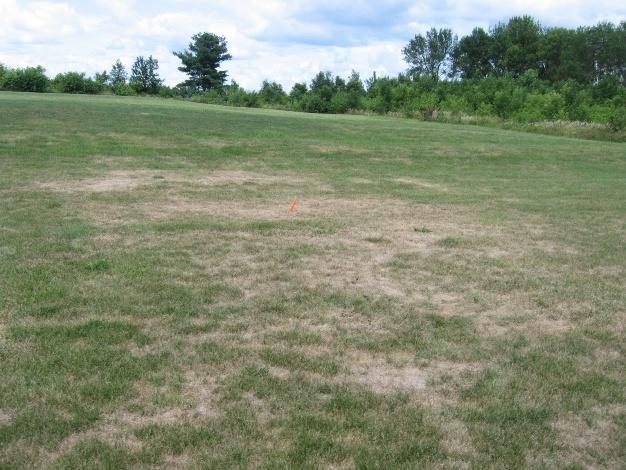
| Brown, irregular dead patches | Often mistaken for drought, NRS, or heat stress |
| Turf peels up easily like carpet | Roots are destroyed by larvae |
| “Sawdust-like” frass inside stems | Larvae hollow out stems from inside |
| Weak, thin turf in early summer | Damage starts before visible browning |
| More severe on south- and west-facing lawns | Heat accelerates larval feeding |
The Tug Test (Easy Diagnosis)
- Grab a handful of grass and pull gently.
- If it breaks off at the crown with white, sawdust-like frass, it is almost certainly billbug.
Primary Causes (Colorado Conditions)
- Heavy thatch where billbugs hide and overwinter
- Kentucky bluegrass most susceptible
- Prior heat/drought stress makes lawns easier for larvae to kill
- Poor fertility or shallow roots intensify damage
- South- and west-exposure lawns warm earlier → more billbug activity
Treatment & Management
1. Cultural Practices (Improve Lawn Resilience)
| Action | Benefit |
|---|---|
| Reduce thatch (<½") | Removes ideal billbug habitat |
| Core aeration 1–2× yearly | Releases compaction and encourages deeper roots |
| Topdress with compost | Improves soil health and turf recovery |
| Keep turf properly fertilized | Stronger turf tolerates feeding better |
| Deep, infrequent watering | Reduces shallow rooting and weak turf |
2. Insecticide Options
Billbug control depends heavily on timing.
Preventive Treatments (Best Option)
Apply in late spring (May–June) when adults lay eggs.
| Product Class | Notes |
|---|---|
| Neonicotinoids (imidacloprid, clothianidin) | Most effective preventive option |
| Anthranilic diamides (chlorantraniliprole – Acelepryn) | Very effective & low-toxicity; long residual |
| Combination products | Improve coverage during variable seasons |
Curative Treatments
Once larvae are fully feeding in stems (mid-summer), results are limited.
| Product Class | Notes |
|---|---|
| Pyrethroids (bifenthrin, deltamethrin) | Kill adults, but limited effect on deep-feeding larvae |
3. Repairing Damage
- Overseed dead areas with tall fescue (more billbug-resistant).
- Water lightly and frequently on newly seeded areas until established.
- For severe damage, consider sod replacement.
When to Worry vs. When It’s Cosmetic
When to Worry (action recommended)
- Grass pulls up easily with no roots
- Large brown patches spreading in early or mid-summer
- Visible frass (sawdust) inside grass stems
- Damage occurs every year in same locations
- South-facing slopes thinning repeatedly
- Preventive insecticides were not applied in late spring
These cases typically require targeted insecticide timing + cultural corrections.
Mostly Cosmetic (monitor only)
- Small, isolated brown spots
- Turf recovers quickly after cooler weather
- No frass in stems during tug test
- Damage only on high-traffic or stressed zones
These often reflect drought or heat, not billbugs.
Diagnostic Imagery
Other lawn & turf problems
Related services
Turf problems are often several problems at once
A Great Western technician can confirm the diagnosis on site before anything is treated — timing matters more than product choice.