Dollar Spot
Clarireedia spp. — fungal turf disease
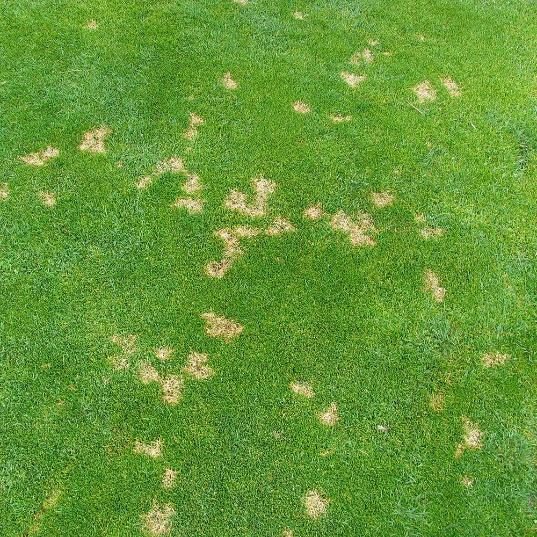
Dollar Spot is a common summer lawn disease in Colorado, especially in Kentucky bluegrass, fescues, and ryegrass under low nitrogen or drought stress. It forms silver-dollar-sized spots that merge into larger brown patches. It is destructive if unmanaged but responds well to proper nutrition and watering.
Seasonal Disease Activity Calendar
| Problem | Type | Active Season |
|---|---|---|
| Dollar Spot | Fungus | Late Spring–Fall (peak in warm, humid nights) |
Symptoms (Homeowner-Friendly)
| Symptom | Description |
|---|---|
| Small tan “dollar-sized” spots | 1–3 inch circular patches that slowly expand |
| Lesions on grass blades | Tan/yellow lesions with reddish-brown borders |
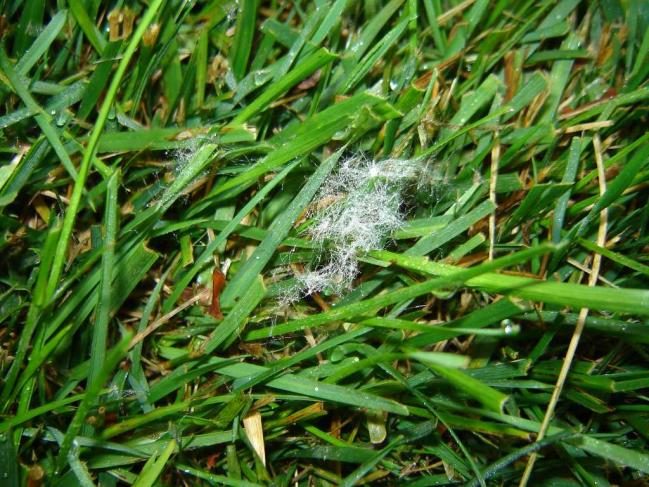
| Early morning mycelium | White, cottony threads visible only at dawn |
| Patchy thinning | Spots merge into larger irregular brown areas |
| Common with low nitrogen | Hungry lawns are extremely susceptible |
Treatment & Management
Most Important Cultural Controls
| Action | Why it Helps |
|---|---|
| Apply balanced nitrogen | Dollar Spot thrives in nitrogen- deficient turf |
| Water deeply but not daily | Reduces leaf wetness & drought stress |
| Mow regularly with sharp blades | Avoid mowing too short—keeps turf vigorous |
| Reduce thatch through aeration | Improves airflow & soil microbes |
| Water early in the morning | Minimizes nighttime leaf moisture |
Dollar Spot is easily prevented with proper fertility.
Recovery Steps
- Apply light nitrogen (e.g., 0.25–0.5 lb N per 1,000 sq ft).
- Increase irrigation consistency—avoid drought swings.
- Overseed thin areas with bluegrass or turf-type tall fescue.
Fungicide Options
Usually needed only for chronic or severe cases.
| Fungicide Class | Notes |
|---|---|
| DMI fungicides (propiconazole, myclobutanil) | Effective; rotate to prevent resistance |
| QoI fungicides (azoxystrobin) | Often tank-mixed |
| SDHI fungicides (boscalid, fluxapyroxad) | Very effective but often professional- only |
| Combination products | Best for high-pressure properties |
Fungicides should be applied preventively during warm, humid periods.
When to Worry vs. When It’s Cosmetic
When to Worry (action recommended)
- Large brown areas merging across the lawn
- Persistent tan lesions even after fertilizing
- Turf thinning significantly in late summer
- Visible mycelium multiple mornings in a row
- Damage not recovering after 2–3 weeks of cultural fixes
This indicates nutrient deficiency + active fungal pressure.
Mostly Cosmetic (monitor only)
- A few scattered dollar-sized spots
- Lesions only on upper leaves
- Mycelium visible briefly after humid nights
- Spots that stop spreading after one nitrogen application
- Patches recovering after consistent irrigation
With basic correction, Dollar Spot is usually short-lived in Colorado.
Diagnostic Imagery
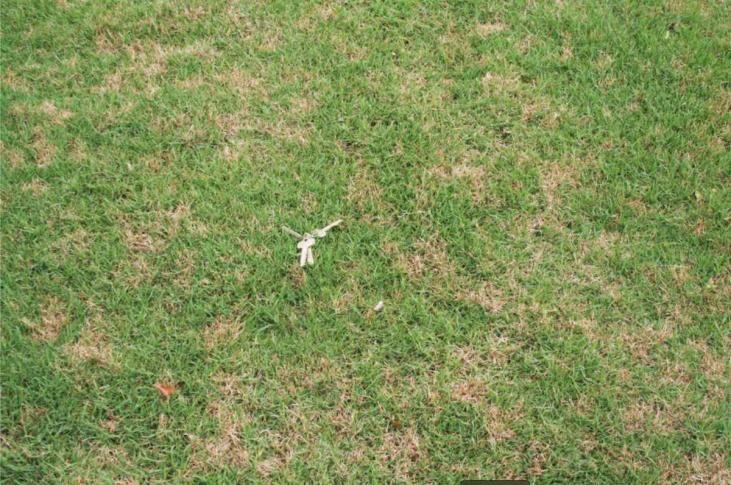
Turf problems are often several problems at once
A Great Western technician can confirm the diagnosis on site before anything is treated — timing matters more than product choice.