Shrubby Potentilla
Potentilla fruticosa
Shrubby potentilla blooms from early summer into fall on almost no supplemental water. It is one of the most dependable low-maintenance shrubs for Colorado landscapes and commercial plantings.
Quick specifications
- Mature Size
- 2–4 ft tall | 3–5 ft wide
- Growth Rate
- Moderate
- Form
- Low, mounded deciduous shrub
- Sun
- Full sun preferred for best flowering
- Water
- Minimal irrigation once established
- Soil
- Performs well in alkaline and poor soils
- Bloom
- Yellow, white, orange, or pink (late spring–fall); very long, continuous flowering
- Lifespan
- 30–50+ years under Front Range conditions
- Hardiness
- Extremely cold hardy and drought tolerant
- Native Status
- Native
Overview
Shrubby potentilla is a compact, fine-textured deciduous shrub with an exceptionally long bloom season.
It is widely used in foundation beds, medians and low-water plantings where consistent color is wanted without irrigation demand.
Identification
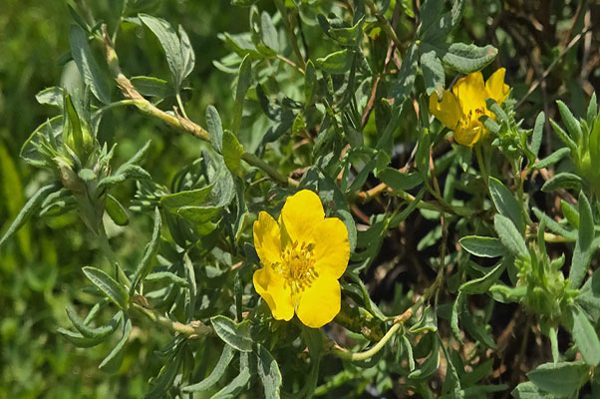
Flower
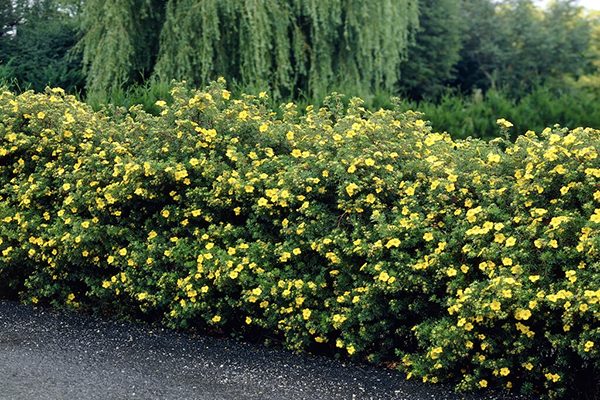
Mature form
Colorado Suitability
Native across Colorado's higher elevations and adaptable statewide.
Blooms reliably for three or more months.
Tolerates poor soils, heat and reflected light.
Planting Considerations
- Full sun is required for dense form and heavy bloom.
- Avoid overwatered turf-adjacent beds.
- Space for air movement between plants.
Care
- Water sparingly; excess moisture causes flopping and dieback.
- Avoid heavy fertilization.
Pruning
- Cut back by one-third in late winter to keep plants dense.
- Renewal-prune old, woody plants hard every few years.
- Deadheading is unnecessary.
Best Use Scenarios
- Foundation plantings and mass beds
- Xeric and low-water landscapes
- Slopes and exposed sites
- Long-blooming color in residential and commercial landscapes
Common Problems
- Woody, open centers when never pruned.
- Spider mites in hot, dusty, sheltered sites.
- Reduced bloom in part shade.
Related Shrubs
Related Services
When you want a professional opinion
The Root exists to help you understand your landscape. When a tree needs hands-on evaluation, a Great Western arborist can look at it in person.