Golden Currant
Ribes aureum
Golden currant is a Colorado native shrub with fragrant yellow spring flowers, edible summer fruit and genuine drought tolerance — a strong choice for low-water and wildlife-oriented landscapes.
Quick specifications
- Mature Size
- 4–8 ft tall | 4–6 ft wide
- Growth Rate
- Moderate
- Form
- Upright to spreading shrub
- Sun
- Full sun to partial shade
- Water
- Moderate water needs once established
- Soil
- Performs well in alkaline and rocky soils
- Bloom
- Yellow, fragrant (early spring)
- Fruit
- Edible golden to black berries (early summer)
- Lifespan
- 30–50+ years under Front Range conditions
- Hardiness
- Native to Colorado and extremely cold hardy
- Native Status
- Native
Overview
Golden currant is an upright, suckering native shrub found naturally along Colorado drainages and foothill slopes.
It supports pollinators in early spring and produces fruit used by birds through summer.
Identification
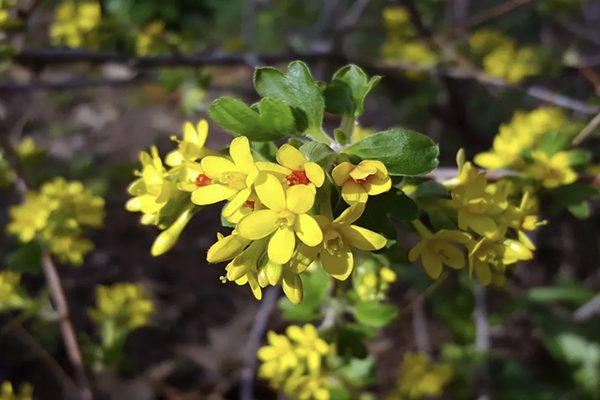
Flower
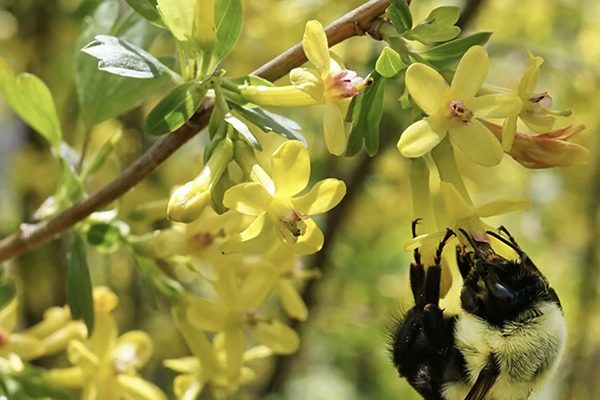
In the field
Colorado Suitability
Native to Colorado — adapted to regional soils, precipitation and temperature swings.
Excellent drought tolerance after establishment.
Valuable wildlife and pollinator habitat.
Planting Considerations
- Works well in naturalized, xeric and transition zones.
- Allow room for gradual suckering, or plan to remove suckers.
- Minimal soil preparation required.
Care
- Little supplemental water needed after the first two seasons.
- Avoid fertilization — it promotes weak, disease-prone growth.
Pruning
- Remove the oldest canes at ground level every few years.
- Thin suckers to control spread in formal beds.
- Prune after flowering to preserve bloom.
Best Use Scenarios
- Native and naturalized landscapes
- Wildlife-friendly plantings
- Edible and pollinator gardens
- Informal hedges and shrub borders
Common Problems
- Powdery mildew in low-airflow sites.
- Aphids on new growth in spring.
- Suckering into adjacent beds if left unmanaged.
- Alternate host for white pine blister rust — avoid planting near five-needle pines.
Related Diseases
Related Shrubs
Related Services
When you want a professional opinion
The Root exists to help you understand your landscape. When a tree needs hands-on evaluation, a Great Western arborist can look at it in person.