Diablo Ninebark
Physocarpus opulifolius 'Monlo'
Diablo ninebark carries deep purple foliage all season and tolerates the cold, wind and alkaline soils of the Front Range with very little input. It is one of the most forgiving color shrubs available here.
Quick specifications
- Mature Size
- 8–10 ft tall | 8–10 ft wide
- Growth Rate
- Moderate
- Form
- Upright to rounded deciduous shrub; exfoliating bark adds winter interest
- Foliage
- Deep burgundy-purple throughout the season
- Sun
- Full sun to partial shade (best foliage color in full sun)
- Water
- Avoid overwatering once established
- Soil
- Performs well in alkaline and clay soils
- Bloom
- White to pale pink (late spring)
- Lifespan
- 40–60+ years under Front Range conditions
- Hardiness
- Excellent cold hardiness and drought tolerance once established
- Native Status
- Regionally adapted
Overview
Diablo ninebark is an arching deciduous shrub with lobed purple leaves and characteristic peeling, layered bark.
It provides strong contrast in green-dominant landscapes without the water demands of most color shrubs.
Identification
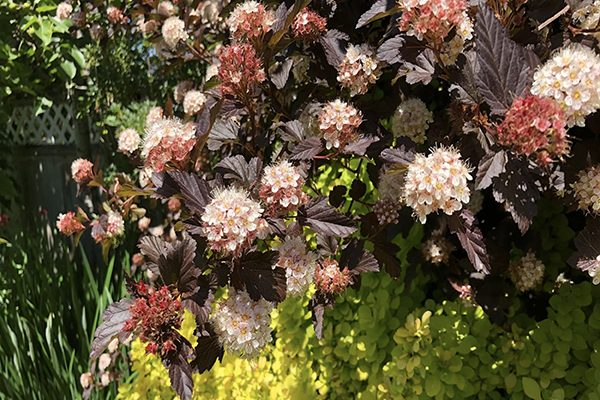
Flower
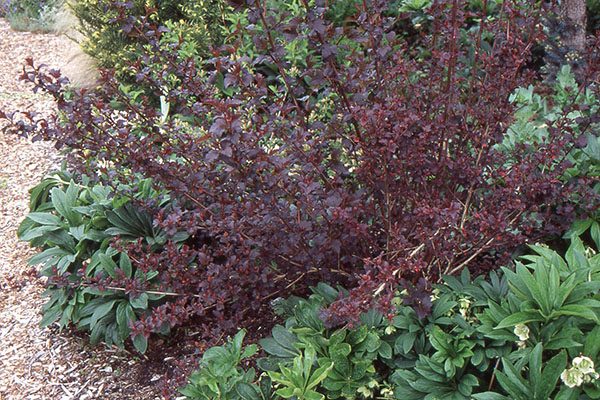
Mature form
Colorado Suitability
Native-species parentage adapted to plains and foothills conditions.
Tolerates cold, wind and poor soils.
Low water requirement once established.
Planting Considerations
- Full sun is required — shade turns foliage muddy green.
- Allow room for the natural arching form.
- No soil amendment is generally required.
Care
- Water deeply and infrequently.
- Mulch to conserve moisture and suppress competition.
Pruning
- Renewal-prune by removing one-third of the oldest canes at ground level in late winter.
- Avoid shearing, which destroys the arching habit.
- Cut back hard every few years to rejuvenate older plants.
Best Use Scenarios
- Accent shrub for foliage color
- Screens and informal hedges
- Xeric and low-water landscapes
- Mixed shrub borders and native-style plantings
Common Problems
- Powdery mildew in crowded or shaded plantings.
- Loss of foliage color in part shade.
- Legginess when never renewal-pruned.
Related Diseases
Related Shrubs
Related Services
When you want a professional opinion
The Root exists to help you understand your landscape. When a tree needs hands-on evaluation, a Great Western arborist can look at it in person.