Necrotic Ring Spot (NRS)
Ophiosphaerella korrae — fungal turf disease
Necrotic Ring Spot is one of Colorado’s most common and destructive lawn diseases, especially in Kentucky bluegrass. It causes rings, dead patches, frog-eye patterns, and thinning that worsens with drought, heat, and excessive thatch. Usually appears late spring through fall.
Seasonal Disease Activity Calendar
| Problem | Type | Active Season |
|---|---|---|
| Necrotic Ring Spot | Fungus | Spring infections; visible Summer–Fall |
Symptoms (Homeowner-Friendly)
| Symptom | Description |
|---|---|
| Frog-eye pattern | Healthy green grass in the center with a brown ring around it |
| Circular dead patches | 6"–3 ft wide patches that slowly expand |
| Thinning in heat or drought | Grass appears weak, patchy midsummer |
| Blackened roots | Infected roots look dark, brittle, or rotted |
| Most severe in Kentucky bluegrass | Fine fescue & tall fescue are more tolerant |
Treatment & Management
Necrotic Ring Spot cannot be cured with a single product—it requires cultural management plus optional fungicide programs.
Cultural Practices (Most Important)
Action Why it Works
Reduces thatch and compaction that promote Aerate 1–2 times per year fungus Raise mowing height (3–3.5") Reduces stress and strengthens roots Deep, infrequent watering Once every 3–5 days; avoid daily irrigation Topdress with compost Increases soil microbes that suppress NRS Overseed with disease-tolerant tall fescue Helps mask and outgrow damaged areas Makes NRS worse—use fall fertilization Avoid heavy nitrogen in spring instead
Fungicide Options (Professional Recommended for Best Results)
Timing is critical: fungicides work preventively, not curatively.
Fungicide Types Use Window Notes
DMI fungicides (propiconazole, myclobutanil) Late spring–early summer Best applied before symptoms expand QoI fungicides (azoxystrobin) Late spring Often tank-mixed with DMIs Combination fungicides May–June Used for high-pressure properties Important: Fungicides alone will NOT fix the problem without improved soil, aeration, and watering adjustments.
When to Worry vs. When It’s Cosmetic
When to Worry (action recommended)
- Large rings expanding each season
- Turf dying completely in hot, dry spells
- Roots easily pull up—black or rotted
- Daily irrigation is being used (makes NRS worse)
- Thatch layer is over 1/2 inch thick
- Turf does not recover after overseeding
These cases require professional intervention + multi-year recovery plan.
Mostly Cosmetic (monitor only)
- Small, new rings early in the season
- Thinning that recovers with fall weather
- Patches limited to high-traffic or compacted zones
- Minor frog-eye patterns without spreading
These typically improve with aeration, compost, and proper watering.
Diagnostic Imagery
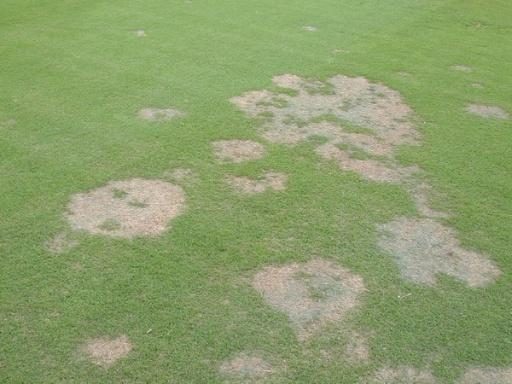
Turf problems are often several problems at once
A Great Western technician can confirm the diagnosis on site before anything is treated — timing matters more than product choice.