Burning Bush
Euonymus alatus
Burning bush is grown for one thing above all: intense scarlet fall color. It is dependable in Colorado landscapes when given full sun, consistent moisture and room to reach mature size.
Quick specifications
- Mature Size
- 8–12 ft tall | 8–12 ft wide
- Growth Rate
- Moderate
- Form
- Dense, upright to rounded shrub
- Foliage
- Green summer leaves turning brilliant red in fall
- Sun
- Full sun to partial shade (best fall color in full sun)
- Water
- Moderate water needs once established
- Soil
- Adapts to a range of soil types when well-drained
- Lifespan
- 40–60+ years under Front Range conditions
- Hardiness
- Good cold hardiness for Front Range winters
- Native Status
- Non-native
Overview
Burning bush is a rounded deciduous shrub with corky winged stems and a formal, symmetrical habit.
It is frequently planted too close to structures and walkways — mature spread is routinely underestimated.
Identification
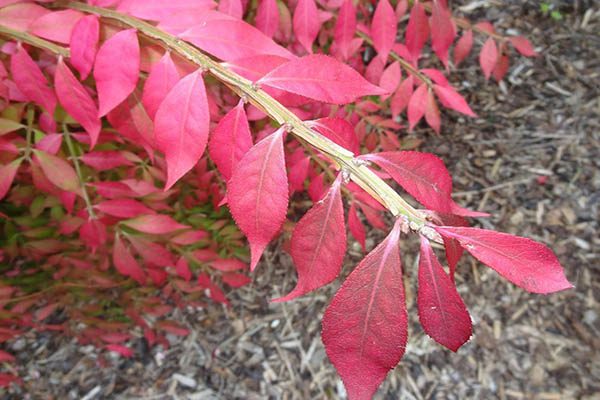
Leaf detail
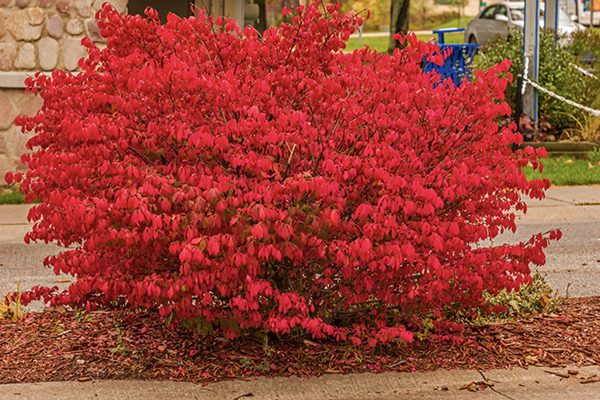
Mature form
Colorado Suitability
Handles Front Range winters without dieback.
Tolerates the alkaline soils typical of Douglas County.
Provides the strongest reliable fall color of any common landscape shrub here.
Planting Considerations
- Give at least 8 ft of clear space in each direction.
- Full sun is required for scarlet color.
- Water consistently through the first two seasons.
Care
- Mulch to hold moisture through hot, dry summers.
- Winter water during dry spells to prevent scorch on exposed sites.
Pruning
- Prune in late winter; the shrub responds well to renewal thinning.
- Avoid shearing into tight boxes — it destroys the natural form and reduces color.
- Remove dead wood after hard winters.
Best Use Scenarios
- Accent shrub for fall color
- Screens and informal hedges
- Larger residential landscapes
- Mixed shrub borders
Common Problems
- Scale insects on stressed or crowded plants.
- Spider mites in hot, dry, sheltered locations.
- Winter scorch on windy western exposures.
- Reduced fall color in shade.
When you want a professional opinion
The Root exists to help you understand your landscape. When a tree needs hands-on evaluation, a Great Western arborist can look at it in person.