Viburnum
Viburnum spp.
Viburnums offer spring flowers, summer fruit and strong fall color in a single plant. Several species perform well along the Front Range when given consistent moisture and protection from harsh winter exposure.
Quick specifications
- Mature Size
- 6–12 ft tall | 6–12 ft wide (varies by species/cultivar)
- Growth Rate
- Moderate
- Form
- Upright to rounded deciduous shrub
- Foliage
- Fall color yellow, orange, or red
- Sun
- Full sun to partial shade (flowering best in full sun)
- Water
- Requires well-drained soil with consistent moisture
- Soil
- Well-drained; avoid highly exposed, droughty sites
- Bloom
- White to pink (spring)
- Fruit
- Blue, red, or black berries depending on species
- Lifespan
- 40–60+ years under Front Range conditions
- Hardiness
- Excellent cold hardiness in properly selected species
- Native Status
- Non-native
Overview
Viburnum is a large, diverse genus of deciduous shrubs grown for multi-season interest — bloom, fruit, foliage texture and fall color.
Species selection matters more than with most shrubs: some tolerate Front Range alkalinity and exposure far better than others.
Identification
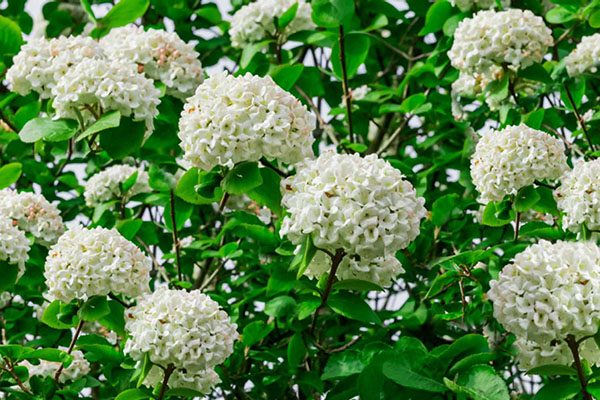
Flower
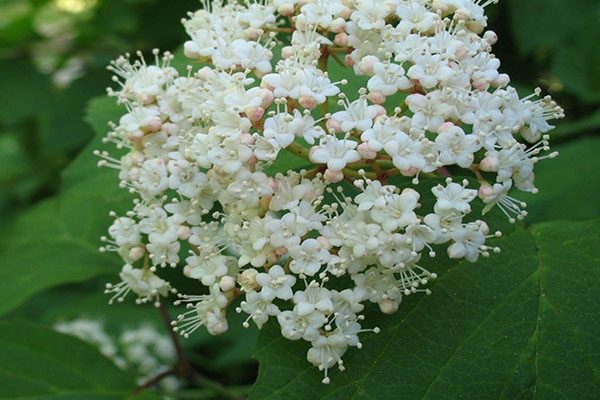
Mature form
Colorado Suitability
Multi-season interest from a single plant.
Good structural screening at medium height.
Best in beds with consistent moisture rather than xeric zones.
Planting Considerations
- Plant two compatible selections nearby to improve fruit set.
- Choose sheltered exposures for less hardy species.
- Mulch and maintain even soil moisture.
Care
- Monitor for chlorosis in high-pH soils and correct with soil treatment rather than foliar sprays alone.
- Winter water during dry spells.
Pruning
- Prune immediately after flowering — summer pruning removes next season's bloom.
- Thin the oldest stems periodically to maintain vigor.
- Avoid shearing into formal shapes.
Best Use Scenarios
- Foundation plantings and mixed shrub borders
- Screens and informal hedges
- Wildlife-friendly landscapes
- Residential landscapes with supplemental irrigation
Common Problems
- Iron chlorosis in alkaline soils.
- Viburnum crown borer in stressed plants.
- Powdery mildew in low-airflow sites.
- Poor fruit set with a single isolated plant.
Related Diseases
Related Shrubs
Related Services
When you want a professional opinion
The Root exists to help you understand your landscape. When a tree needs hands-on evaluation, a Great Western arborist can look at it in person.