
Spring Snow Crabapple
Malus 'Spring Snow'
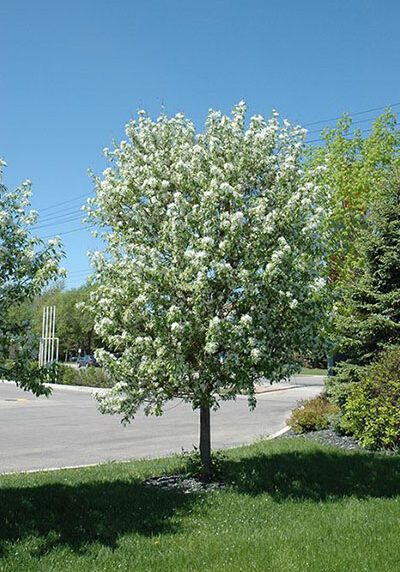
Spring Snow crabapple is a fruitless, single-flowering cultivar prized for its clean white spring blossoms without the fruit litter of traditional crabapples. It is a popular choice for homeowners who want ornamental spring bloom near patios, walkways, and driveways with no cleanup.
Quick specifications
- Mature Height
- 20–25 ft
- Mature Spread
- 20–25 ft
- Growth Rate
- Moderate
- Sun
- Full sun for best flowering
- Water
- Regular watering during establishment; moderate drought tolerance once mature
- Hardiness
- USDA Zone 4–8; reliable at Front Range elevations
- Genus
- Crabapple (Malus)
Identification
Species
Overview
Spring Snow is a sterile, essentially fruitless cultivar developed specifically to give homeowners the spring flowering display of a crabapple without the fruit drop that stains patios, driveways, and turf. Its single white flowers open from pink buds and cover the canopy in a dense spring show.
Because it does not set the small fruit typical of most Malus cultivars, Spring Snow is a common recommendation for Front Range properties where the tree will hang over sidewalks, patios, or parking areas and low-maintenance cleanup is a priority.
Key Characteristics
- Mature Size: 20–25 ft tall | 20–25 ft wide
- Growth Rate: Moderate
- Form: Rounded, symmetrical canopy
- Flower Color: White, single, opening from pink buds
- Fruit: Sterile/fruitless — no significant fruit litter
- Foliage: Clean dark green, no notable fall color
Colorado Growing Conditions
Fruitless habit makes it ideal for placement over hardscape, patios, and walkways
Reliable spring bloom performance in Front Range climates
Adapts well to clay and alkaline soils common in Douglas County
Good structural form requires minimal corrective pruning when trained young
Planting Considerations
- Plant in full sun; partial shade reduces bloom density
- Water deeply through the first two seasons to establish a strong root system
- Avoid low, poorly drained planting sites — root rot risk increases in standing water
- Structural pruning in the first several years helps establish strong scaffold branching
Common Problems
- Some susceptibility to fire blight and apple scab in wet springs, though generally moderate
- Fireblight strikes should be pruned out promptly with sanitized tools
- Occasional aphid or mite activity on new growth
Best Use Scenarios
- Patios, driveways, and walkways where fruit drop is undesirable
- Front-yard ornamental accent
- Low-maintenance flowering shade for small residential lots
- HOA and streetscape plantings where litter control matters
Related Services
Related Resources
When you want a professional opinion
The Root exists to help you understand your landscape. When a tree needs hands-on evaluation, a Great Western arborist can look at it in person.