
Thunderchild Crabapple
Malus 'Thunderchild'
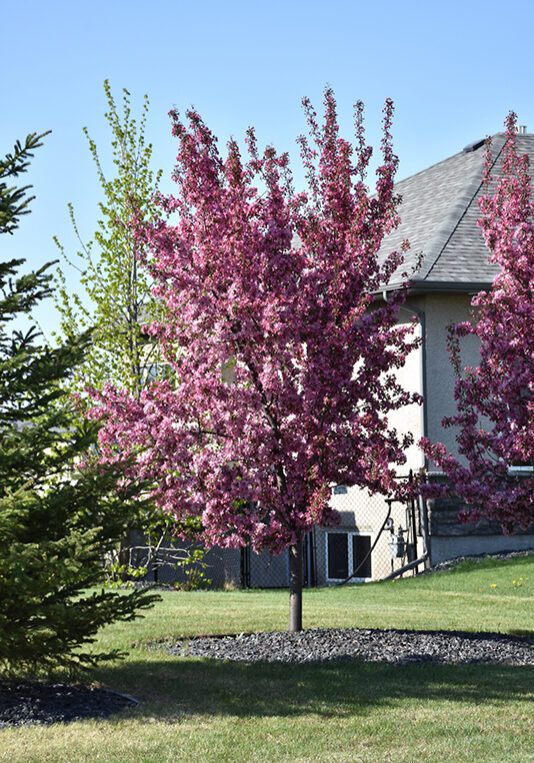
Thunderchild crabapple is an exceptionally cold-hardy cultivar with rich purple foliage and deep pink-red spring flowers, followed by small persistent purple-red fruit. Its extreme cold hardiness makes it a strong option for higher-elevation Front Range and foothills properties.
Quick specifications
- Mature Height
- 12–15 ft
- Mature Spread
- 12–15 ft
- Growth Rate
- Moderate
- Sun
- Full sun for best foliage color and bloom
- Water
- Regular deep watering during establishment; moderately drought-tolerant once mature
- Hardiness
- USDA Zone 3–8; among the most cold-hardy crabapple cultivars available
- Genus
- Crabapple (Malus)
Identification
Species
Overview
Thunderchild is bred for extreme cold hardiness, rated to USDA Zone 3, making it one of the most reliable crabapple options for exposed, high-elevation, or foothills sites along the Front Range where late spring frosts and harsh winter winds are common.
Deep purple-red foliage holds its color through summer, offset by rose-pink spring flowers and small, dark persistent fruit that carries into winter, adding seasonal interest after leaf drop.
Key Characteristics
- Mature Size: 12–15 ft tall | 12–15 ft wide
- Growth Rate: Moderate
- Form: Rounded, compact canopy
- Foliage: Deep purple-red, holds color through the season
- Flower Color: Rose-pink to red, heavy spring bloom
- Fruit: Small, dark purple-red, persistent
- Cold Hardiness: Exceptional — rated to Zone 3
Colorado Growing Conditions
One of the most cold-hardy ornamental crabapples available, well suited to foothills and higher-elevation sites
Compact size fits smaller residential lots and tighter planting areas
Tolerates Front Range wind exposure better than many ornamental cultivars
Persistent fruit provides winter interest and food for birds
Planting Considerations
- Plant in full sun for strongest foliage color and bloom density
- Water deeply during the first two growing seasons to establish roots
- Well suited to exposed or windy sites where hardiness is a priority
- Structural pruning while young encourages a strong, well-spaced canopy
Common Problems
- Some susceptibility to apple scab and fire blight in wet spring conditions
- Occasional aphid activity on new growth
- Leaf scorch possible during extended summer drought
Best Use Scenarios
- Higher-elevation and foothills properties needing extra cold hardiness
- Compact ornamental accent for smaller yards
- Windbreak-adjacent or exposed planting sites
- Winter interest and wildlife plantings
Related Services
Related Resources
When you want a professional opinion
The Root exists to help you understand your landscape. When a tree needs hands-on evaluation, a Great Western arborist can look at it in person.