
Royal Raindrops Crabapple
Malus 'JFS-KW5'
Royal Raindrops crabapple is a compact, disease-resistant ornamental prized for its deeply cut, purple-red foliage, magenta-pink spring flowers, and small persistent red fruit. Its strong resistance to apple scab and fire blight makes it a dependable, low-maintenance accent tree for Front Range yards.
Quick specifications
- Mature Height
- 15–20 ft
- Mature Spread
- 12–15 ft
- Growth Rate
- Moderate
- Sun
- Full sun for best flowering, foliage color, and fruit set
- Water
- Regular deep watering during establishment; drought-tolerant once established
- Hardiness
- USDA Zone 4b–8; well suited to 5,500–7,500 ft elevations
- Genus
- Crabapple (Malus)
Identification
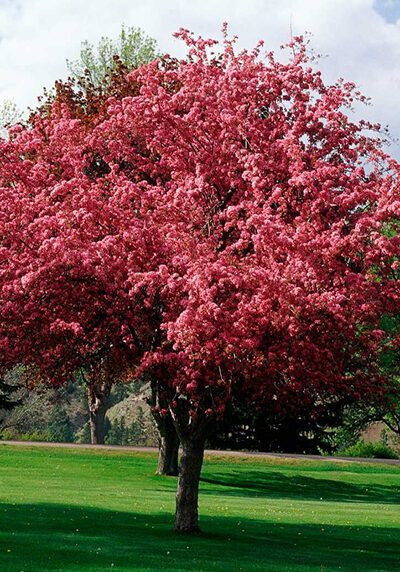
In the field
General crabapple reference image from the GWTC photo library; not a verified photo of Royal Raindrops.
Overview
Royal Raindrops is one of the more distinctive modern crabapple cultivars, valued for its finely dissected, wine-purple leaves that hold color from spring through summer before turning orange-red in fall. Small, dark red fruit persists into winter and provides food for birds after other ornamentals have dropped their fruit.
Bred for improved disease resistance, Royal Raindrops shows strong tolerance to apple scab, fire blight, cedar-apple rust, and powdery mildew — a meaningful advantage in Colorado's variable spring moisture, where older crabapple varieties often struggle.
Key Characteristics
- Mature Size: 15–20 ft tall | 12–15 ft wide
- Growth Rate: Moderate
- Form: Upright, rounded canopy
- Foliage: Deeply cut, purple-red, holds color through the growing season
- Flower Color: Magenta-pink, fragrant, heavy spring bloom
- Fruit: Small (⅜ in), dark red, persistent through winter
- Disease Resistance: Excellent — scab, fire blight, rust, and mildew
Colorado Growing Conditions
Strong disease resistance reduces spray and maintenance needs in humid spring stretches
Handles alkaline clay soils well once established
Cold-hardy well beyond Front Range winter lows
Persistent fruit is small enough to avoid the heavy walkway litter of older crabapple varieties
Planting Considerations
- Plant in full sun for the richest foliage color and heaviest bloom
- Amend heavy clay soils at planting to improve early root establishment
- Water deeply and consistently through the first two growing seasons
- Space to allow airflow through the canopy, reducing disease pressure
Common Problems
- Occasional aphid activity on new growth
- Fire blight can appear in wet, humid springs despite good resistance
- Leaf scorch possible in extreme heat or drought stress
Best Use Scenarios
- Front-yard ornamental accent
- Small-space and residential landscapes
- Sites where fall and winter fruit interest is desired
- Pollinator- and bird-friendly plantings
Related Services
Related Resources
When you want a professional opinion
The Root exists to help you understand your landscape. When a tree needs hands-on evaluation, a Great Western arborist can look at it in person.