
Turf Mites (Winter Mites & Clover Mites)
Primarily Brown Wheat Mite, Banks Grass Mite, Clover Mite, and related species
Turf mites are tiny, sap-feeding arachnids that cause dry, straw-colored patches, usually during late winter to early spring when grass is stressed and moisture is low. In Colorado, winter turf mite damage is extremely common, especially on south- and west-facing slopes.
Seasonal Activity Calendar
Mite Group Active Season Icons
Winter Mites (Brown Wheat Mite, Clover Mite) Late Fall–Winter–Early Spring Summer Mites (Banks Grass Mite) Hot, dry summers
Symptoms (Homeowner-Friendly)
What Homeowners See
| Symptom | Description |
|---|---|
| Straw-colored or tan patches | Often appear in late winter or early spring |
| Damage on south/west exposures | Areas receiving winter sun dry out quickly |
| Grass looks dead but roots may still be viable | Especially with winter mites |
| Slow spring green-up | Turf recovers unevenly |
| Mites extremely small | Size of a speck of pepper; hard to see without magnification |
Diagnosis Tips
- Inspect blades closely for tiny moving dots.
- Lay white paper on turf and tap blades → mites appear as very small dark or reddish specks.
- If damage occurred during snow-free, sunny winter periods → almost always winter mite.
Primary Causes (Colorado Conditions)
- Lack of winter watering
- Hot, sunny winter days drying soil
- South- and west-facing slopes with minimal snow cover
- Poor fall fertilization (weakens turf over winter)
- Heat and drought (for Banks grass mites in summer)
Treatment & Management
1. MOST IMPORTANT: Proper Winter Watering
| Practice | Benefit |
|---|---|
| Water every 3–4 weeks during dry winters | Prevents turf desiccation and mite outbreaks |
| Focus on slopes, sunny areas, and edges | These dry out first and suffer the most damage |
| Water midday when temps >40°F | Allows absorption without freezing |
2. Cultural Practices for Recovery
| Action | Why it Helps |
|---|---|
| Aeration in spring | Helps roots recover from desiccation |
| Light spring fertilization | Encourages green-up and new growth |
| Overseed thin areas | Tall fescue helps mask recurring damage |
| Maintain 3–3.5" mowing height | Reduces turf stress and moisture loss |
3. Insecticides / Miticides
Chemical control is rarely necessary and only somewhat effective because mites are active when weather is cold or extremely hot.
Mite Type Control Notes
Winter Mites Least responsive to chemicals → winter watering is the real control
Mite Type Control Notes
Summer Mites (Banks grass mite) Can be treated with miticides (abamectin, bifenthrin, acequinocyl) if necessary Important: Do not apply miticides in freezing conditions or on drought-stressed turf.
When to Worry vs. When It’s Cosmetic
When to Worry (action recommended)
- Large brown areas in late winter or early spring
- Turf not greening up by mid-spring
- Damage appears every winter on the same slopes
- Turf feels crunchy/dry and roots are thin
- No winter watering has been done
These require winter watering + spring overseeding + aeration.
Mostly Cosmetic (monitor only)
- Small patches greening up slowly
- Minor winter discoloration
- Only edges or sunny corners affected
- Grass recovers within 2–4 weeks of warm weather
- Mites present but turf not thinning significantly
Most mite damage is preventable with simple winter watering.
Diagnostic Imagery
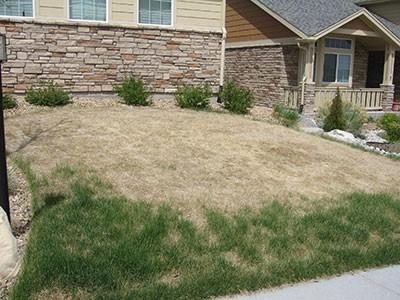
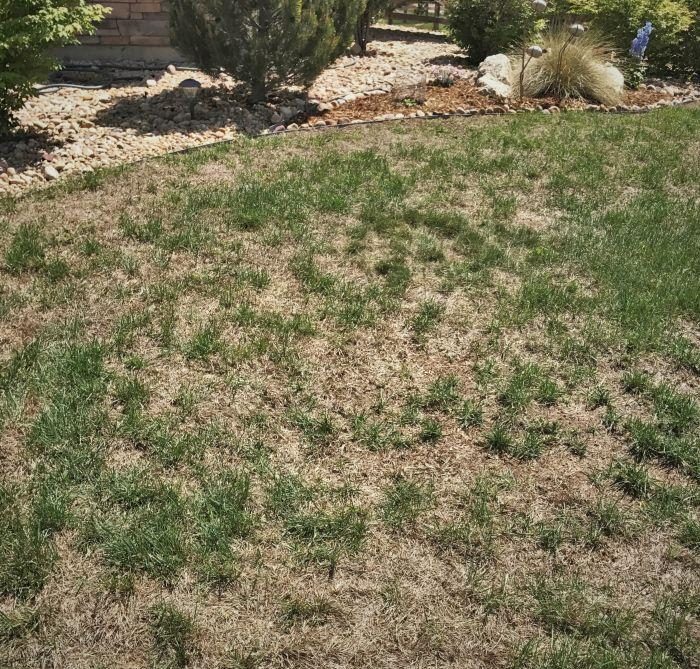
Turf problems are often several problems at once
A Great Western technician can confirm the diagnosis on site before anything is treated — timing matters more than product choice.