
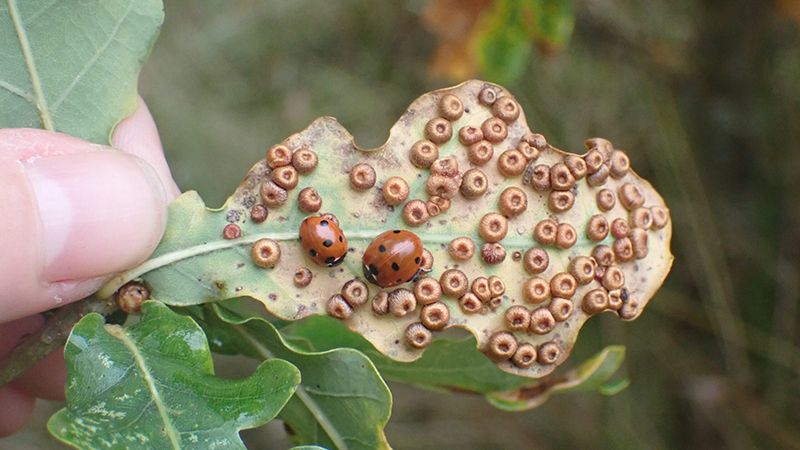
If you’ve ever noticed strange bumps, balls, or growths on your tree leaves or branches, you’ve likely encountered one of nature’s most fascinating phenomena:
Galls.
While they can look alarming, most galls are harmless and highly specialized interactions between trees and insects or mites. Understanding them is key to knowing when to act—and when to leave them alone.
What Are Galls?
Galls are abnormal plant growth that form when an insect, mite, or other organism manipulates plant tissue.
As the pest feeds or lays eggs, it releases chemicals that cause the tree to:
- Redirect nutrients
- Form protective structures
- Create a custom “home” for the organism
Each gall is species-specific, meaning different insects create distinct shapes, sizes, and locations on the tree.
What Causes Galls?
Most galls in Colorado are caused by
- Tiny mites (often invisible to the naked eye)
- Small insects like wasps, aphids, or midges
These organisms trigger gall formation early in the growing season—often before you even notice them.
Common Types of Galls in Colorado
Leaf Galls
- Appear as bumps, blisters, or pouch-like structures
- Common on maples, oaks, and hackberries
- Often green, red, or yellow
Twig & Branch Galls
- Woody, round, or irregular growths on stems
- Can persist for multiple years
Bud & Flower Galls
- Distort normal growth
- Can impact appearance more than function
Are Galls Harmful to Trees?
In most cases: No.
Galls are primarily
- Cosmetic
- Temporary
- Not a serious threat to overall tree health
Healthy, established trees can tolerate galls with little to no long-term impact.
When Should You Be Concerned?
While most galls are harmless, there are exceptions.
You may want a professional evaluation if you see:
- Heavy infestations across the entire canopy
- Repeated defoliation or stress year after year
- Significant branch dieback
- Galls combined with other stress factors (drought, poor soil, etc.)
In these cases, galls may be contributing to overall tree decline, especially in already stressed trees.
Why Galls Are Actually Fascinating
From an arborist’s perspective, galls are a remarkable example of:
- Plant-insect coevolution
- Highly specialized biological interactions
- Natural ecosystem processes
Each gall is essentially a custom-built structure, designed by the insect but grown by the tree.
Can Galls Be Treated?
Here’s the key point most homeowners don’t hear:
Once you see a gall, it’s already too late to treat it that season.
The triggering activity happens early—often before leaves fully emerge.
Management options include
Monitoring
- Most effective approach for minor infestations
Cultural care
- Improve tree vigor through watering, soil health, and mulching
Preventative treatments (in select cases)
- Timed applications before gall formation
- Typically, only recommended for severe or recurring issues
The Bigger Picture: Tree Health Matters Most
Galls tend to be more noticeable—and sometimes more abundant—on trees that are:
- Stressed
- Growing in poor soil
- Lacking proper care
The best defense against any pest issue is a healthy, well-maintained tree.
HOA & Property Manager Insight
For HOAs, galls often generate concern because of their appearance.
However
- Most do not justify chemical treatment
- Overreacting can lead to unnecessary costs
- Education is key to managing expectations
A professional tree care provider can help determine when action is warranted—and when it’s not.
Final Thoughts from an Arborist
Galls may look strange—even alarming—but in most cases, they are simply part of the natural relationship between trees and their environment.
Understanding them helps you
- Avoid unnecessary treatments
- Focus on overall tree health
- Make informed decisions about your landscape