Plant Health Profile
Alberta Spruce
Picea glauca ‘Conica’ — Dwarf Alberta Spruce
Alberta spruce is a slow-growing, dense, evergreen conifer commonly used as an accent plant, entryway anchor, or formal foundation shrub. In Colorado, most decline problems are tied to dry winter wind/sun, drought stress, and mite pressure, especially when plants are in hot exposures or allowed to dry out.
Seasonal Pest & Disease Calendar
| Problem | Type | Active Season |
|---|---|---|
| Spruce spider mites | Mite | Spring & Fall (often missed) |
| Spruce aphids (green spruce aphid) | Insect | Late Winter–Spring |
| Rhizosphaera needle cast | Fungus | Spring–Summer infection; symptoms later |
| Cytospora canker / branch dieback | Fungus | Stress-related; symptoms year-round |
| Winter burn / desiccation | Environmental | Winter–Early Spring |
| Drought stress / heat stress | Environmental | Summer |
Pest & Disease Guide (Homeowner-Friendly)
1. Spruce Spider Mites
Symptoms
- Fine “sandblasted” stippling on needles
- Bronzing/rusty look; thinning from the inside
- Damage often shows before summer (cool-season pest)
Treatment
- Blast foliage with water (especially inner canopy) during active periods
- Reduce drought stress (deep watering + mulch, not against trunk)
- Miticides only if mites are confirmed and damage is progressing
2. Spruce Aphids (Green Spruce Aphid)
Symptoms
- Mottled yellowing, needle drop, thinning
- Often noticed in late winter into spring as plants wake up
Treatment
- Strong water spray can reduce populations
- Horticultural oil (timed to cool temps) can help
- Avoid pushing tender growth with heavy nitrogen if stressed
3. Rhizosphaera Needle Cast
Symptoms
- Inner/lower needles turn purple-brown then drop
- Bare interior branches with “tufts” of green at tips
- Often worsens with overhead irrigation and poor airflow
Treatment
- Avoid overhead watering; water at the base
- Improve airflow (spacing, light thinning—not shearing)
- Fungicides are preventative and timing-dependent; usually a pro-level program if severe
4. Cytospora Canker / Stress Dieback
Symptoms
- Branch dieback (often lower branches first)
- Resin “pitching” or white sap on infected branches
- Typically shows up on stressed plants over time
Treatment
- Prune out dead branches back to healthy tissue (sanitize tools)
- Reduce stress: consistent watering, mulch, avoid injury
- No true “cure” once established—management is stress reduction + pruning
5. Winter Burn / Desiccation
Symptoms
- Needles turn tan/brown after windy cold snaps
- Often worse on the south/west side
- Tips may look “fried,” with brittle needles
Treatment
- Winter watering during warm spells when soil is dry
- Wind protection (burlap screen) on exposed sites
- Anti-desiccant sprays can help in some situations
6. Drought / Heat Stress
Symptoms
- Browning needles, interior needle drop
- Slow decline, thinning, poor vigor (often followed by mites)
Treatment
- Deep, slow watering (soak root zone), then allow partial dry-down
- Mulch 2–3" (keep off trunk) to stabilize moisture/temps
- Avoid heavy fertilization when stressed
Treatment Timing Calendar – Alberta Spruce (Colorado Front Range)
March–Early April ( )
- Check for winter burn and early stress
- Water during warm/dry spells if soil is dry
Late April–May ( )
- Scout for spruce aphids and early mite activity
- Treat only if active populations confirmed
June ( )
- Keep moisture consistent as heat ramps up
- Watch interior needles for early browning/needle drop
July–August ( )
- Deep watering + mulch (critical)
- Drought stress often triggers mites later—monitor closely
September–October ( )
- Spider mites often flare again in fall—scout inner canopy
- Deep watering before soil freeze
Winter ( )
- Winter water during warm spells (especially exposed sites)
- No pesticide treatments needed
When to Worry vs. When It’s Cosmetic
When to Worry (Action Needed)
- Progressive thinning/needle loss year-to-year
- Confirmed mite outbreaks with bronzing and interior dieback
- Resin + branch dieback suggesting canker plus ongoing stress
Mostly Cosmetic (Monitor Only)
- Mild winter burn with good spring recovery
- Light, scattered needle browning during normal seasonal needle shed
Diagnostic Imagery
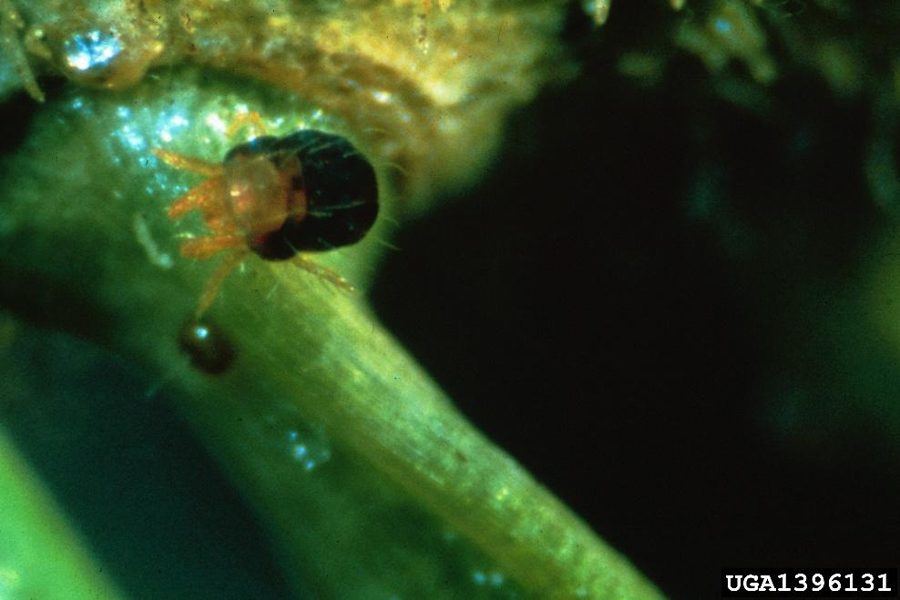
Spruce Spider Mites
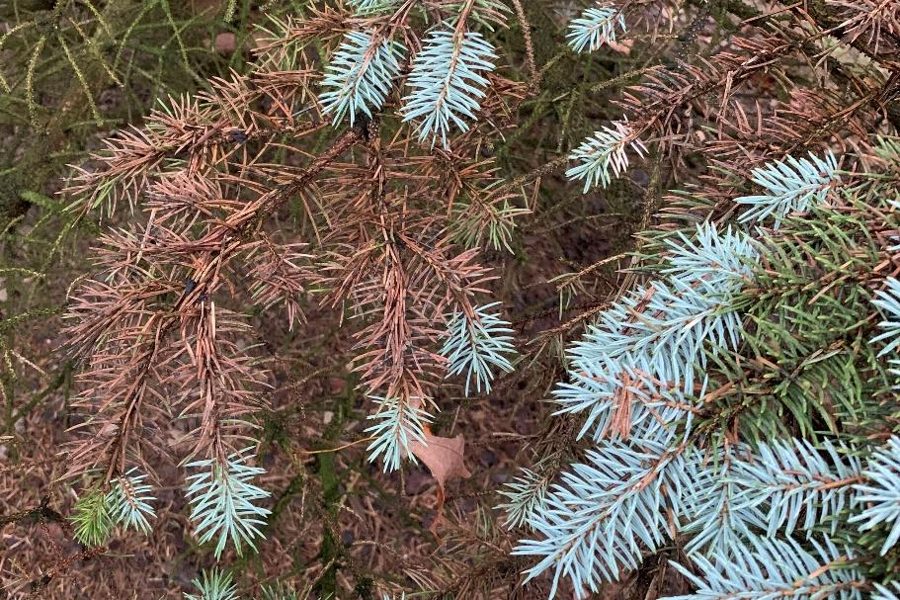
Spruce Spider Mites
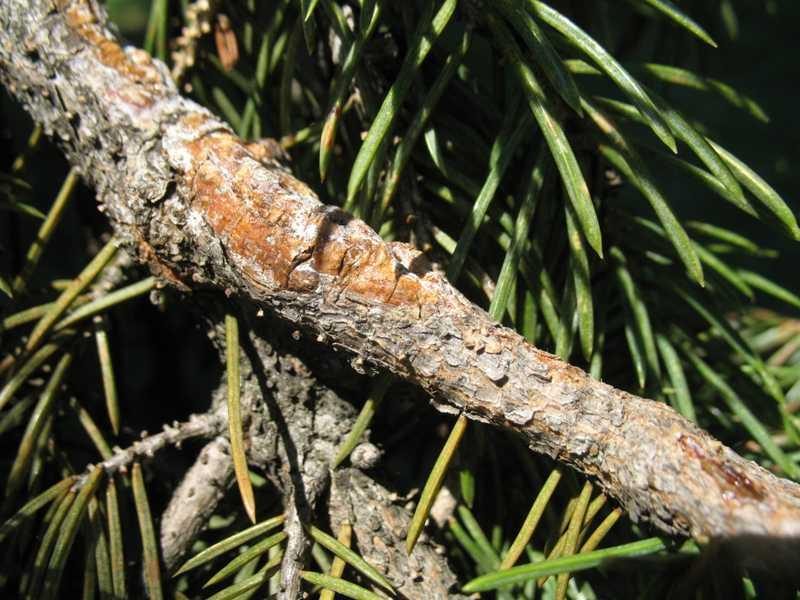
Rhizosphaera Needle Cast
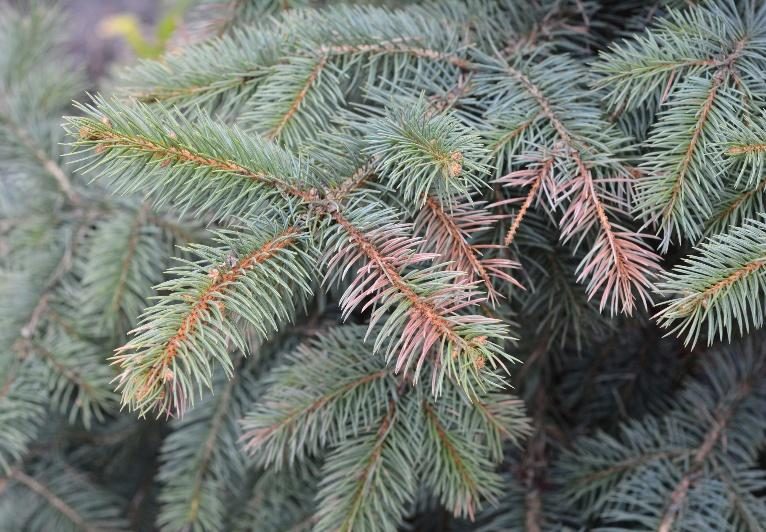
Cytospora Canker / Stress Dieback
Other plant health profiles
Related services
Great Western Tree Care
Shrub decline is usually a site problem
A Great Western technician can confirm the diagnosis on site before anything is treated — timing matters more than product choice.