
Common Lilac
Syringa vulgaris
Common lilac problems in Colorado: identify lilac leafminer, powdery mildew, bacterial blight, borers and scale, with symptoms, seasonal timing and homeowner treatment options.
Plant Identification – Common Lilac
Common lilac is a deciduous flowering shrub valued for its fragrant spring flowers. In Colorado, lilacs thrive in full sun, good air circulation, and well-drained soils. Most issues are seasonal and manageable with proper pruning, sanitation, and stress reduction.
Seasonal Pest & Disease Calendar
| Problem | Type | Active Season |
|---|---|---|
| Lilac leafminer | Insect | Spring–Summer |
| Lilac/Ash borer | Insect | Late Spring–Early Summer |
| Powdery mildew | Fungus | Mid Summer–Fall |
| Bacterial blight | Bacterial | Early Spring |
| Leaf spot / foliar blight | Fungus | Summer–Fall |
Pest & Disease Guide (Homeowner-Friendly)
1. Lilac Leafminer
Symptoms
- Brown, blotchy, scorched-looking leaf patches
- Leaves may fold or curl
- Premature leaf drop in heavier infestations
Treatment
- Remove and destroy heavily damaged leaves
- Rake fallen leaves in fall
- Insecticides rarely needed unless damage is severe and recurring
2. Lilac / Ash Borer
Symptoms
- Wilting or dieback of individual stems
- Sparse foliage or thinning canopy
- Small round exit holes near base
- Sawdust-like frass at trunk or branches
Treatment
- Prune and destroy infested stems
- Reduce drought and winter stress
- Avoid trunk injury
- Preventive sprays only effective when timed correctly (late spring)
3. Powdery Mildew
Symptoms
- White or gray powdery coating on leaves
- Most common mid-to-late summer
- Possible early leaf drop if severe
Treatment
- Improve airflow and sunlight
- Thin canopy after flowering
- Avoid excess nitrogen
- Mostly cosmetic — fungicides optional
4. Bacterial Blight
Symptoms
- Dark brown or blackened shoots and leaves
- Water-soaked leaf spots that spread rapidly
- Buds and flower clusters may blacken
- Appears early in spring
Treatment
- Prune infected tissue during dry weather
- Sanitize tools between cuts
- Avoid overhead watering
- No curative chemical once established
5. Leaf Spot / Foliar Blight (Fungal Complex)
Symptoms
- Brown or tan leaf spots
- Spots may merge into large dead areas
- Leaves may drop early in late summer
Treatment
- Rake and remove fallen leaves
- Improve airflow with pruning
- Water at soil level
- Fungicides rarely needed for homeowners
Treatment Timing Calendar – Common Lilac (Colorado Front Range)
March–Early April (Early Spring)
- Watch for bacterial blight after frost or wet weather
- Avoid pruning when foliage is wet
- Avoid overhead watering
Late April–May (Bloom Period)
- Prune immediately after flowering (most important timing)
- Begin scouting for borer activity
- Do not delay pruning into summer
Late May–June (Early Summer)
- Peak window for lilac leafminer damage
- Preventive borer treatments only effective now (if history exists)
- Deep water during dry periods
July–August (Mid–Late Summer)
- Monitor for powdery mildew and leaf spot
- Fungicides only if appearance is important
- Avoid nitrogen fertilization
- Avoid pruning (removes next year’s blooms)
September–October (Fall)
- Rake and remove fallen leaves
- Water before ground freezes
- Remove dead or broken branches only
Winter (November–February)
- Winter watering during dry, warm spells
- No pesticide treatments effective
When to Worry vs. When It’s Cosmetic
When to Worry (Action Needed)
- Entire stems dying back (possible borer damage)
- Blackened shoots and buds in early spring
- Repeated severe insect damage
- Significant loss of vigor
Mostly Cosmetic (Monitor Only)
- Powdery mildew in mid-late summer
- Minor leaf spotting late season
- Limited leafminer damage
Seasonal Care Tips for Colorado
- Prune immediately after flowering
- Provide full sun and airflow
- Deep water during drought
- Avoid late-season pruning
- Clean up fallen leaves in fall
Diagnostic Imagery
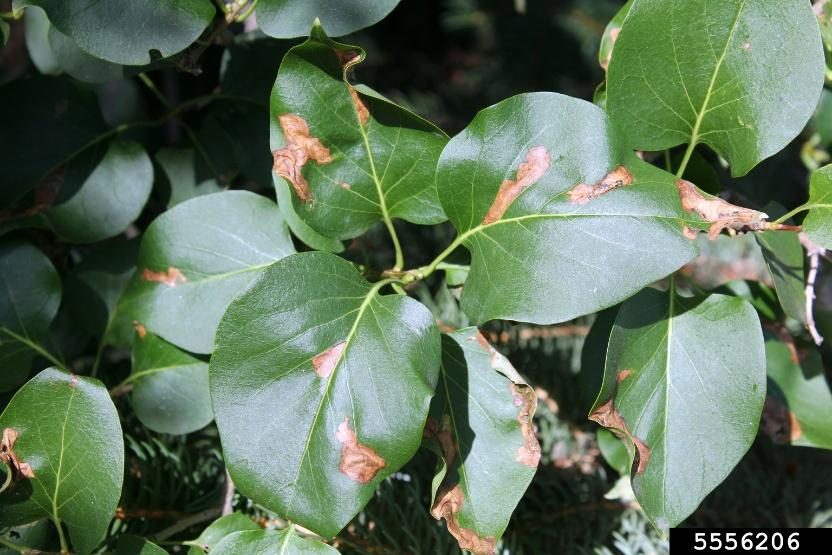
Lilac Leafminer
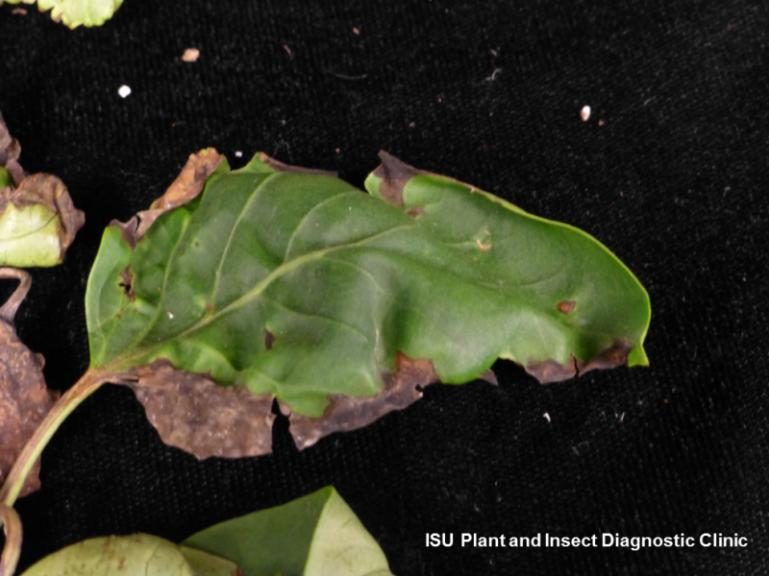
Powdery Mildew
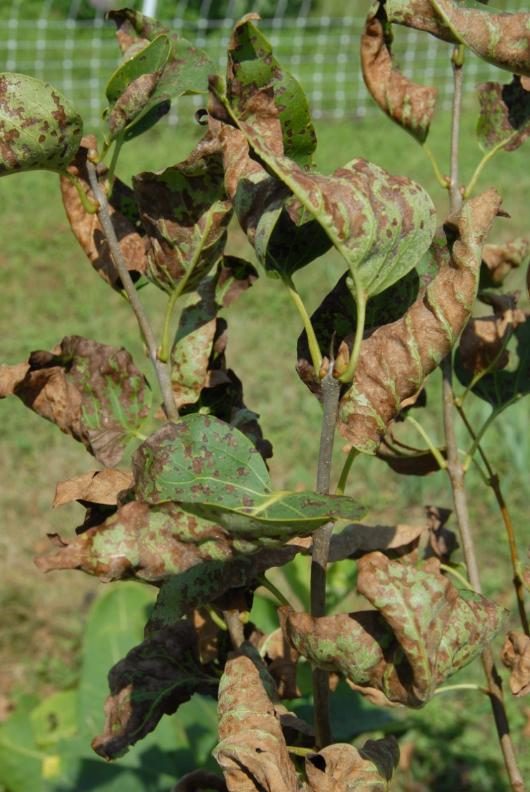
Bacterial Blight
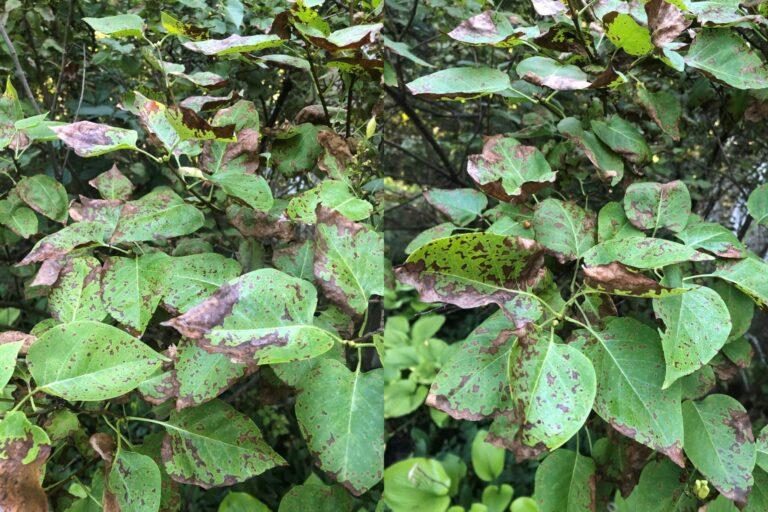
Bacterial Blight
Other plant health profiles
Related services
Shrub decline is usually a site problem
A Great Western technician can confirm the diagnosis on site before anything is treated — timing matters more than product choice.