
Summer Patch
Magnaporthe poae — root-infecting fungus
Summer Patch is a serious, root-destroying turf disease in Colorado, primarily affecting Kentucky bluegrass and occasionally annual bluegrass. It thrives in hot soil temperatures, poor drainage, and compacted or overwatered lawns. Damage is often mistaken for drought stress, but watering does not revive affected patches.
Seasonal Disease Activity Calendar
| Problem | Type Active Season |
|---|---|
| Summer Patch | Fungus Spring infection; symptoms peak Summer |
Symptoms (Homeowner-Friendly)
| Symptom | Description |
|---|---|
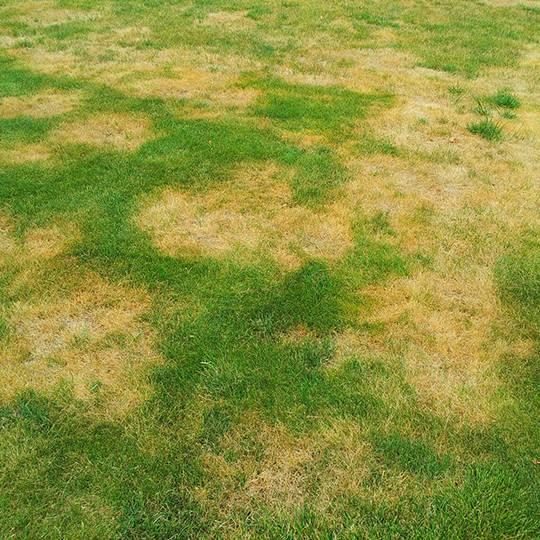
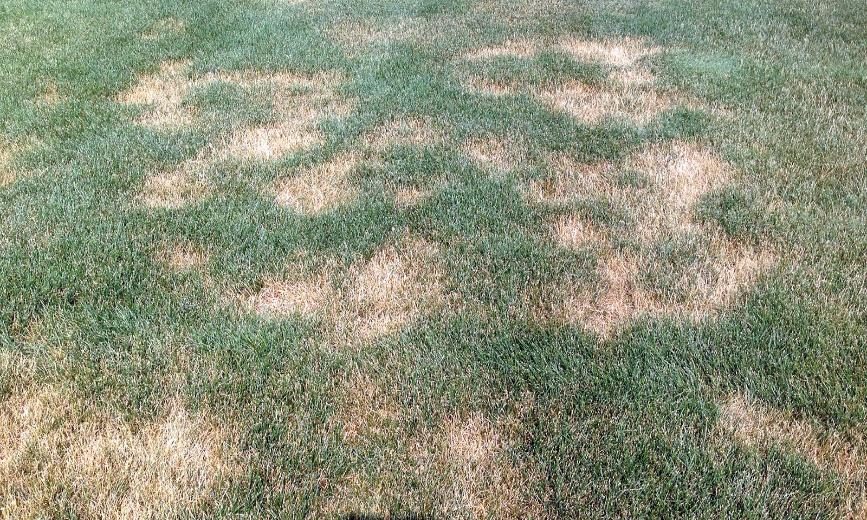
| Frog-eye or ring patterns | Patches of dead grass with green centers, similar to NRS but caused by a different fungus |
| Irregular yellow or brown patches | 6"–3 ft wide, expanding during heat |
| Grass wilts and dies despite watering | Roots are damaged, so water cannot help |
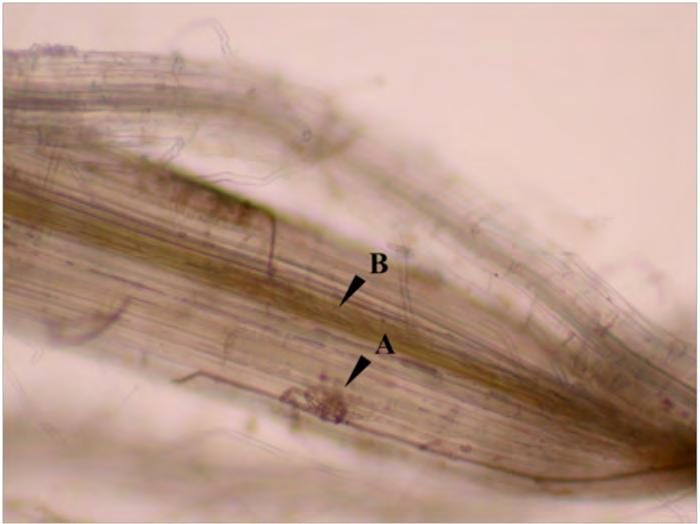
| Root rot | Roots appear dark, rotted, brittle, with poor depth |
| Symptoms peak in hot weather | Especially July–September |
Primary Causes (Colorado Conditions)
- Compacted clay soils
- Overwatering or daily irrigation
- Excessive thatch
- High soil temperatures (>70°F at root zone)
- Poor mowing height (cutting too short)
- Shallow root systems
Treatment & Management
Summer Patch is difficult because the pathogen infects roots in spring, but symptoms appear weeks later. Management focuses on soil improvement + correct irrigation.
1. Cultural Practices (Most Critical)
| Action | Why it Helps |
|---|---|
| Raise mowing height to 3–3.5" | Encourages deeper rooting |
| Deep, infrequent watering | Prevents shallow, vulnerable roots |
| Core aeration 1–2× per year | Reduces compaction and improves drainage |
| Reduce thatch (<½”) | Removes fungal habitat |
| Topdress with compost | Boosts beneficial microbes |
| Avoid excessive spring nitrogen | Produces weak, disease-prone roots |
2. Overseeding (Recovery)
- Use turf-type tall fescue or disease-tolerant KBG varieties.
- Overseed thin areas in late summer or early fall.
- Consider replacing chronic Summer Patch areas with tall fescue entirely.
3. Fungicide Options (Timing Is Everything)
Fungicides must be applied preventively in spring, BEFORE symptoms appear. They do not cure active Summer Patch.
| Fungicide Class | Timing | Notes |
|---|---|---|
| QoI fungicides (azoxystrobin) | Late May–June | Most effective option |
| DMI fungicides (propiconazole, myclobutanil) | Late May–June | Often tank-mixed |
| SDHI fungicides | Late May–June | Professional-only options for severe cases |
Apply when soil temps reach 65–70°F at 2–3" depth.
When to Worry vs. When It’s Cosmetic
When to Worry (action recommended)
- Brown patches failing to respond to watering
- Frog-eye patterns enlarging each season
- Roots pulling up easily and appear dark/rotted
- Significant thinning every summer
- Chronic disease in the same areas year after year
- Lawns with compacted clay and poor drainage
These lawns need long-term soil correction, not just fungicides.
Mostly Cosmetic (monitor only)
- Small patches that recover in cooler weather
- Yellowing during temporary heat waves
- Light thinning that responds to aeration and compost
- Minor symptoms in tall fescue lawns
Summer Patch is primarily a Kentucky bluegrass problem, and fescue blends greatly reduce recurrence.
Diagnostic Imagery
Turf problems are often several problems at once
A Great Western technician can confirm the diagnosis on site before anything is treated — timing matters more than product choice.