Turf Rust
Puccinia spp. / Uromyces spp.
Rust is a very common late-summer lawn disease in Colorado, especially during dry periods, slow growth, or nutrient deficiency. It coats grass blades in orange dust, weakens the lawn, and can stain shoes and pets. Rust is usually non-lethal and easy to manage with proper fertilization and watering.
Seasonal Disease Activity Calendar
| Problem | Type | Active Season |
|---|---|---|
| Turf Rust | Fungus | Late Summer–Fall (peak) |
Symptoms (Homeowner-Friendly)
| Symptom | Description |
|---|---|
| Grass blades coated with orange/yellow powder | Rust spores rub off on hands, shoes, pets |
| Thin, weak, slow-growing turf | Often during hot, dry, or low-nitrogen periods |
| Small yellow spots on leaves | Spots elongate and rupture into spore pustules |
| Staining | Shoes and mower wheels turn orange |
| Worse in shade or low air flow | Turf stays damp longer, increasing infection |
Treatment & Management
Primary Management (Most Effective)
Rust is best controlled by improving turf vigor, not chemicals.
Action Why it Works
Apply nitrogen fertilizer Rust thrives when turf growth is slow
Action Why it Works
Water deeply & consistently Helps turf outgrow disease Mow regularly (3–3.5") Removes infected leaf tissue Reduce shade if possible Improves leaf drying Overseed thin areas Encourages healthy competition Most rust outbreaks disappear within 1–3 weeks after nitrogen and watering adjustments.
Fungicide Use (Usually Optional)
Rust is rarely severe enough to require fungicides, but they help in high-pressure or irrigated commercial settings.
Fungicide Classes Notes
DMI fungicides (propiconazole, myclobutanil) Effective; rotate to prevent resistance QoI fungicides (azoxystrobin) Good broad-spectrum option SDHI fungicides Used mostly in professional programs Combo products Useful for repeated yearly outbreaks
When to Worry vs. When It’s Cosmetic
When to Worry (action recommended)
- Lawn stays rust-covered for 3+ weeks
- Turf becomes thin or weak despite watering
- Rust returns annually in the same shaded areas
- Shoes turn bright orange when walking across lawn
- Areas refuse to recover even with nitrogen
These cases may need aeration, overseeding, and shade management.
Mostly Cosmetic (monitor only)
- Light orange dust on blades
- Rust appearing during hot, dry spells
- Turf greens up quickly after feeding
- Isolated patches that don’t spread
- Mild rust that stops once weather cools
Rust is one of the easiest lawn diseases to fix once turf nutrition and watering improve.
Diagnostic Imagery
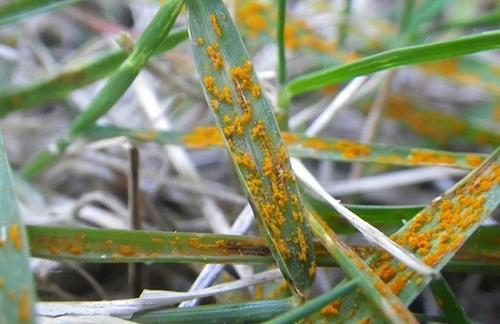
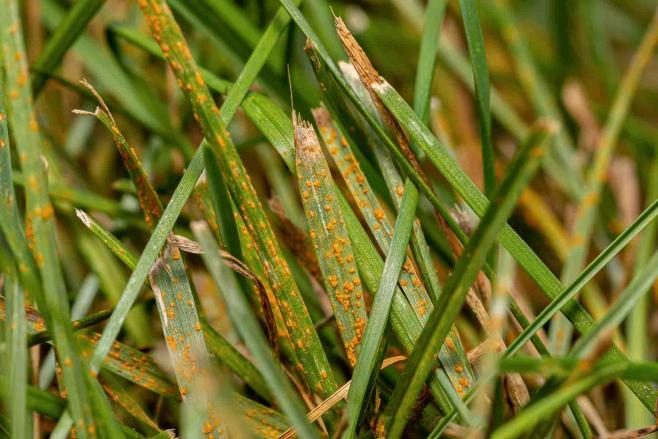
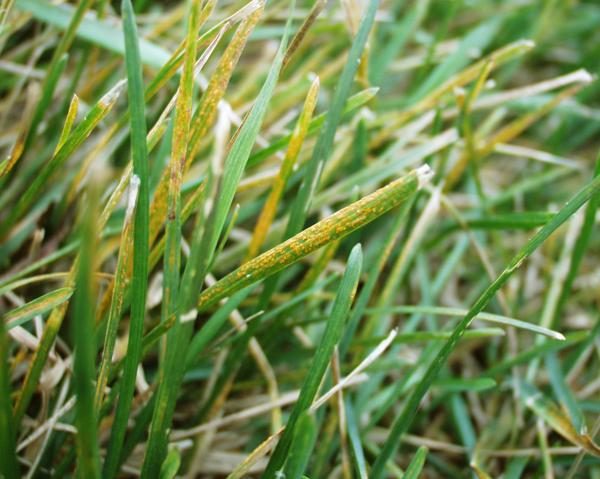
Turf problems are often several problems at once
A Great Western technician can confirm the diagnosis on site before anything is treated — timing matters more than product choice.